
Reviewed · JEWISH HERITAGE TOURS
Krakow Jewish District and Ghetto Guided Tour in a Small Group
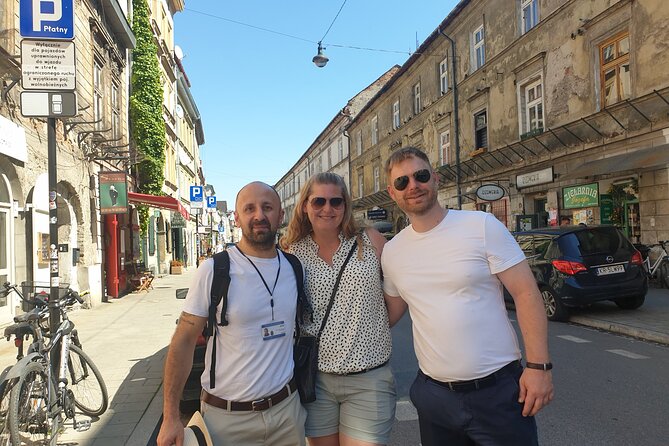
Krakow’s Jewish Quarter and former ghetto are close on a map, but the stories can be hard to piece together on your own. This two-hour walking tour links the main sites in a clear route, from Szeroka Street and its synagogues to Ghetto Heroes Square and the surviving ghetto wall.
I like the small maximum of 10 people, which makes it easier to hear the guide and ask questions. I also like the strong geographic arc: you move from the old Jewish quarter to the wartime ghetto, rather than seeing disconnected monuments. The main consideration is that most synagogues are viewed from outside, so this is a street history tour, not an interior museum visit.
Key points to know before booking
- The route covers two distinct areas: Krakow’s historic Jewish quarter and the former ghetto across the river.
- The group is capped at 10 people, a useful size for a walking tour with frequent stops.
- Most synagogue visits are exterior stops, including Remuh, the Old Synagogue, the High Synagogue, and Izzak Synagogue.
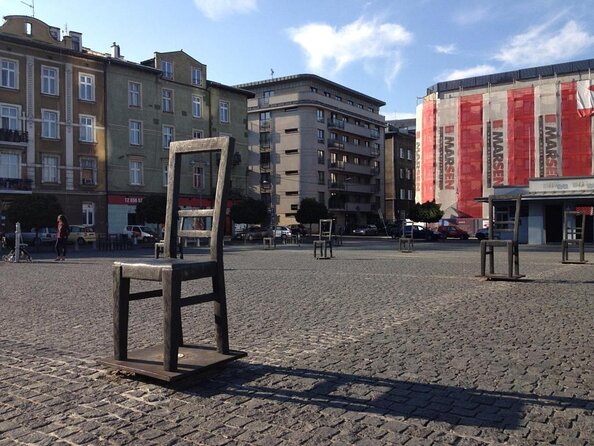
- The tour ends at Ghetto Heroes Square, with the Eagle Pharmacy and a fragment of the former ghetto wall along the way.
- The English tour lasts about two hours and starts at Szeroka 6.
- The price is $60.21 per person, reasonable if you want the route and historical explanation handled for you, but less attractive if you only want a quick walk past the sights.
Why this route matters in Krakow
This experience works because it connects place and time. You begin in Kazimierz, the area associated with Krakow’s Jewish community, then follow the route toward the former ghetto. The shift is important. It helps you see that Krakow’s Jewish story did not begin with the Second World War, and it did not end with the destruction of the ghetto.
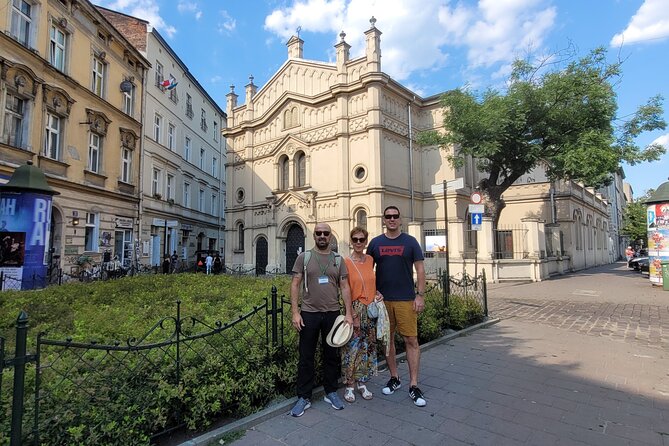
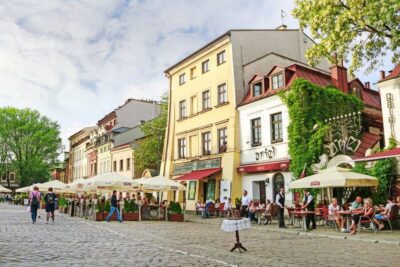
You start on Szeroka Street, described as the oldest part of the Jewish quarter. The opening stop lasts about 10 minutes, enough for your guide to set the scene without using the entire tour at one address.
From there, the route passes several synagogues. Their exteriors give you useful visual markers, but the tour does not include interior admission. If you want to enter a synagogue or spend time in a museum, plan that separately.
The walk then continues through Plac Nowy, the old trading center of the Jewish community, before moving toward the former ghetto. This gives the tour a natural rhythm: community life, religious buildings, public spaces, wartime memory, and physical remains.
More Jewish Heritage Tours in Krakow
- Krakow: Schindler’s Factory & Ghetto Guided Tour
★ 4.7 · 1,694 reviews - Krakow: Jewish Quarter and Former Ghetto Tour
★ 4.9 · 1,441 reviews - Krakow: Bike Tour of Old Town, Jewish Quarter and the Ghetto
★ 4.9 · 1,155 reviews
Szeroka Street and the first synagogues
Szeroka Street is a sensible place to begin because it puts you in the historic core immediately. The meeting point is Szeroka 6, in Krakow’s 31-053 postal district. You do not need to find a museum entrance or wait at a distant transport hub.
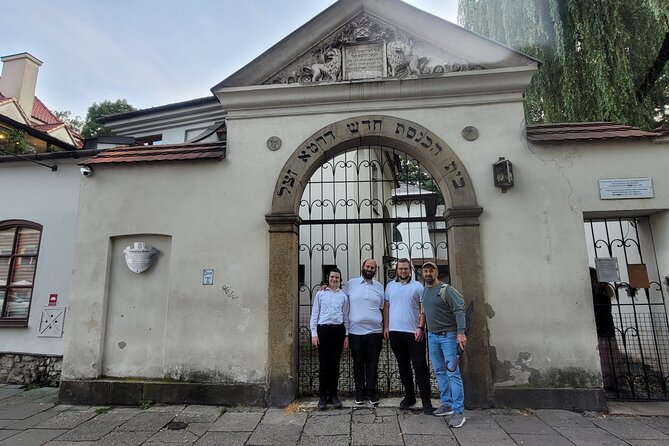
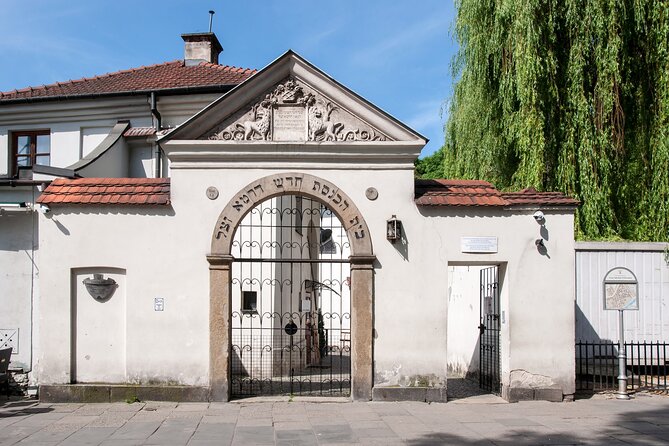
The first synagogue stop is Remuh Synagogue, a 16th-century building viewed from outside for about 15 minutes. The longer stop suggests that the guide will use the building and its setting to explain more than just its age.
The Old Synagogue follows, with around 10 minutes outside. Its name can confuse first-time visitors because it is not simply another modern place of worship. Here, the value comes from seeing how closely religious buildings sit within the surrounding streets.
You will also see the 16th-century Wolf Popper Synagogue. This is a short, five-minute stop, but it adds another piece to the neighborhood’s religious and social history.
The route includes a 19th-century synagogue and the High Synagogue, both exterior stops. The High Synagogue receives about five minutes, while the 19th-century synagogue receives about 10 minutes. These quick pauses are helpful for orientation, though they will feel brief if architecture is your main interest.
A practical point: do not expect a slow architectural tour. The guide has several sites to cover in two hours. You are getting a connected explanation of the area, not a detailed examination of every facade.
Jan Karski and the human side of the story
The statue of Jan Karski is one of the route’s most meaningful stops. Karski is presented here as the man who tried to stop the Holocaust, and the tour allows about five minutes at the statue.
That short stop carries a lot of weight. It shifts attention from buildings to individual responsibility and action. The statue is not just another point on a walking route. It gives your guide a chance to explain the wartime story through one person’s efforts.
Because the tour includes both Jewish community sites and wartime memorials, it avoids reducing the district to a single period. You see religious buildings, a public market area, a community center, and memorial sites. That wider frame is one of the tour’s strongest qualities.
Plac Nowy and the living community
Plac Nowy takes about 10 minutes. In earlier centuries, it served as a trading center for Krakow’s Jewish community. The square helps you understand the quarter as a place where people lived and worked, not only as a collection of historic buildings.
The walk also includes the Krakow Jewish Community Center, known as JCC Krakow, for about five minutes. This stop brings the story into the present day. It is a useful reminder that Jewish life in Krakow is not only a subject from the past.
I like the balance here. A tour focused only on wartime suffering can leave you with a narrow picture of the district. Including Plac Nowy and JCC Krakow gives you a broader sense of community, public life, and continuity.
The route also passes Izzak Synagogue, a 17th-century building, viewed from outside for about five minutes. Again, the stop is short, but it fits the tour’s purpose: connect several sites without spending the entire morning at one location.
Same city, a completely different kind of day:
- Kraków: Evening or Night River Cruise
★ 4.0 · 7,386 reviews - Krakow: Oskar Schindler’s Factory Entry Ticket & Guided Tour
★ 4.2 · 3,793 reviews - Krakow: City Sightseeing Tour by Electric Golf Cart
★ 4.5 · 3,264 reviews - Krakow: Schindler’s Factory Tour with Entrance Ticket
★ 4.5 · 3,182 reviews
Crossing toward the former Krakow ghetto
The later part of the route changes tone. You leave the older Jewish quarter and continue toward the former Krakow ghetto. The itinerary includes the Eagle Pharmacy from outside, with about 10 minutes at the site.
The pharmacy is an important marker because it is tied directly to the history of the ghetto. An exterior stop cannot offer the same experience as entering a museum, but the location still gives the guide a fixed place to explain what happened in this part of the city.
This is where having a guide becomes especially useful. Without one, you might walk past a building or square without knowing why it matters. The tour is designed to prevent that. It gives context at the exact places connected with the story.
The walking route is also easier to follow with a guide. The start and finish are in different parts of the city, and the tour is not a loop. You begin at Szeroka Street and finish at Plac Bohaterów Getta, known in English as Ghetto Heroes Square.
Ghetto Heroes Square and the wall fragment
Plac Bohaterów Getta is the main place associated with the Krakow ghetto. The tour spends about 10 minutes here, making it one of the longer stops on the later section of the route.
The square gives the tour a strong closing point. After seeing community buildings and public spaces in the Jewish quarter, you reach a place directly associated with the ghetto. The guide can connect the earlier stops with the events represented here.
The final stop is a fragment of the former ghetto wall, with about five minutes at the remains. Physical fragments often communicate scale better than words alone. A wall section may look modest, but it gives you something concrete to see after hearing the historical explanation.
The tour ends at Ghetto Heroes Square, not back at Szeroka Street. That matters for your plans. You can continue exploring the area afterward, but you should not expect to be dropped back at the starting point.
What the small group changes
The group limit is 10 people. For this kind of walk, that is a useful cap. You are moving through public streets and stopping at several sites, so a smaller group should make it easier to stay together and hear the guide.
A small group also suits the subject. The route includes difficult history, and you may want to ask a question at a particular site rather than wait until the end. With 10 people or fewer, the experience is less likely to feel like a moving crowd.
Still, small group does not mean private tour. You are sharing the guide, and the exact pace can depend on the group. The benefit is a more manageable walking experience, not a custom route built around your interests.
The tour is offered in English. Confirmation arrives at booking, and the activity is near public transportation. Most people can participate, but the supplied details do not specify the walking distance, terrain, or the exact accessibility of each stop. If those points matter to you, ask the provider before booking.
Is $60.21 a fair price?
At $60.21 per person, this is not the cheapest way to see the district. The value depends on what you want from the walk.
If you already know Krakow well and only want to locate the main sites, you can see many exterior landmarks without paying for a guide. In that case, the price may feel high, especially because admission tickets are not included and most synagogue stops remain outside.
If you want the sites explained in a sensible order, the price is easier to justify. You are paying for the English-speaking guide service, a group limited to 10 people, and the time saved by having the route organized. You also finish in the former ghetto, rather than having to work out how the two areas connect yourself.
The tour does not include gratuities. Any tip is optional. Free cancellation is available up to 24 hours before the start time, but changes or cancellations inside that window are not accepted for a refund. The activity also requires a minimum number of people, so a cancellation by the provider can result in another date or a full refund.
The tour is often booked well ahead, around 33 days in advance on average. That does not guarantee it will sell out on your dates, but it is a good reason to reserve early if you have a fixed Krakow schedule.
Who will get the most from this walk?
I would choose this tour if you are visiting Krakow for the first time and want a clear introduction to Kazimierz and the former ghetto. It also suits anyone who prefers historical explanation to wandering with a map and a list of addresses.
It is a good fit for people with about two hours available. The short format lets you learn the main story without giving up an entire day.
You may want something else if you are mainly interested in synagogue interiors, museum collections, or long architectural discussions. This experience shows many buildings from the outside, so it works best as an orientation and context-setting walk.
The tour also suits people who want a small group without paying for a fully private guide. Ten people is large enough to keep the price below a private tour while still being much easier to manage than a large group.
Tips for making the most of the two hours
Start at Szeroka 6 with enough time to find the meeting point. The route is scheduled tightly, and the tour moves through several stops.
Wear shoes suited to city walking. The tour is on foot and includes multiple short stops, though the precise walking distance is not provided.
Keep the route’s ending in mind. Since you finish at Ghetto Heroes Square, arrange your next activity from that area rather than planning to return automatically to Szeroka Street.
If you want to see interiors, add that separately to your Krakow plans. Remuh Synagogue, the Old Synagogue, the High Synagogue, Izzak Synagogue, and the Eagle Pharmacy are listed as exterior stops on this experience.
The tour is recommended by 100 percent of the 12 submitted ratings, with an overall score of 5. That is a very small sample, so I would treat it as a positive sign rather than proof that the tour suits every style of sightseeing.
Should you book it?
Book this walk if you want the Jewish quarter and former ghetto explained as one connected story, especially in a small English-speaking group. The route covers a lot in two hours and ends at the most important ghetto memorial area.
Skip it if you want museum entry, extended synagogue visits, or a low-cost self-guided stroll. For most first-time visitors who value clear context and a manageable group, $60.21 is a fair price for the organization and guide service.
FAQ
How long does the Krakow Jewish District and Ghetto tour last?
The tour lasts approximately two hours.
What language is the tour offered in?
The tour is offered in English.
How large is the tour group?
The group has a maximum of 10 people.
Where does the tour begin?
The tour begins at Szeroka 6, 31-053 Kraków, Poland.
Where does the tour end?
The tour ends at Plac Bohaterów Getta, also called Ghetto Heroes Square, at 30-527 Kraków, Poland.
Does the tour include synagogue admission?
No. Remuh Synagogue, the Old Synagogue, the 19th-century synagogue, the High Synagogue, and Izzak Synagogue are listed as exterior stops. Admission tickets are not included.
What places are included on the route?
The route includes Szeroka Street, several synagogue exteriors, Wolf Popper Synagogue, Jan Karski’s statue, Plac Nowy, JCC Krakow, the Eagle Pharmacy, Ghetto Heroes Square, and a fragment of the former ghetto wall.
Is public transportation nearby?
Yes. The tour location is near public transportation.
Are gratuities included?
No. Gratuities are optional and are not included in the tour price.
Can I cancel for a full refund?
Yes, if you cancel at least 24 hours before the experience start time. Cancellations or changes made less than 24 hours before the start time are not refunded.
Just added around Krakow
- stag dog chase Krakow prank★ 5.0 · 4 reviews
- Divine Mercy Sanctuary – Private Tour from Krakow★ 5.0 · 4 reviews
- ZALIPIE – painted village, unique small group tour from Krakow★ 5.0 · 7 reviews
- ZALIPIE – painted village, unique PRIVATE tour from Krakow★ 5.0 · 20 reviews
- Zalipie Private Tour from Krakow The Painted Village★ 5.0 · 4 reviews
- Wooden Churches Unesco List Private Tour from Krakow★ 5.0 · 14 reviews
- Guided tour to Salt Mine & Schindler Factory with Pick-Up Options★ 4.0 · 58 reviews
- Wawel Castle, Cathedral, & Rynek Underground Tour with Lunch★ 5.0 · 4 reviews
Jewish Heritage Tours, compared.
Bike Tour of Old Town, Jewish Quarter and the Ghetto
Read our review →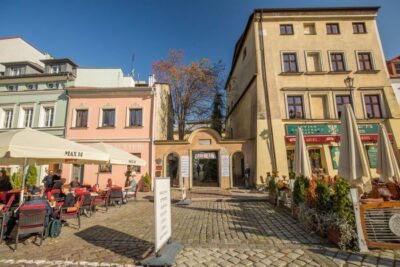
Kazimierz, Schindler’s Factory & Ghetto Guided Tour
Read our review →
Full Bike Tour – the Old Town, Jewish Qtr & the Ghetto NEW BIKES
Read our review →
Warsaw Ghetto Private Walking Tour with Hotel Pickup
Read our review →
Bike Tour of the Old Town, Kazimierz, and the Ghetto
Read our review →Browse the lists this tour appears in