
Reviewed · JEWISH HERITAGE TOURS
Krakow: Jewish Ghetto Walking Tour
Kraków’s former Jewish Ghetto is not a museum set apart from city life. It is a real neighborhood, with ordinary streets, homes, shops, and traffic moving through places where more than 15,000 people were forced into a few blocks during World War II. This one-hour walking tour helps you read those streets and understand what happened there.
I like the surviving section of the Ghetto Wall, and I like the empty chairs at Ghetto Heroes Square, a simple memorial with a heavy meaning. Guides such as Olga, Aga, Joanna, Ewa, and Phil are praised for clear, sensitive storytelling. The main drawback is the short format: one hour is enough for the key sites, but not enough for every detail.
Key points at a glance
- A surviving Ghetto Wall fragment: See one of the few remaining pieces of the barrier that enclosed the Kraków Ghetto.
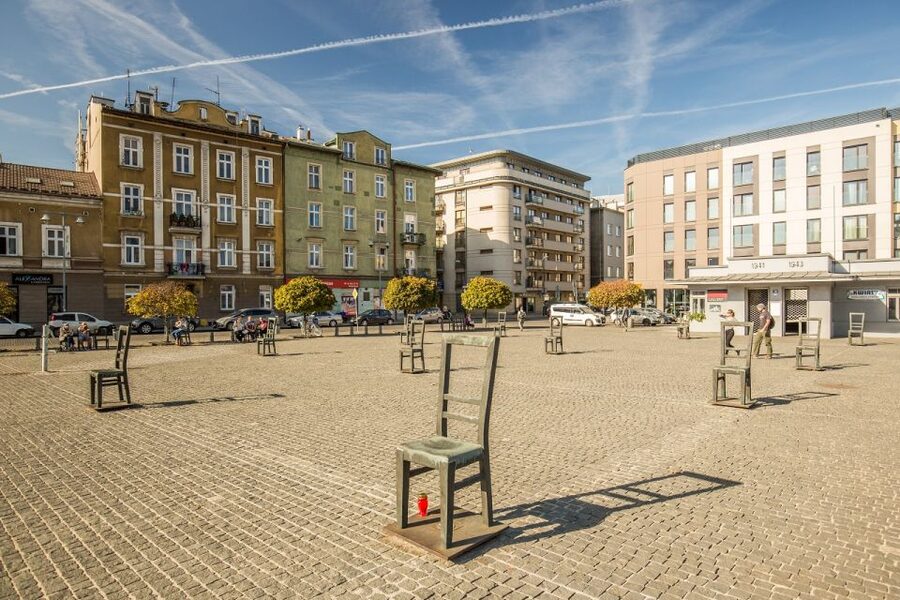
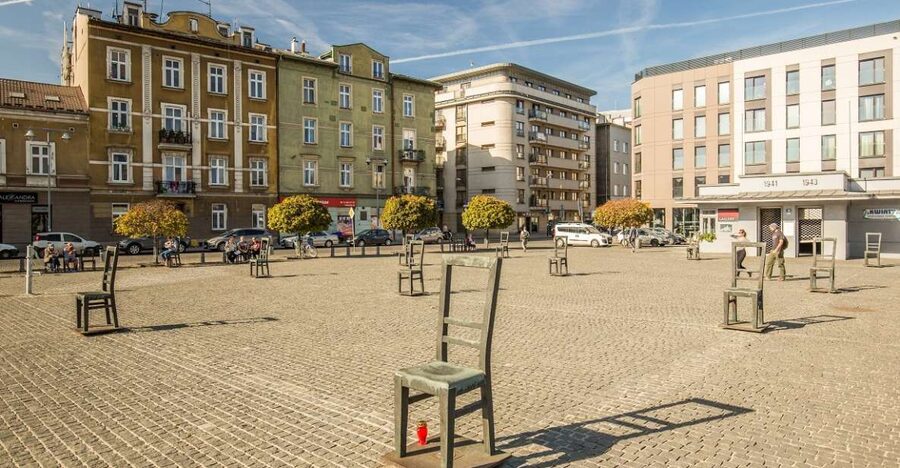
- Ghetto Heroes Square: Learn why the empty metal chairs represent people who were deported and killed.
- Under the Eagle Pharmacy: Hear about Tadeusz Pankiewicz and his staff, who helped Jewish residents at great personal risk.
- A real neighborhood, not a recreated exhibit: Walk original streets and see wartime buildings mixed into modern Podgórze.
- Short and good value: At $11 for an hour with a live guide, this is an affordable way to add context before or after Schindler’s Factory.
- Many language choices: Tours are offered in English, French, German, Italian, Spanish, Russian, Portuguese, Swedish, and Slovak.
Why Podgórze tells the story so well
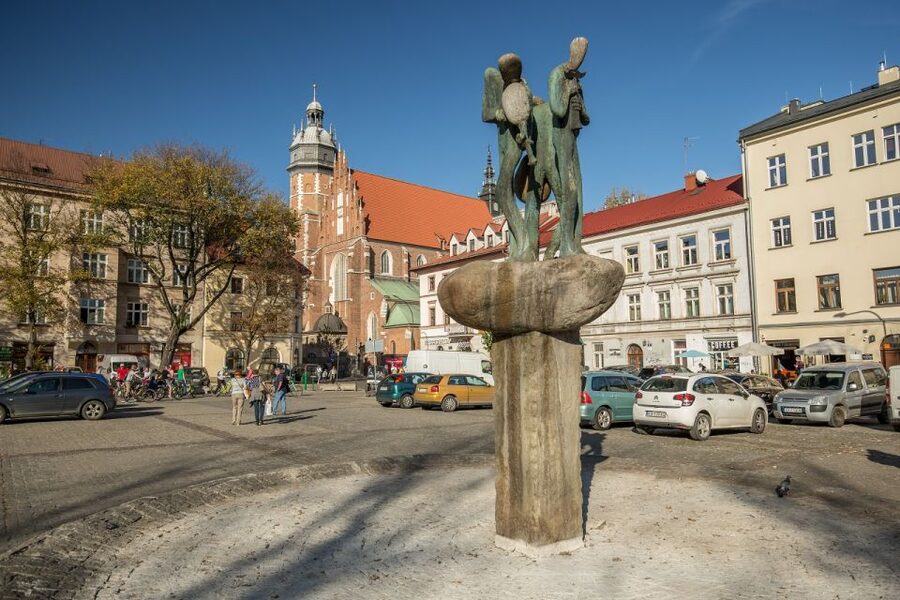
The former Jewish Ghetto lies in Podgórze, across the river from Kraków’s old center. The setting matters. You are not simply looking at objects behind glass. You are walking along streets that still function as part of the city.
That can make the experience more powerful, but also more demanding. There are no complete ghetto streets preserved as a single historic set. Modern life carries on around the sites. A guide helps you connect the fragments: a wall remnant, a square, a pharmacy, a building, and the shape of a street.
The tour focuses on what daily life meant under German occupation. You hear how Jewish residents were forced into the ghetto, how they coped with hunger and fear, and how deportations changed the area. The emphasis is not only on dates and official events. It is also on people trying to survive in impossible conditions.
That human scale is one of the tour’s strengths. You are encouraged to picture families, workers, children, and neighbors rather than treating the ghetto as an abstract chapter in wartime history.
More Jewish Heritage Tours in Krakow
- Krakow: Schindler’s Factory & Ghetto Guided Tour
★ 4.7 · 1,694 reviews - Krakow: Jewish Quarter and Former Ghetto Tour
★ 4.9 · 1,441 reviews - Krakow: Bike Tour of Old Town, Jewish Quarter and the Ghetto
★ 4.9 · 1,155 reviews
Starting point and the first walk
The meeting point can vary with the option you book. Several tours begin near Schindler’s Factory, which is a practical starting point if you plan to visit both places on the same day. A few people specifically found the route useful after a Schindler’s Factory visit, since the walking tour takes the story beyond the factory and into the streets where Kraków’s Jewish residents were confined.
Do not assume every departure uses exactly the same meeting point. Check your booking details and arrive at least 10 minutes early. The group leaves on time, and late arrivals cannot join or receive a refund.
The opening section sets the scene before reaching the major memorials. Your guide explains the district’s wartime role and points out original buildings and street layouts. Some guides use photographs to show how the area looked before and during the occupation. That is especially helpful because much of the district now looks ordinary.
The walk is generally manageable. One earlier participant described it as flat and not especially far, while another noted that there is a fair amount of walking. Both points can be true: the route is not a strenuous hike, but you are on your feet for the full hour.
The remaining Ghetto Wall
The Ghetto Wall is one of the clearest physical reminders of confinement. Only fragments remain, so you will not see the full barrier that once enclosed the district. That limitation is worth knowing before you book. The value comes from seeing an original piece in its actual setting and learning what the wall meant to the people living behind it.
The surviving section helps you understand the cramped scale of the ghetto. More than 15,000 people were forced into only a few city blocks. Your guide explains how the wall separated residents from the rest of Kraków and how ordinary movement, supplies, work, and family life were controlled.
This is also a good point to pay attention to the street around you. You may see modern buildings and routine city activity, yet the guide is describing a place shaped by fences, surveillance, overcrowding, and fear. That contrast is central to the experience. The neighborhood has changed, but the physical layout still gives clues.
A guide is particularly useful here because the remaining wall alone cannot explain its full meaning. Without context, it is easy to take a quick photograph and move on. With a guide, you learn why this small fragment matters.
Ghetto Heroes Square and the empty chairs
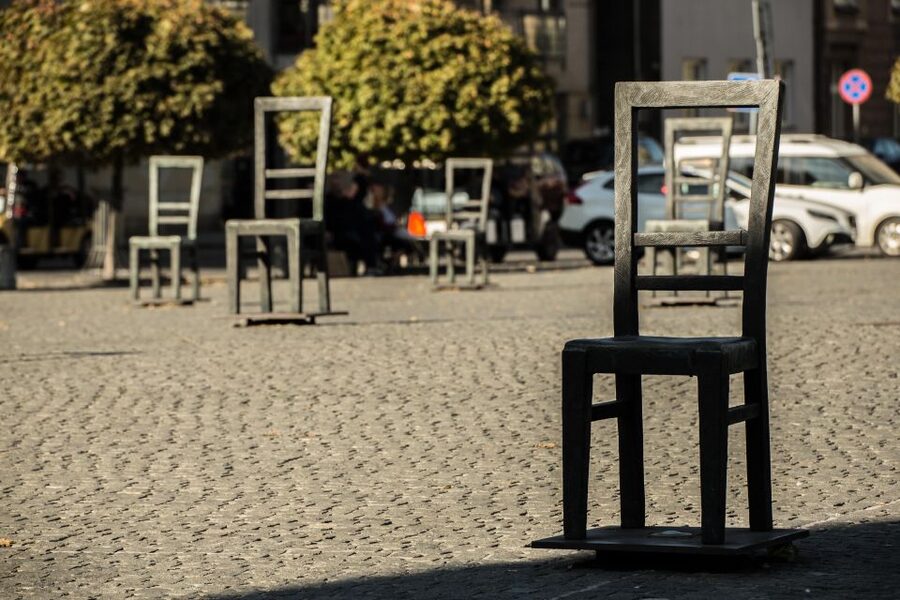
Ghetto Heroes Square is the emotional center of the walk. During the occupation, it was connected with the forced movement and deportation of Jewish residents to concentration camps. Today, the square contains rows of empty metal chairs.
The chairs are a stark memorial. They suggest absent people, abandoned homes, and possessions left behind. Their open, repeated design avoids turning the site into a grand monument. Instead, the memorial asks you to look at an ordinary public space and think about the people who were removed from it.
Your guide explains the square’s wartime role and the meaning of the memorial. This is often where the walk becomes quiet. The group may pause while the guide adds personal stories and details about deportations. The subject is difficult, and the best guides handle it without rushing or turning the moment into a performance.
The square is also a useful place to understand the difference between learning history in a museum and encountering it outdoors. You are standing in a public place where the city continues around you. That can feel unsettling, but it makes the past harder to keep at a safe distance.
More Walking Tours in Krakow
- Old Town Krakow & Wawel Castle Walking Tour
★ 5.0 · 1,508 reviews - Creepy Krakow: 2-Hour City Walking Tour
★ 4.7 · 1,131 reviews - Krakow: The Old Town Walking Tour
★ 4.8 · 794 reviews - Krakow: Kazimierz Jewish Quarter Walking Tour
★ 4.8 · 571 reviews
Under the Eagle Pharmacy and everyday courage
Across from the square is the historic Under the Eagle Pharmacy. It is linked with Tadeusz Pankiewicz and his staff, who risked their safety to help people inside the ghetto. The pharmacy offered medicine and a place where assistance could be given during a period when even small acts of kindness carried danger.
The guide shares stories of this work and places it within the wider pressure of the occupation. This stop adds a different layer to the tour. The Ghetto Wall and Heroes Square show confinement and loss. The pharmacy shows decisions made by individuals who chose to help.
The tour does not automatically include food, drinks, or a separate museum admission. The route finishes at or near the pharmacy, but access may depend on the day and the option booked. One person found the pharmacy closed, so you should not treat entry as guaranteed. The important point is the building and the story connected with it, though an open visit would add more material.
If you want a fuller museum experience, check the details of your chosen booking before you go. The walking tour itself is mainly about outdoor locations and the guide’s explanation.
Authentic streets, limited surviving buildings
One honest point deserves attention: there is not a large collection of intact wartime buildings waiting around every corner. Some original structures and street patterns remain, but the district has changed. You will see a living neighborhood rather than a preserved film set.
I consider that a benefit if you want to understand how history sits inside modern Kraków. You are not being shown a neatly arranged reconstruction. You must use the guide’s words, photographs, and location clues to picture the past.
It can also be a drawback if you expect grand ruins or a long sequence of dramatic structures. The physical remains are limited. The tour’s strength is interpretation, not spectacle.
This is why the quality of the guide matters so much. Phil has been praised for using photographs and for keeping the group involved. Joanna has been noted for setting a comfortable pace, including for slower walkers. Ewa brought a sensitive approach to individual stories, while Aga connected the history of Nazi occupation with the danger of hatred in the present.
Those examples point to what you should look for: a guide who explains clearly, treats the subject with care, and helps you understand the locations rather than simply naming them.
Guide style, languages, and group comfort
The tour is led live, and group tours operate in one selected language. Available languages include English, French, German, Italian, Spanish, Russian, Portuguese, Swedish, and Slovak. Select carefully when booking.
English-language guides have received particular praise for clear speech and strong command of the subject. Still, the outdoor setting can affect how well you hear. One person suggested that the guide speak more slowly and use a microphone. Other departures provided headsets or earphones, which helped the group follow the commentary while walking.
You may get a private group option, depending on availability. A private tour could suit you if you want more time for questions or a quieter pace. The regular group option is the better value for most visitors, especially at $11.
The route continues in rain or sunshine. Wear shoes suitable for walking on city streets and bring clothing for the forecast. Cold weather can make an outdoor history tour harder to absorb, though one guide invited a group inside to wait during very cold conditions. That kind of help may depend on the meeting point and the day, so do not rely on it.
Is one hour enough?
One hour works well for a first visit. You can cover the Ghetto Wall, Ghetto Heroes Square, Under the Eagle Pharmacy, and several original buildings without spending half a day on the subject.
The short length is also useful if you are combining the walk with Schindler’s Factory or another Kraków activity. It fits neatly into a busy schedule and does not require a full afternoon.
The tradeoff is depth. A very enthusiastic guide may have far more material than can fit into 60 minutes. Anna was described as having enough information for several more hours, and that captures the main limitation. You will receive the outline and many meaningful details, but not every story connected with the district.
If you already know a great deal about Kraków during World War II, you may want a longer private format. If you are new to the subject, the hour gives you a strong foundation and helps you decide which museum or site to visit next.
Value at $11 per person
At $11, this is one of the easier Kraków history activities to recommend on value. You get a licensed live guide, a focused route, and access to places that can be easy to miss when walking alone.
The value is not in the number of attractions. You are not paying for several ticketed museums or a long coach excursion. You are paying for the explanation that links scattered remains into one understandable story.
That matters in Podgórze. You can find the square, wall, and pharmacy on a map, but the meaning of each place is much less clear without historical context. The tour also saves you from wandering through the district without knowing which buildings or street views are significant.
There is free cancellation up to 24 hours before the start, and you can reserve now and pay later. Those terms help if your Kraków plans are still shifting, but punctuality remains important on the day.
Who should book this walk?
I would choose this tour if you want to understand the Kraków Ghetto as a place where people lived, worked, suffered, helped one another, and faced deportation. It suits first-time visitors who want a serious history lesson without committing to a much longer excursion.
It is also a good companion to Schindler’s Factory. The factory focuses on a different part of the wartime story, while this route takes you into the neighborhood itself. Doing both can give you a fuller sense of Kraków under German occupation.
You should prepare for difficult material. The subject includes forced confinement, deportations, concentration camps, and the Holocaust. This is not a light sightseeing walk, though the guide’s personal approach can make the history easier to understand.
I would hesitate only if you want a long museum visit, extensive access inside historic buildings, or a route with little walking. The surviving remains are limited, and the hour moves at a steady pace.
Should you book the Kraków Jewish Ghetto Walking Tour?
Yes, if you want a short, affordable, carefully guided introduction to Podgórze’s wartime history. The strongest parts are the surviving wall, the empty chairs at Ghetto Heroes Square, and the stories connected with Under the Eagle Pharmacy.
Book it with realistic expectations. You are walking through a modern neighborhood with scattered remains, not entering a fully preserved ghetto. At $11, the guide’s explanation is the main purchase, and that makes arriving on time, choosing your language, and staying close enough to hear especially important.
For many people, this will be one of Kraków’s most meaningful one-hour activities. It does not tell every story, but it gives you the context to see the district differently afterward.
FAQ
How long does the Jewish Ghetto walking tour last?
The tour lasts one hour.
How much does the tour cost?
The listed price is $11 per person.
What places does the walking tour visit?
The route includes the remains of the original Ghetto Wall, Ghetto Heroes Square, the Chair Memorial, Under the Eagle Pharmacy, and authentic wartime buildings and street layouts in Podgórze.
Is a guide included?
Yes. An expert live guide is included with the walking tour.
Which languages are available?
The tour is offered in French, German, Italian, English, Spanish, Russian, Portuguese, Swedish, and Slovak. Group tours operate in one selected language.
Is the tour available as a private experience?
A private group option is available, depending on the booking option.
What should I know before joining the tour?
Arrive 10 minutes early because latecomers cannot join and tickets cannot be refunded. The tour runs in all weather, so bring suitable clothing and comfortable footwear. Food and drinks are not included.
Just added around Krakow
- stag dog chase Krakow prank★ 5.0 · 4 reviews
- Divine Mercy Sanctuary – Private Tour from Krakow★ 5.0 · 4 reviews
- ZALIPIE – painted village, unique small group tour from Krakow★ 5.0 · 7 reviews
- ZALIPIE – painted village, unique PRIVATE tour from Krakow★ 5.0 · 20 reviews
- Zalipie Private Tour from Krakow The Painted Village★ 5.0 · 4 reviews
- Wooden Churches Unesco List Private Tour from Krakow★ 5.0 · 14 reviews
- Guided tour to Salt Mine & Schindler Factory with Pick-Up Options★ 4.0 · 58 reviews
- Wawel Castle, Cathedral, & Rynek Underground Tour with Lunch★ 5.0 · 4 reviews
Jewish Heritage Tours, compared.
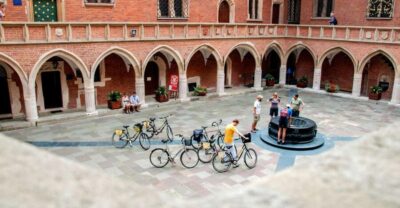
Bike Tour of Old Town, Jewish Quarter and the Ghetto
Read our review →
Kazimierz, Schindler’s Factory & Ghetto Guided Tour
Read our review →
Full Bike Tour – the Old Town, Jewish Qtr & the Ghetto NEW BIKES
Read our review →
Warsaw Ghetto Private Walking Tour with Hotel Pickup
Read our review →
Bike Tour of the Old Town, Kazimierz, and the Ghetto
Read our review →Browse the lists this tour appears in