
Reviewed · JEWISH HERITAGE TOURS
Krakow: Kazimierz Jewish District Private Guided Tour
Kazimierz is where Krakow’s Jewish story becomes wonderfully walkable. In four hours, you trace the old Jewish quarter from its synagogues and cemetery to the ghetto wall remains and places linked with Schindler’s List. I especially like the focus on Jewish life before, during, and after the war, and the fact that a private guide can adjust the pace to your interests. The tour also gives you a useful look at Jewish life in Krakow today, not just its painful past.
The main consideration is that this is a serious history walk, not a light sightseeing stroll. You will spend much of the time on foot, and the emotional weight of the Holocaust story may be considerable. Comfortable shoes and clothing suited to the weather are essential.
Key points at a glance
- Four hours in a private group: You get a guide focused on your party, with room to adjust the pace and emphasis.
- Seven major synagogues: Kazimierz contains one of Europe’s largest synagogue complexes, with Szeroka Street at its historic center.
- Remu Synagogue and cemetery: This pairing helps you see how worship and burial shaped the old Jewish quarter.
- Holocaust history on location: Ghetto wall remains give the wartime story a physical setting rather than leaving it as an abstract lesson.
- Schindler’s List connections: The guide points out places used in the film and explains their link to Krakow’s past.
- Eight guide languages: English, French, Italian, Spanish, German, Russian, Polish, and Portuguese are available.
Starting at the Jewish Cultural Center
Your meeting point is the Jewish Cultural Center, where your guide waits with a sign showing your name. This is a practical start because you do not have to search for a guide in a busy square or beside a large attraction.
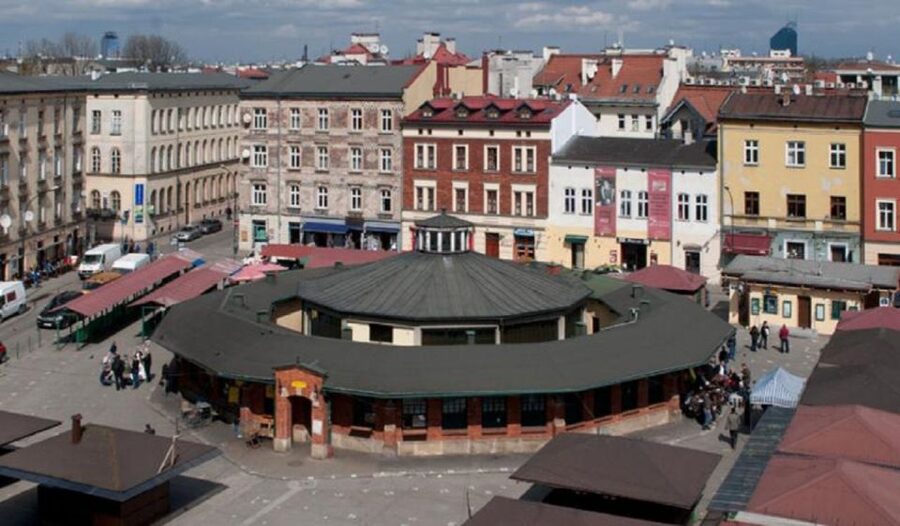
From there, you begin exploring Kazimierz, a UNESCO World Heritage Site and one of Krakow’s most distinctive districts. The tour is built around walking, so you can see the neighborhood at street level rather than passing through it from a vehicle.
I like this format for a first visit because Kazimierz can feel confusing if you only follow a map. The Jewish quarter’s story is spread across streets, religious buildings, cemeteries, walls, markets, and restored public spaces. Your guide supplies the links between them.
The private format also matters. If you want to spend more time on synagogue architecture, ask about cemetery customs, or focus on the Holocaust period, you can make that preference clear. One French-language booking with Agnieszka was adapted to the group’s pace and interests, and that flexibility is one of the strongest reasons to choose a private tour rather than a fixed group walk.
More Jewish Heritage Tours in Krakow
- Krakow: Schindler’s Factory & Ghetto Guided Tour
★ 4.7 · 1,694 reviews - Krakow: Jewish Quarter and Former Ghetto Tour
★ 4.9 · 1,441 reviews - Krakow: Bike Tour of Old Town, Jewish Quarter and the Ghetto
★ 4.9 · 1,155 reviews
Szeroka Street and the heart of old Kazimierz
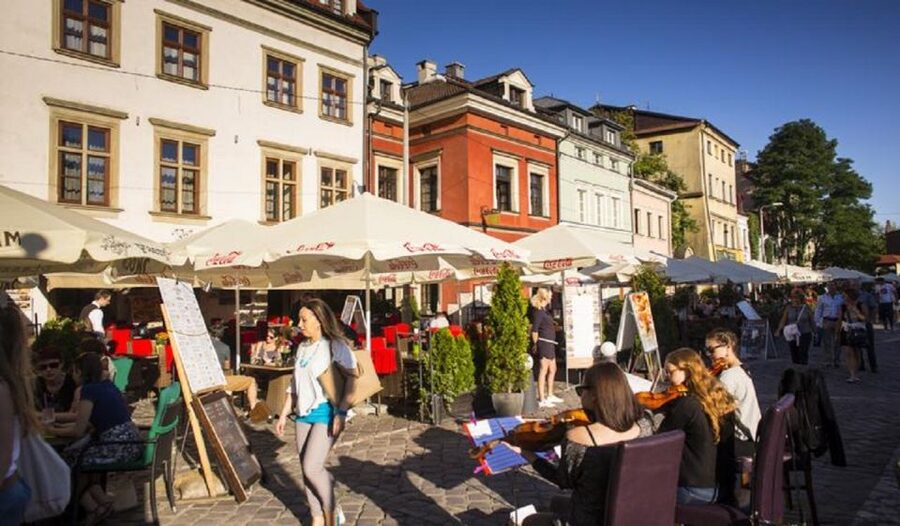
Szeroka Street is the natural center of the old Jewish quarter. It gathers several important Jewish sites in one memorable stretch and gives you a sense of how religious, social, and commercial life once met in the same neighborhood.
This is not simply a pretty street to photograph. Your guide uses it to explain the Jewish community that shaped Kazimierz and to place the district’s buildings in a wider story. You begin to see why the neighborhood cannot be understood by looking at one synagogue at a time.
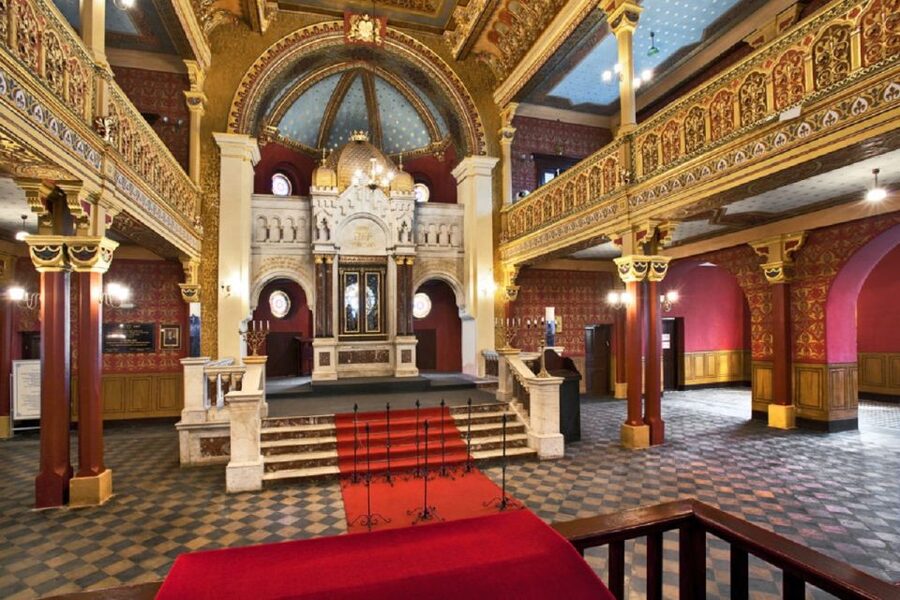
The tour highlights seven major synagogues, described as the largest synagogue complex in Europe. You should not expect a visit to every interior to receive equal time, since the exact pace depends on the group and the guide. Still, seeing the buildings together helps you understand the scale of Jewish life in Krakow before the war.
This part suits you if you like architecture with context. The buildings are not presented as isolated monuments. They are connected to the people who worshipped there, the streets around them, and the changes the district experienced across the twentieth century.
Remu Synagogue and the old cemetery
The Remu Synagogue is paired with its adjoining old cemetery, or kirkut. That combination is especially useful because it lets you consider both daily religious life and the traditions surrounding death and remembrance.
Your guide explains what makes the site important and places it within the old Jewish quarter. The cemetery also changes the mood of the walk. After the activity of Szeroka Street, the setting offers a quieter place to think about the community that once lived here.
As with any religious site, modest, weather-appropriate clothing is a sensible choice. The tour information specifically advises comfortable shoes and clothing suited to the conditions. You will be walking for several hours, so this is not the time for hard dress shoes or clothing that leaves you unprepared for rain or cold.
The cemetery visit may be one of the more meaningful parts of the experience, but it is not a quick photo stop. If you prefer a fast-paced checklist of attractions, four hours may feel long. If you want time for explanation and questions, the length is useful.
The Old Synagogue and Jewish Museum
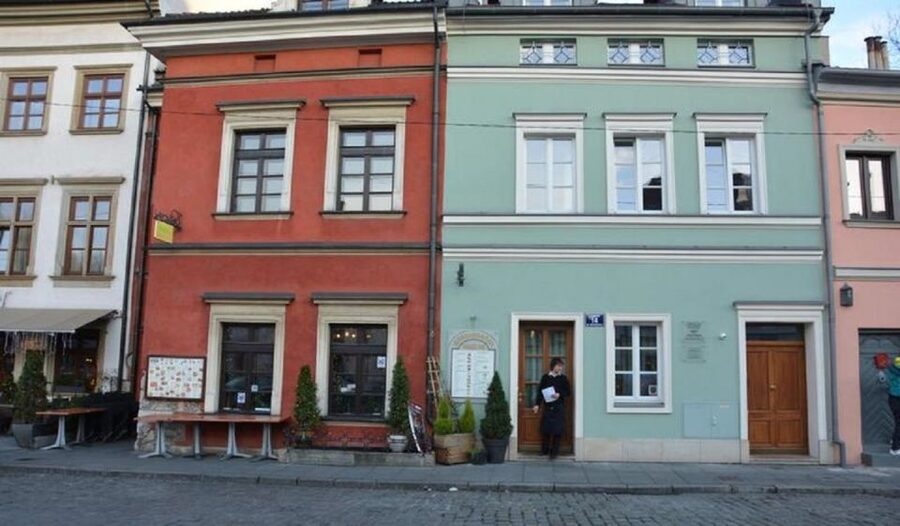
You also see the Old Synagogue, now home to the Jewish Museum. This stop gives the tour a more structured setting for learning about Jewish history in Krakow.
The museum helps connect objects, religious practice, and community life with the streets you have already walked. Your guide can explain what the Jewish community was like before the war, what happened during the war, and how Jewish life changed afterward.
That three-part structure is important. Many visits to Krakow focus heavily on wartime destruction, and rightly so, but the story begins earlier and continues afterward. Kazimierz was not created by the Holocaust, and it did not become meaningless after 1945. The guide’s stated focus on the past, present, and future gives the neighborhood a fuller frame.
Allow yourself time to listen here. The value of a guided museum visit is not just seeing the displays. It is having someone explain why a particular site matters and answer questions while the information is still fresh in your mind.
Same city, a completely different kind of day:
- Kraków: Evening or Night River Cruise
★ 4.0 · 7,386 reviews - Krakow: Oskar Schindler’s Factory Entry Ticket & Guided Tour
★ 4.2 · 3,793 reviews - Krakow: City Sightseeing Tour by Electric Golf Cart
★ 4.5 · 3,264 reviews - Krakow: Schindler’s Factory Tour with Entrance Ticket
★ 4.5 · 3,182 reviews
Ghetto wall remains and the Holocaust story
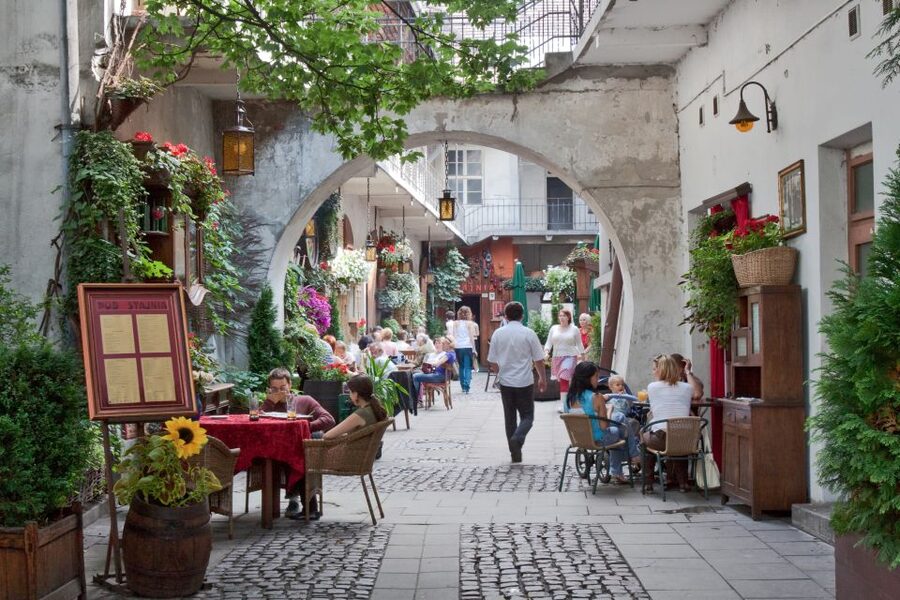
The tour also takes you to remains of the ghetto walls and explains the history of the Holocaust. This is where the walk turns from the older story of Jewish Krakow to the violence and persecution of the Second World War.
Seeing part of a wall can be more affecting than hearing a general description of the ghetto. The physical remains give you a fixed point in the city, while the guide explains what the walls represented and how the neighborhood changed.
Expect this section to be difficult. The subject is not treated as a decorative backdrop to sightseeing. You are being asked to understand what happened to the Jewish community in Krakow and how the city’s streets became part of that history.
I appreciate that the tour does not stop at the wartime period. The guide also discusses what Jewish life in Krakow is like today and what may lie ahead. That keeps the experience from presenting Jewish culture only as something that disappeared.
Schindler’s List locations in the real city
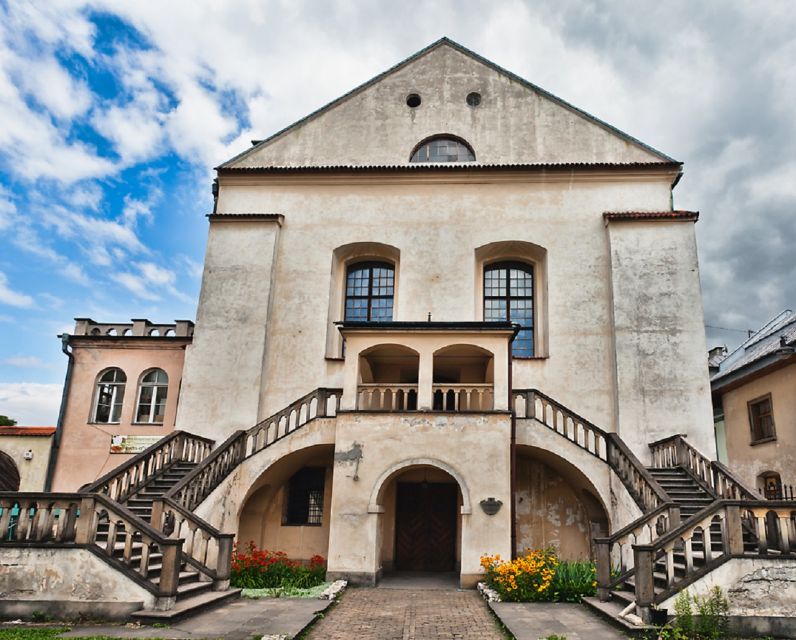
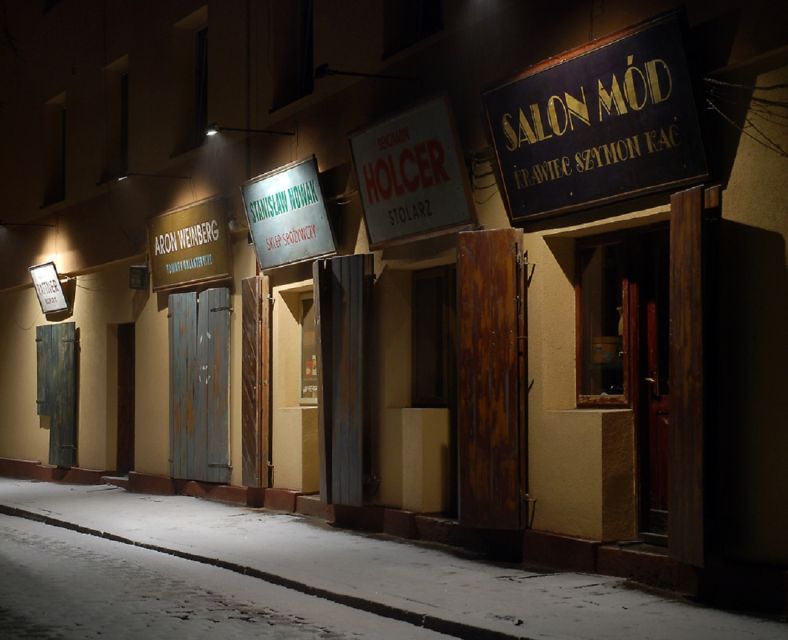
Kazimierz and other parts of Krakow were used for Schindler’s List, and the tour points out places made familiar by the film. These locations can help you connect a well-known movie with the actual city, but the film is only one part of the experience.
A good guide uses the movie as a doorway into history, not as the whole story. You can expect explanations of why certain places appeared on screen and how the film relates to Krakow’s wartime past.
If you have seen the film, you may recognize locations or visual details. If you have not, the stops still make sense because the tour is built around the district’s Jewish history rather than film trivia.
The movie connection is also a reminder that cinematic Krakow and historical Krakow are not identical. A private guide can help separate what was filmed here from what happened here. That distinction makes the stop more useful and less like a simple movie-location hunt.
What the four-hour format gives you
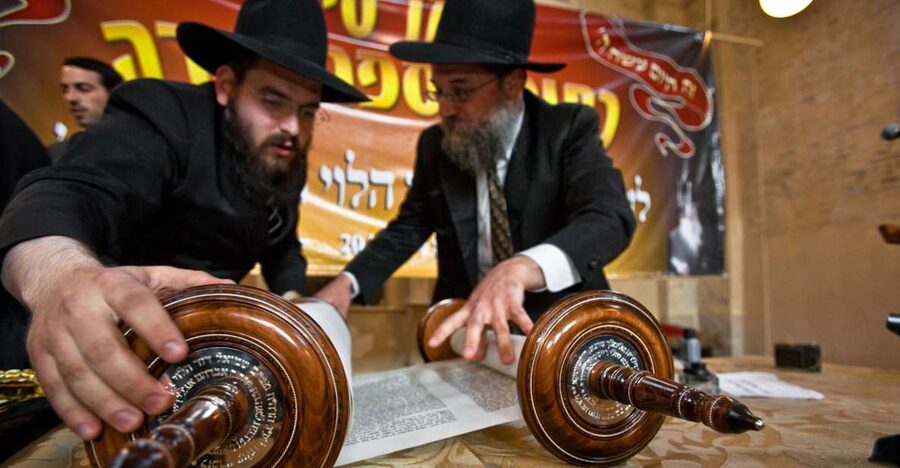
Four hours is a substantial amount of time for a walking tour. You get enough room to cover synagogues, Szeroka Street, the cemetery, the Old Synagogue, ghetto wall remains, and film-related sites without reducing every stop to a quick sentence.
One Italian booking included about five hours with guide Nargarita, but the advertised duration is four hours. Treat four hours as the standard planning figure and view any extra time as dependent on the day and guide.
The length is a strength if you want a serious introduction to Kazimierz. It also means you should plan your energy sensibly. Wear supportive shoes, bring weather-appropriate clothing, and avoid scheduling an important activity immediately afterward if you dislike feeling rushed.
Because the group is private, the experience can fit your pace better than a large public tour. That does not mean every stop will be optional, but you have a better chance to ask questions and pause when a subject catches your attention.
Guide quality and language choices
The guides named in the feedback include Nargarita, Catherine, Marzena, and Agnieszka. The praise centers on preparation, friendliness, stamina, and the ability to explain a great deal without making the four hours feel slow.
That pattern tells you what to value here. The guide is not just there to lead you from one address to another. The guide is the main source of context, and the quality of the explanations will shape how much you take away.
Languages available are English, French, Italian, Portuguese, Spanish, German, Russian, and Polish. Choose the language in which you can comfortably discuss sensitive history and ask follow-up questions. That choice may matter more here than it would on a simple city-center walk.
The perfect guide for this tour needs to handle several tones: architectural explanation, religious history, Holocaust education, film connections, and present-day Jewish life. The named guides received full marks in the supplied feedback, including praise for Catherine’s explanations and Marzena’s preparation.
Price, value, and what is not included
At $16 per person, this is an unusually modest price for four hours of private guiding. The value is strongest if you are traveling with a small party and want focused attention rather than paying for a short group introduction.
The price covers the guide. Food and drinks are not included, so plan refreshments separately. The supplied details do not promise admission to every interior, a meal, or transport between stops. Think of this as a guided walking experience centered on interpretation and place.
The private format makes the cost especially appealing for couples, families, or a small group with shared interests. For one person, the same low per-person price may still be worthwhile, but the private advantage is naturally more noticeable when the group can ask questions together.
Free cancellation up to 24 hours before the tour and a reserve-now, pay-later option add useful flexibility. You can hold the experience while your Krakow plans settle, then cancel in time for a full refund if needed.
Accessibility and practical preparation
The activity is listed as wheelchair accessible. Still, the experience covers several outdoor locations, religious sites, streets, and cemetery areas, so you should discuss any specific mobility needs with the provider before booking.
The tour lasts four hours and involves walking. Comfortable shoes are not a minor suggestion here. They are the most important item to bring, especially if you want to remain comfortable through the full visit.
Weather-appropriate clothing is also essential. The experience moves between outdoor streets and historic locations, and the conditions can change. Food and drinks are not supplied, so bring or arrange anything you need before or during the walk.
The meeting point is clear: the Jewish Cultural Center. Your guide waits with a sign bearing your name, which keeps the start simple.
Who should choose this Kazimierz tour?
I would choose this tour if you want more than a quick look at Krakow’s old Jewish quarter. It suits you if you care about context, ask questions, and want the story to include both prewar Jewish life and the present day.
It is also a good fit if Schindler’s List gave you an interest in Krakow but you want to move beyond the movie. The guide can connect film locations with the real history of the district.
Families and small groups may benefit from the private format, especially if ages and interests differ. A guide can adjust explanations and pace more easily than on a large group outing.
You may want another activity instead if you dislike long walks, prefer casual sightseeing, or want a tour focused only on food, nightlife, or modern Krakow. The Holocaust section is serious, and the subject deserves your full attention.
Should you book it?
I would book this experience if you have four hours for a thoughtful introduction to Kazimierz and want a guide who can connect synagogues, cemeteries, ghetto wall remains, museum displays, and film locations.
The $16 price offers strong value, especially for a private group. Go prepared for a walking tour with emotional weight, not a breezy neighborhood sampler. If that sounds right for your Krakow plans, this is a practical and focused way to understand Kazimierz.
FAQ
Where does the tour begin?
The meeting point is the Jewish Cultural Center. Your guide waits there with a sign showing your name.
How long does the tour last?
The scheduled duration is four hours. One booking included about five hours, but you should plan around the standard four-hour duration.
Is the tour private?
Yes. This is a private group experience with a guide dedicated to your party.
What languages are available?
Guides are available in French, Italian, Portuguese, English, Spanish, German, Russian, and Polish.
Does the tour visit synagogues?
The tour highlights seven main synagogues and includes the Old Remu Synagogue and the Old Synagogue, which houses the Jewish Museum.
Does the tour include Jewish cemeteries?
Yes. The route includes the old cemetery beside Remu Synagogue and discusses Jewish cemeteries, known as kirkuts.
Does the tour cover the Holocaust?
Yes. Your guide explains the history of the Holocaust and takes you to see remains of the ghetto walls.
Are food and drinks included?
No. Food and drinks are not included in the tour price.
Can I cancel for a full refund?
Yes. You can cancel up to 24 hours in advance for a full refund. You can also reserve now and pay later.
Just added around Krakow
- stag dog chase Krakow prank★ 5.0 · 4 reviews
- Divine Mercy Sanctuary – Private Tour from Krakow★ 5.0 · 4 reviews
- ZALIPIE – painted village, unique small group tour from Krakow★ 5.0 · 7 reviews
- ZALIPIE – painted village, unique PRIVATE tour from Krakow★ 5.0 · 20 reviews
- Zalipie Private Tour from Krakow The Painted Village★ 5.0 · 4 reviews
- Wooden Churches Unesco List Private Tour from Krakow★ 5.0 · 14 reviews
- Guided tour to Salt Mine & Schindler Factory with Pick-Up Options★ 4.0 · 58 reviews
- Wawel Castle, Cathedral, & Rynek Underground Tour with Lunch★ 5.0 · 4 reviews
Jewish Heritage Tours, compared.
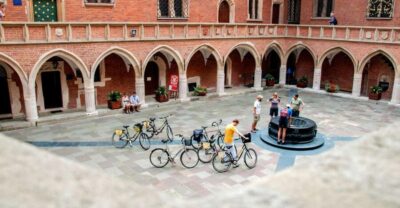
Bike Tour of Old Town, Jewish Quarter and the Ghetto
Read our review →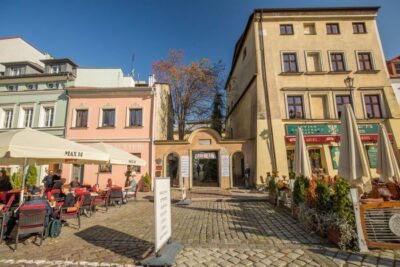
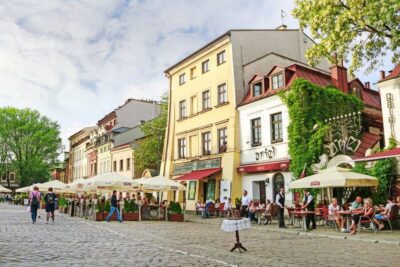
Kazimierz, Schindler’s Factory & Ghetto Guided Tour
Read our review →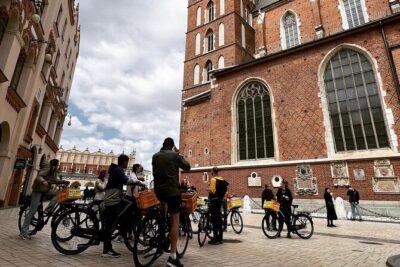
Full Bike Tour – the Old Town, Jewish Qtr & the Ghetto NEW BIKES
Read our review →
Warsaw Ghetto Private Walking Tour with Hotel Pickup
Read our review →
Bike Tour of the Old Town, Kazimierz, and the Ghetto
Read our review →Browse the lists this tour appears in