
Reviewed · SCHINDLER FACTORY TOURS
Krakow Schindler’s Factory & Ghetto & Plaszow Camp Guided Tour
Krakow’s wartime story becomes clearest when you connect the museum with the places outside it. This tour links Schindler’s Enamel Factory, the former Jewish ghetto, and Plaszow Camp, turning separate sites into one sobering account of Nazi occupation. I like that the factory visit focuses on Krakow under Nazi rule rather than pretending to be a full biography of Oskar Schindler.
I also like the small-group format and the time given at Plaszow, where a guide can explain what happened on ground that is far less formally presented than the museum. The main drawback is the amount of walking: five hours, several outdoor stops, and a tram connection can make this a tiring day, especially if your schedule begins around noon.
Key points to know before booking
- Schindler’s Factory is an occupation museum, not a Schindler biography: The main exhibition examines Krakow from 1939 to 1945 and the lives of people under Nazi control.
- The tour connects four important locations: You visit the factory, a surviving section of the ghetto wall, Ghetto Heroes Square, and the former Plaszow concentration camp.
- Plaszow receives about 90 minutes: This is important because the camp site needs explanation to make sense, and it is the most outdoor-focused part of the tour.
- Plan for a long walking day: One person found the five-hour route physically tiring, though still worthwhile.
- A tram ticket costs 4 PLN extra: The tour does not include this local transport fare.
- Group size details need checking: The experience is described as capped at 15 people in its highlights, while the additional information gives a maximum of 25.
Why this Krakow history tour matters
I find this route valuable because it moves beyond a single museum visit. Schindler’s Factory gives you a structured introduction to occupied Krakow, while the ghetto and Plaszow stops show how that policy affected real streets, public spaces, homes, and forced labor sites.
The subject is difficult. This is not a light sightseeing outing, and you should allow yourself some quiet time afterward. Still, a guide helps you follow the sequence of events and understand why each place matters. Without that context, the ghetto wall may look like a short section of old masonry, and Plaszow may seem like an open area with few obvious remains.
The experience has received a top overall rating from four published reviews, with particular praise for the guides’ clear explanations and steady pacing. One person who had also visited Auschwitz found the Plaszow portion especially useful because it added context to events shown in the film Schindler’s List. Another person described the two guides as informative from beginning to end.
No guide names are provided, so you should not book this expecting a specific named historian. What you can expect is a guided format with commentary at the museum and outdoor sites.
More Jewish Heritage Tours in Krakow
- Krakow: Schindler’s Factory & Ghetto Guided Tour
★ 4.7 · 1,694 reviews - Krakow: Jewish Quarter and Former Ghetto Tour
★ 4.9 · 1,441 reviews - Krakow: Bike Tour of Old Town, Jewish Quarter and the Ghetto
★ 4.9 · 1,155 reviews
Inside Schindler’s Factory at Lipowa 4
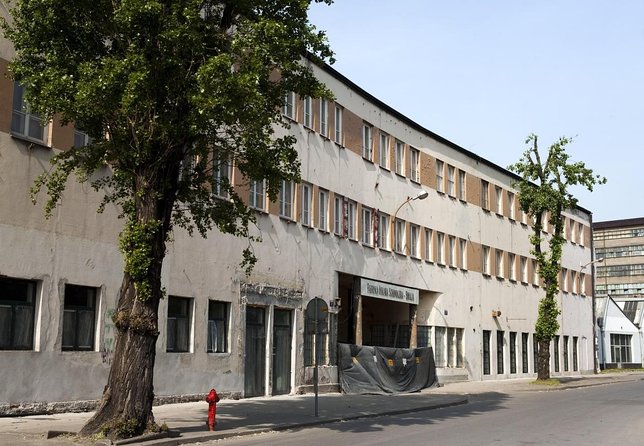
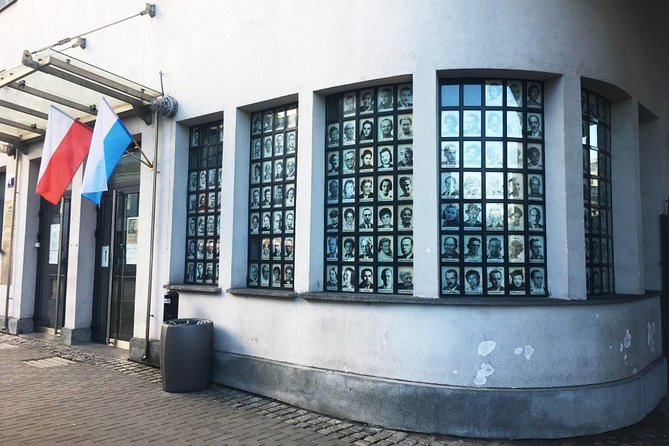
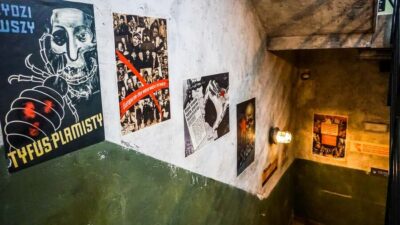
The tour begins at 4 Lipowa Street, home to Oskar Schindler’s former enamel factory. The museum is part of Krakow’s Historical Museum, and the included entrance ticket is a real benefit here. The factory is one of Krakow’s most popular museums, so having admission arranged can save time at the entrance.
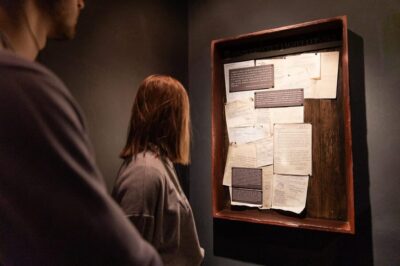
The main exhibition is titled Krakow under Nazi Occupation 1939 to 1945. That distinction matters. You are not entering a conventional life story of Schindler, and the museum does not limit its attention to his actions. Instead, it looks at the city under German occupation and shows how war altered daily life.
I like this approach. Schindler is an important figure, but the wider story is larger than one man. The exhibition places Krakow’s Jewish population, Polish residents, German authorities, forced labor, and wartime control into the same frame. Your guide can help separate the film version of events from the wider history of the city.
You spend about 90 minutes inside. That is enough time for a guided introduction, but it is not an unlimited museum visit. If you enjoy reading every display in detail, you may wish for more independent time. The benefit of the fixed visit is focus: the guide can point out the parts that best explain the next stops.
The museum is also a good first stop because it gives you a timeline. Once you leave, you have a better basis for understanding the ghetto wall and Ghetto Heroes Square. The tour works best when you listen closely here rather than treating the factory as a quick photo stop.
Seeing the surviving Ghetto Wall
The next stop is a 12-metre fragment of the original Krakow ghetto wall. You spend about 15 minutes here. No separate admission ticket is included or listed for this outdoor stop.
The fragment is small, but its message is heavy. A commemorative plaque in Hebrew and Polish explains that people lived, suffered, and died there, and that their final journey to the death camps began from that place. The wall gives physical form to the boundaries imposed on the ghetto’s residents.
This is one of those places where a guide adds real value. On your own, you might see only a section of masonry beside the road. With historical explanation, you can understand it as part of a controlled district and as a sign of the forced separation of Krakow’s Jewish population.
The short stop also helps the five-hour schedule stay practical. You are not spending a long period at every location, but the guide can provide the essential background before moving on. Keep in mind that the outdoor visits are not museum-style experiences. You will be standing outside, listening, and walking between sites.
Ghetto Heroes Square and the empty chairs
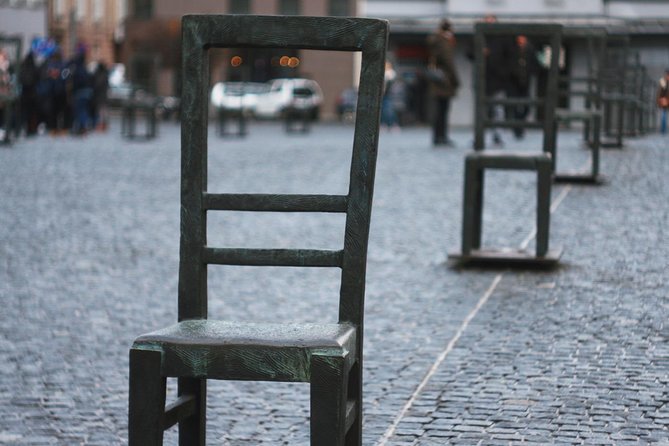
Ghetto Heroes Square, or Plac Bohaterow Getta, is in Krakow’s Podgórze district. From 1941 to 1943, it was inside the ghetto and served as a place where Jewish residents were gathered before transport to concentration camps.
The square’s memorial is made up of several dozen cast-iron chairs placed separately across the open space. They represent furniture and personal belongings left behind after the ghetto was liquidated. The design is restrained and unsettling. Rather than using a large statue, it shows absence through ordinary household objects.
You spend about 15 minutes here. That may seem brief, but the square is best approached with clear historical guidance rather than a long formal presentation. The guide can explain how this public space fit into the deportation process and why the chairs carry such a strong meaning.
I would pay attention to the transition from the wall to the square. The wall shows forced separation. The chairs show what remained when people were removed from their homes. Together, the two stops make the ghetto’s story more concrete than a museum display alone.
Again, do not expect a long independent visit. This is a guided stop within a larger route, so the group will continue after the explanation. If you want extra time to sit quietly or photograph the memorial, check the schedule with your guide.
More ways to visit Schindler's Factory:
- Krakow: Oskar Schindler’s Factory Entry Ticket & Guided Tour
★ 4.2 · 3,793 reviews - Krakow: Schindler’s Factory Tour with Entrance Ticket
★ 4.5 · 3,182 reviews - Krakow: Schindler’s Factory Skip-the-Line Ticket
★ 4.4 · 3,105 reviews - Krakow: Schindler’s Factory Tour with Entrance Ticket
★ 4.6 · 1,737 reviews
Plaszow Camp, the longest outdoor stop
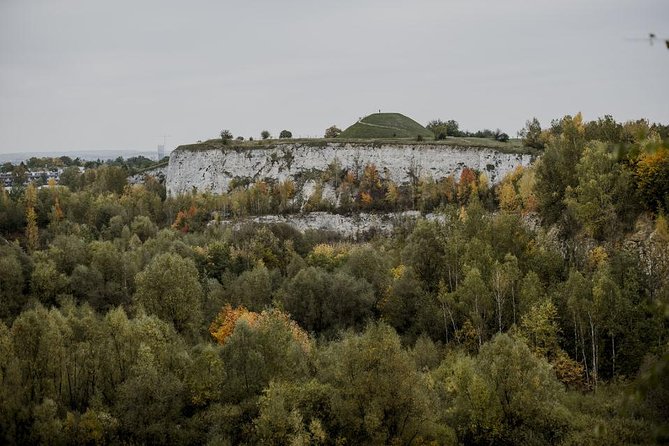
Plaszow receives about 90 minutes, matching the time spent inside Schindler’s Factory. This former Nazi concentration camp was founded after the German invasion of Poland. It first operated as a forced labor camp and was later expanded and converted into a concentration camp.
The camp supplied labor for military factories and a quarry. From October 28, 1942, deportations of Jews from the Krakow ghetto began. These facts are difficult, but they are essential to understanding why Plaszow belongs on this route.
The site is different from Schindler’s Factory. You do not enter a carefully arranged museum exhibition with a clear sequence of rooms. Instead, you visit a former camp site and rely on the guide to explain its purpose, development, and connection to the ghetto.
That makes the commentary especially important. A guide can help you understand how a labor camp became a concentration camp, how it related to nearby industry, and how deportations changed the role of the site. One person who had visited Auschwitz considered the Plaszow portion particularly worthwhile because it added useful background to events seen in the film Schindler’s List.
Plaszow is also where the walking burden becomes most noticeable. The tour description does not promise a short paved museum route, and the stop lasts an hour and a half. Wear comfortable shoes, bring water, and avoid scheduling another demanding activity immediately afterward.
The site’s open character can be both a strength and a limitation. It helps you confront the fact that this history is tied to real ground outside the city center. At the same time, you may find fewer visible structures than at a preserved museum. If you need displays, signs, and intact buildings to follow a story, Schindler’s Factory will be easier to process. If you want to understand the physical setting connected to the camp, Plaszow adds something the museum cannot.
Five hours, a tram, and a lot of walking
The full experience lasts about five hours. That sounds manageable on paper, but the route includes indoor touring, outdoor explanations, transport, and walking between or around sites. One person who booked a series of three related tours could not finish everything after starting at noon, and advised beginning earlier if possible.
The listed meeting point is Lipowa 4, 32-051 Krakow, at Schindler’s Factory. The tour ends at Henryka Kamieńskiego 57, 30-644 Krakow. This is not a return-to-start outing, so you should plan your next activity from the end point rather than assuming you will finish back near the factory.
A tram ticket is not included and costs 4 PLN. That is a small extra cost, but it is worth carrying cash or arranging payment before the tour begins. The need for public transport also means you should leave a little flexibility around the schedule.
The group size needs special attention. The highlights describe a small group capped at 15 people, while the additional information gives a maximum of 25. Those are different group sizes. I would confirm the expected number at booking if a genuinely small group is important to you.
The route is described as suitable for most people, but it is not a low-effort sightseeing tour. You should be comfortable standing and walking for extended periods. The person who wrote about aching feet was not warning against the experience, but giving useful practical advice: the day takes physical energy.
Is the $76.35 price good value?
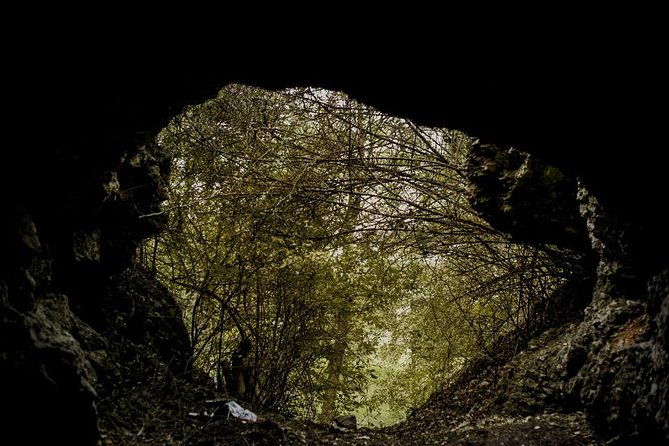
At $76.35 per person, the price is not simply an entrance fee. It covers a professional guide, admission to Schindler’s Factory, and a planned route through four significant locations. The value comes from the connections between the sites.
If you visited only Schindler’s Factory, you would receive a stronger museum presentation but miss the ghetto wall, the memorial chairs, and Plaszow. If you visited the outdoor sites alone, you might save money but lose much of the historical framework. For me, the guide is the main reason the package can justify its price.
The included factory admission also removes one task from your day. Since the museum is among Krakow’s most popular, avoiding a separate ticket purchase may be useful, especially during a busy period. The 4 PLN tram fare is minor, but it is not included, so add it to your budget.
The price is less attractive if you plan to rush away after the first museum stop or if you dislike guided pacing. You are paying for a fixed five-hour structure. That works well for someone who wants the history organized and explained. It works less well for someone who prefers to spend an entire afternoon reading every museum panel or wandering without a schedule.
Who should book this experience?
I would recommend it to you if you want a connected account of Krakow during Nazi occupation rather than a single famous-site visit. It suits first-time visitors who want the major wartime locations explained in one half-day and people who have already seen Schindler’s List and want to separate the film from the historical places behind it.
It is also a good choice if you value an on-site guide. The positive feedback centers on informative explanations, good pacing, and the usefulness of having guides check people in and explain the day. That structure can make a difficult subject easier to follow.
You may want a different plan if you have limited stamina, dislike long outdoor walks, or need substantial free time at each site. The day is emotionally serious and physically demanding. Give yourself time afterward rather than fitting in another major attraction.
The tour is also better for adults and older children who can handle the subject. The supplied information does not give a child age policy or a detailed accessibility description, so families should confirm those points before booking.
Cancellation is flexible if your plans change: you can receive a full refund by canceling at least 24 hours before the local start time. Changes or cancellations inside that window are not accepted, and the experience requires a minimum number of participants. If that minimum is not met, you are offered another date or experience, or a full refund.
Should you book the Schindler’s Factory and Plaszow tour?
Book it if you want a guide to connect Krakow’s museum exhibits with the actual ghetto and camp sites. The strongest feature is the combination of clear museum context and difficult outdoor places, especially the 90-minute visit to Plaszow.
Think twice if you want a relaxed afternoon or a museum-only experience. Five hours is a serious commitment, the route involves substantial walking, and the subject demands attention. For a visitor ready to spend half a day learning about Krakow’s wartime past, the price is reasonable because it includes museum admission, transport planning, and guided interpretation at sites that can be hard to understand alone.
FAQ
How long does the tour last?
The tour lasts approximately five hours.
Where does the tour begin?
It begins at Schindler’s Enamel Factory, 4 Lipowa Street, 32-051 Krakow, Poland.
Where does the tour end?
The tour ends at Henryka Kamieńskiego 57, 30-644 Krakow, Poland.
What places are included?
The route includes Schindler’s Enamel Factory, a fragment of the former ghetto wall, Ghetto Heroes Square, and Plaszow Concentration Camp.
Is admission to Schindler’s Factory included?
Yes. The entrance ticket to Schindler’s Factory Museum is included.
Is public transportation included?
No. A tram ticket is not included. The stated cost is 4 PLN.
How much time is spent at Plaszow?
The Plaszow visit lasts about one hour and 30 minutes.
How large is the group?
The tour highlights describe a maximum of 15 people, while the additional information states a maximum of 25. Confirm the expected group size when booking.
Can I cancel for a full refund?
Yes. You can cancel at least 24 hours before the experience starts for a full refund. Cancellations or changes made less than 24 hours before the start time are not refunded or accepted.
Just added around Krakow
- stag dog chase Krakow prank★ 5.0 · 4 reviews
- Divine Mercy Sanctuary – Private Tour from Krakow★ 5.0 · 4 reviews
- ZALIPIE – painted village, unique small group tour from Krakow★ 5.0 · 7 reviews
- ZALIPIE – painted village, unique PRIVATE tour from Krakow★ 5.0 · 20 reviews
- Zalipie Private Tour from Krakow The Painted Village★ 5.0 · 4 reviews
- Wooden Churches Unesco List Private Tour from Krakow★ 5.0 · 14 reviews
- Guided tour to Salt Mine & Schindler Factory with Pick-Up Options★ 4.0 · 58 reviews
- White Water Rafting Krakow★ 5.0 · 3 reviews
Schindler Factory Tours, compared.
Oskar Schindler’s Factory Entry Ticket & Guided Tour
Read our review →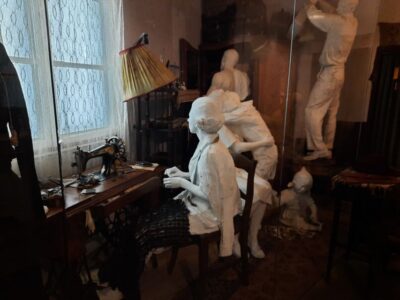
Schindler’s Factory Tour with Entrance Ticket
Read our review →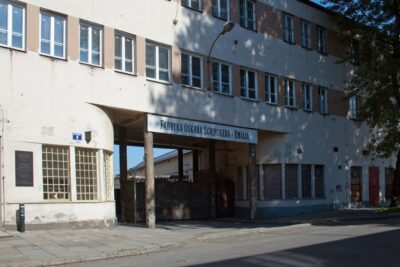
Schindler’s Factory Tour with Entrance Ticket
Read our review →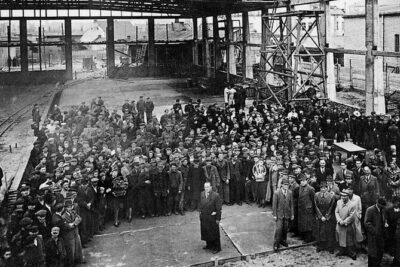
Schindler’s Factory in Krakow: Guided Tour & Skip the Line Ticket
Read our review →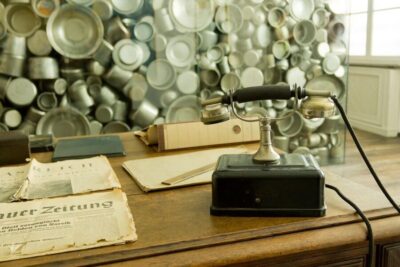
Schindler’s Factory Ticket with Guided Tour Option
Read our review →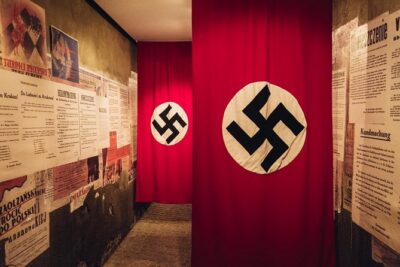
Krakow Schindler’s Factory Guided Tour with Admission Ticket
Read our review →Browse the lists this tour appears in