
Reviewed · HISTORICAL TOURS
Private Historical Tour of Warsaw by a Retro Fiat with Pickup
Warsaw’s past comes into sharper focus from the back seat of a Polish Fiat 125p. You roll from the rebuilt Old Town to the former Jewish ghetto, across the river to Praga, and past reminders of Nazi occupation, the Warsaw Uprising, and Communist rule. I like the private format and the way the car lets you cover far more ground than a walking tour. I also like that guides such as Karol, Agata, Martin, Hania, and Konrad adjust the route to your interests.
The main drawback is the car itself. A retro Fiat is part of the fun, but it is not a modern vehicle. One report noted the lack of air-conditioning, and the compact cabin may feel snug on a hot day. Some stops are also brief, so this tour gives you a strong city overview rather than long visits inside museums.
Key points to know before booking
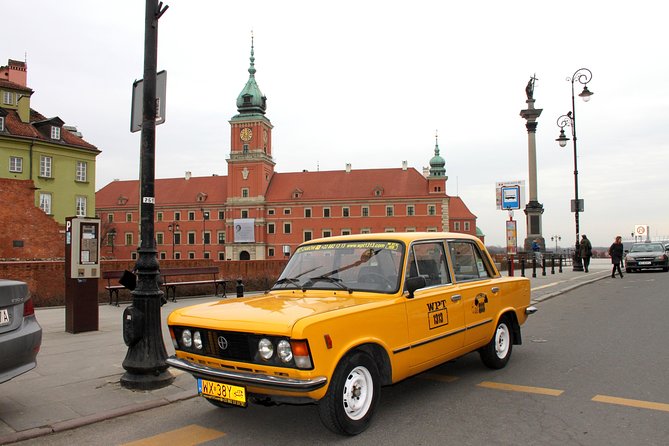
- A Polish Fiat becomes part of the sightseeing: The 125p is a former Communist-era workhorse and an eye-catching way to move around Warsaw.
- You cover both sides of the Vistula: The route links the rebuilt center with Praga, one of the least damaged parts of the city.
- The history is serious and direct: Expect discussion of Nazi occupation, the Warsaw Ghetto, the 1944 Warsaw Uprising, and Communist Poland.
- Short walks break up the driving: You stop at monuments, squares, wall remnants, and historic streets rather than staying in the car for four hours.
- The route can be adjusted: Guides have substituted places such as Łazienki Palace when guests had already seen the Palace of Culture and Science.
- Pickup keeps the half-day easy: Central hotel pickup and return are offered, with the Palace of Culture and Science used as the main meeting point.
Why the retro Fiat works so well in Warsaw
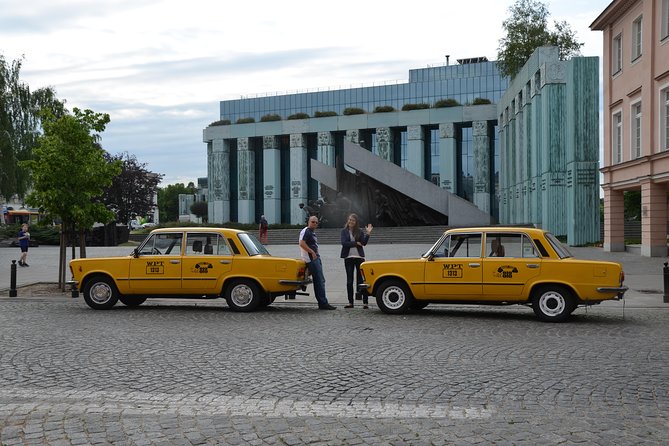
A four-hour Warsaw tour needs wheels. The city is spread out, and its important stories are not gathered in one compact center. The Old Town sits apart from the former ghetto sites, while Praga lies across the Vistula. Walking between all of these areas would take much of your day.
The Fiat 125p solves that problem in an entertaining way. This boxy Polish car is not just a prop for photographs. It connects naturally with the story of postwar Poland and the Communist period. You will likely notice people looking at the car as it passes, and the vehicle gives the tour a clear identity that a standard sedan would not have.
You also get a private vehicle and guide for your group alone. That matters because Warsaw’s history raises plenty of questions. You can stop to ask what happened to a building, why a street looks new, or how the city changed after 1945. Guides have also tailored routes around prior sightseeing, family connections, and personal interests.
The experience mixes driving with short walks. That makes it suitable if you want to limit long periods on foot, though you still need to get out at monuments and historic areas. Think of it as a moving introduction to Warsaw, not a museum tour with a car attached.
More Historical Tours in Warsaw
- Warsaw: POLIN Museum of the History of Polish Jews Ticket
★ 4.7 · 1,142 reviews - Warsaw: Chopin Concert at Historical Venue in Old Town
★ 4.7 · 445 reviews - Small-Group Historical Guided Tour of Warsaw with pick up/drop off. Public Tour.
★ 4.5 · 343 reviews
Old Town and Castle Square: a rebuilt center with older roots
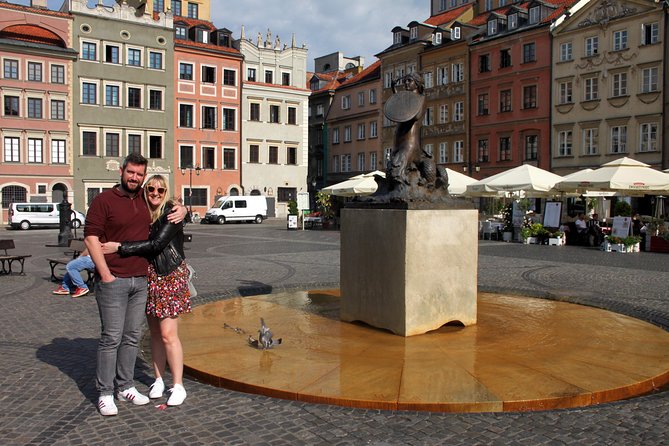
The tour begins with Warsaw’s UNESCO-listed Old Town. At first glance, the colorful façades, narrow streets, and market square look like a perfectly preserved medieval quarter. The more important fact is that much of this center was rebuilt after World War II.
Your guide points out the four buildings that survived the war, then explains how the rest of the district was reconstructed. This is one of the best places to understand Warsaw’s unusual character: the city feels historic, but much of what you see is the result of an enormous postwar rebuilding effort.
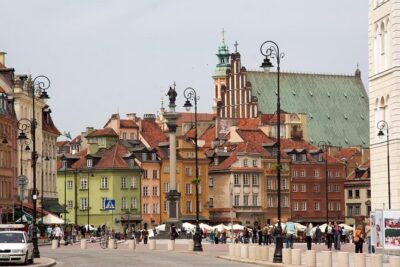
Castle Square provides a natural link between the Old Town and the Royal Route. Its focal point is the column of King Sigismund III Vasa, who moved Poland’s capital from Kraków to Warsaw in the late sixteenth century. The square also faces the Royal Castle, so you get a useful orientation point even if you do not go inside.
The stop is short, about 15 minutes, after roughly an hour in the Old Town. That timing is useful for a first look, but not enough for a full Old Town visit. If you want to enter the Royal Castle or spend time inside the cathedral, you will need to return separately.
St. John’s Archcathedral and the former city gate
The Archcathedral of St. John the Baptist is only a brief stop, but it carries a lot of weight. Your guide explains who is buried there and how German forces destroyed the church during World War II.
The point is not simply to admire the brick Gothic-style exterior. It is to see another example of Warsaw’s destruction and reconstruction. As the group leaves the Old Town through the site of a former city gate, the tour shifts from royal Warsaw to the places tied more closely to occupation and resistance.
The ten-minute visit will suit you if you want context and an exterior look. It will not suit you if you expect time for a quiet interior visit or a detailed architectural study.
Warsaw Uprising Monument: the story behind the 1944 revolt
The Warsaw Uprising Monument honors the Polish civilians and resistance fighters who fought German forces in 1944. The bronze figures capture the urgency of the uprising, and the setting gives your guide a chance to explain why the revolt remains central to Warsaw’s identity.
This is one of the moments when a private guide helps. The subject is difficult, and dates alone do not explain what the uprising meant for ordinary residents. Guides on this tour have been praised for explaining Warsaw’s wartime past from social and political angles, not just pointing at statues.
The planned stop lasts about ten minutes. I would treat it as an introduction and ask questions while you are there. If this subject is a main reason for booking, tell the guide in advance so more of the drive can focus on uprising-related sites.
Same city, a completely different kind of day:
- Warsaw: Chopin Concert in the Old Town
★ 4.8 · 2,287 reviews - Warsaw: Traditional Galar Cruise on The Vistula River
★ 4.6 · 1,640 reviews - Warsaw: Old Town Highlights Walking Tour in English
★ 4.7 · 1,516 reviews - Warsaw Concert: Chopin – Painted by Candlelights with Wine
★ 4.8 · 1,442 reviews
POLIN and the Monument to the Ghetto Heroes
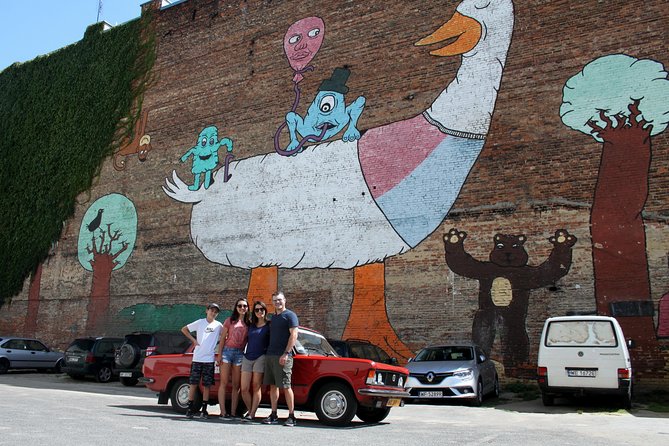
The route then turns toward the former Jewish ghetto and the POLIN Museum of the History of Polish Jews. You see the museum from outside and hear about the long history of Poland’s Jewish community. The building itself is modern and striking, but this tour keeps the focus on the surrounding streets and the people connected with them.
At the nearby Monument to the Ghetto Heroes, the guide discusses Mordechai Anielewicz and the 1943 Warsaw Ghetto Uprising. You also hear about the basalt used for the monument. That detail may seem small, but it opens the door to the political symbolism built into the memorial.
This part of the tour is emotionally serious. You will not get a full museum visit, and the POLIN stop is about 15 minutes. If you want the full story of Polish Jewish life, plan separate time for POLIN. The Fiat tour adds location and context that an indoor visit cannot provide, while the museum offers far more detail than a short exterior stop.
Ghetto wall remnants and the city’s missing streets
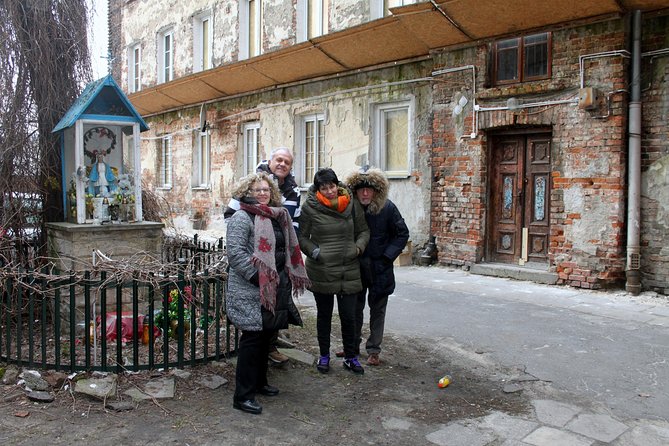
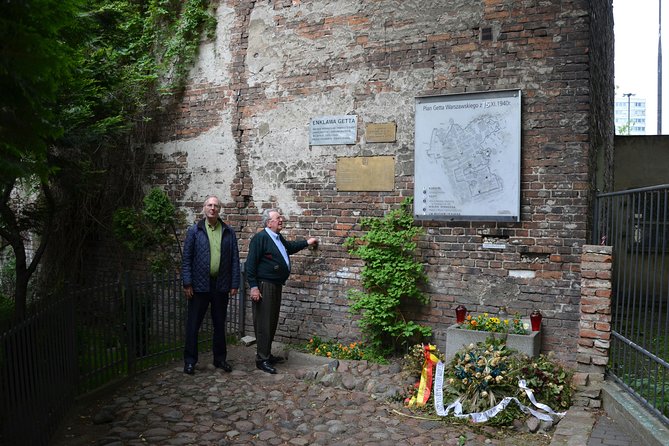
One of the most affecting parts of the route is the fragment of the ghetto wall. Only small sections remain, and that is precisely why the stop matters. The remnants are easy to miss when you explore Warsaw on your own, especially because modern streets and buildings now occupy much of the former Jewish quarter.
The guide helps you picture the scale of the ghetto and explains how the war changed this part of the city. You also hear about nearby places tied to the Warsaw Uprising. The stop lasts around 30 minutes, giving you more time to look around and ask questions than at some of the central monuments.
I would bring a phone or camera, but I would use it respectfully. This is not a colorful sightseeing pause. The value is in understanding what is absent, what was destroyed, and how little physical evidence remains.
The route also touches on the departure point for Treblinka, the extermination camp associated with gas chambers. The tour does not take you to Treblinka, but the reference places Warsaw’s wartime story within the wider system of Nazi mass murder. That context can make the city’s memorials feel less isolated from the events that shaped them.
Communist Warsaw at the Palace of Culture and Science
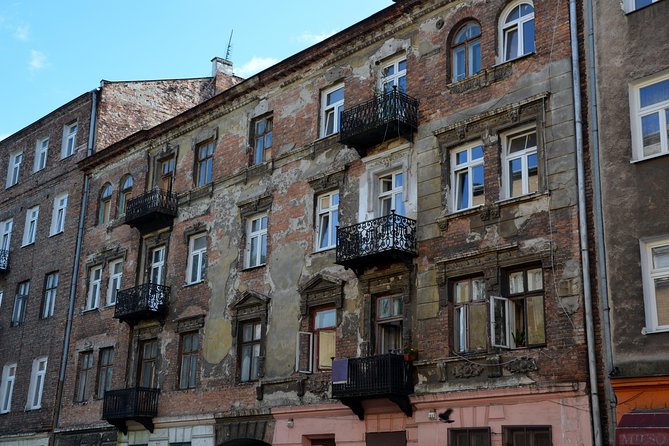
The Palace of Culture and Science is Warsaw’s most recognizable Communist-era building. The tour gives you time to see it and hear why it remains such a charged symbol.
Its size and design reflect the political power of the Soviet period. For some people, it is an impressive city landmark. For others, it is a reminder of outside control and postwar political pressure. Your guide can connect the building to everyday life in Communist Poland, including the famous black market that operated during that period.
The stop takes about 15 minutes. You will not be touring every floor or visiting an interior exhibit, but you get the building’s place in the skyline and in Polish memory. If you have already seen it, say so. Guides have changed the route for guests and substituted places such as Łazienki Palace when that made better use of the afternoon.
Praga Północ: Warsaw’s older, rougher side
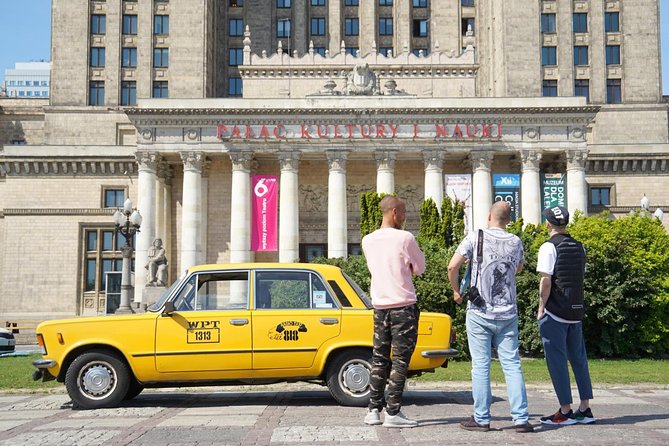
Crossing to Praga Północ gives the tour a different rhythm. This district was far less damaged during World War II than central Warsaw, so it preserves streets and buildings that disappeared elsewhere. It is one of the few places where you can get a clearer feel for prewar Warsaw’s physical character.
The stop lasts about 30 minutes, and guides may point out old architecture and street art. The area is not polished in the same way as the rebuilt Old Town, and that is part of its appeal. You see a less carefully packaged side of the city, with traces of age beside newer creative work.
Praga is also a useful counterpoint to the war story. Central Warsaw was destroyed and reconstructed. Praga survived more of the physical conflict, so its streets tell a different story. The comparison helps you understand why Warsaw can change so sharply from one neighborhood to the next.
What the four hours feel like
Four hours is enough to get your bearings and learn the main chapters of Warsaw’s twentieth-century story. You will see the Old Town, Royal Route, former ghetto area, Palace of Culture and Science, and Praga without spending the whole day on foot.
The pace is active but not rushed in the same way as a large bus tour. The itinerary includes driving between stops and short walks at each site. Because the tour is private, your guide can spend more time on subjects you care about and less time on places you have already visited.
Still, you should set the right expectation. This is not a slow architectural tour, a full Jewish history course, or a full-day museum program. The POLIN Museum, Royal Castle, and other interiors are seen from outside unless you arrange separate visits. The tour’s strength is connection: the guide links scattered places into one clear story.
The Fiat can also be warm in summer. One report specifically noted that the car had no air-conditioning, so I would consider the weather when booking. On a mild day, the unusual vehicle adds charm. On a very hot day, a regular modern car may be more comfortable.
Guides, flexibility, and the personal touch
The strongest part of this experience is the guide. Names associated with particularly praised tours include Karol, Agata, Martin, Konrad, Max, Hania, Alice, and Jakub. The important point is not choosing one name as a guarantee, but recognizing the type of guide the company uses: local, highly engaged, and comfortable discussing history in English.
Guides have offered Polish snacks, paczki, and vodka during some tours. Those extras are not presented as a fixed promise, so do not book solely for them. They show the friendly, personal style that can make a private tour feel more like an outing with a well-informed local than a scripted ride.
Hania, in particular, was noted for adjusting explanations to a guest’s interests rather than giving only standard facts. Konrad has changed routes, offered restaurant suggestions, and provided snacks. Max has been praised for showing old photographs and adding less obvious sights. Those details matter because a private tour is only as good as the conversation inside the car.
English is the offered language. You receive a professional local guide, private transport, and pickup and return from central locations. If your hotel lies outside the normal pickup area, contact the provider before booking to work out another meeting place.
Price, pickup, and who gets good value
At $108.28 per person, the price is easiest to judge by group size. For one person, it is a significant half-day expense. For a couple or small group, it buys a private car, an English-speaking guide, central pickup, and a route that covers several neighborhoods in four hours.
The tour is especially useful if you have only one day in Warsaw, are arriving for a short stay, or prefer not to walk long distances. It also makes sense if you want to see both sides of the river and understand how wartime destruction shaped the modern city.
You get less value if you want long museum visits or already know Warsaw well. A standard walking tour may be better for a detailed Old Town visit, while a dedicated POLIN visit is better for Polish Jewish history. This Fiat tour earns its price through range, flexibility, and private attention.
The booking page lists free cancellation up to 24 hours before the start time. The meeting point is at the Palace of Culture and Science, though central hotel pickup may be arranged. The activity returns to the meeting point unless your guide agrees to another central drop-off.
Should you book the Fiat tour?
Book it if you want a lively first look at Warsaw, have limited time, or care about the city’s difficult twentieth-century history. You will cover more ground than on foot, cross from the rebuilt center into Praga, and see wartime sites that are easy to miss without local help.
I would also choose it for a private family or small-group outing, especially if everyone has different interests. Tell the guide what you have already seen and what matters most. The route can be more useful when it is shaped around you.
Skip it if you want to spend hours inside museums, require modern-car comfort, or prefer a slow walk with long stops. For everyone else, the retro Fiat adds character while the guide supplies the meaning. It is a strong four-hour introduction to a city that has been destroyed, rebuilt, occupied, and reshaped many times.
FAQ
How long is the private Warsaw Fiat tour?
The tour lasts approximately four hours.
What vehicle is used?
Transport is provided in a private retro Fiat 125p.
Which language is offered?
The tour is offered in English.
Is hotel pickup available?
Yes. Pickup and drop-off are available from central locations. The guide may collect you from your hotel lobby or meet you in front of the building. If your hotel is outside the pickup area, you should contact the provider to discuss another arrangement.
Where is the main meeting point?
The listed meeting point is the Palace of Culture and Science at plac Defilad 1 in Warsaw.
Which areas does the tour visit?
The route includes the UNESCO-listed Old Town, Castle Square, St. John’s Archcathedral, the Warsaw Uprising Monument, the POLIN Museum area, the Monument to the Ghetto Heroes, a fragment of the ghetto wall, the Palace of Culture and Science, and Praga Północ.
Does the tour enter the POLIN Museum or Royal Castle?
The supplied tour details describe seeing POLIN from outside and visiting the Old Town and Castle Square. They do not include admission to POLIN or the Royal Castle.
Is this a private tour?
Yes. Only your group participates in the activity.
Can the itinerary be changed?
The tour is described as personalized, and guides have adjusted routes for guests who had already visited certain sights. You should discuss your priorities with the guide, especially if you want to replace a planned stop.
What is the cancellation policy?
You can cancel up to 24 hours before the experience start time for a full refund. Cancellations or changes made less than 24 hours before the start time are not accepted for a refund.
Just added around Warsaw
- Wolfs Lair and Swieta Lipka Small Group Tour from Warsaw with Lunch★ 4.5 · 21 reviews
- Wolf’s Lair & Treblinka Tour in 1 day from Warsaw★ 5.0 · 37 reviews
- Wolfs Lair “Hitler’s Headquarters” – Full Day Tour from Warsaw by private car★ 4.5 · 4 reviews
- Tour from Warsaw: Wolf’s Lair, Hitler’s HQ Zones I and II★ 5.0 · 32 reviews
- Wolf’s Lair Private Day Trip from Warsaw★ 5.0 · 50 reviews
- Warsaw Must-See Local City Tour with Antek and Tomek★ 5.0 · 51 reviews
- Off the Beaten Track in Warsaw: Private City Tour★ 4.5 · 9 reviews
- Warsaw’s Old Town A Self-Guided Audio Tour★ 4.5 · 10 reviews
Historical Tours, compared.

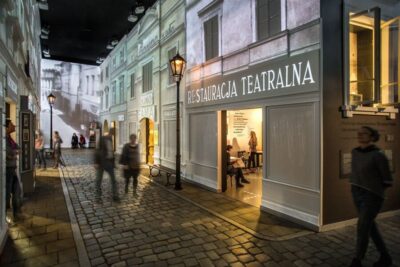
POLIN Museum of the History of Polish Jews Ticket
Read our review →
Gdańsk City Sights & History Guided Walking Tour in English
Read our review →


Small-Group Historical Guided Tour of Warsaw with pick up/drop off. Public Tour.
Read our review →Browse the lists this tour appears in