
Reviewed · HISTORICAL TOURS
Historic Heart of Warsaw Walking Tour
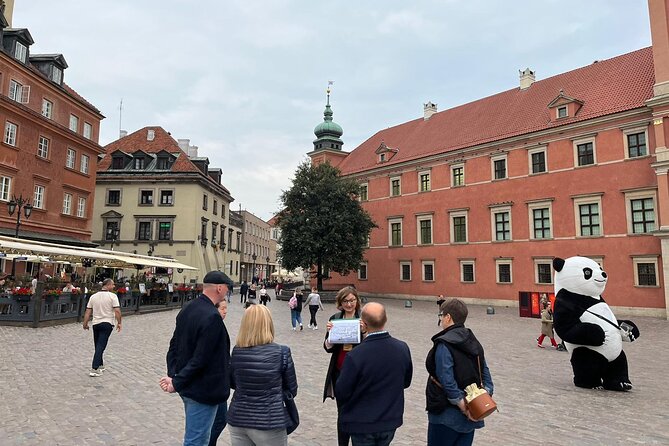
Warsaw’s story changes sharply over these two hours. You begin beside the Royal Castle and colorful Old Town squares, then pass the Warsaw Ghetto boundary markers and finish at the 1944 Uprising Monument. That arc gives you more than pretty buildings: it shows how royal Warsaw, Jewish Warsaw, and wartime Warsaw fit into one city.
I like the strong route and the way the guide connects major sights with small details, such as the Wishing Bell and the old lookout at Gnojna Gora. I also like the guides’ human touch. Olivia is singled out for her humor, while Agnieszka is praised for clear explanations and warm answers to questions. The main drawback is pace: eleven stops in about two hours means you will see many places from the outside, and museum tickets cost extra.
Key points at a glance
- A city story in one walk: The route moves from the Royal Castle and medieval defenses to the Warsaw Ghetto markers and the 1944 Uprising Monument.
- A lively English-speaking guide: Olivia and Agnieszka are named guides associated with funny, clear, and engaging explanations.
- Small details among famous sights: Kanonia, the Wishing Bell, and Gnojna Gora add character beyond the usual Old Town circuit.
- Good value for a first look: At $28.75, the tour covers a lot of ground and includes visual aids, city tips, and food and drink recommendations.
- Accessible in practical terms: The walk is wheelchair-friendly, service animals are welcome, and most people can take part.
- A point-to-point route: You finish at the Warsaw Uprising Monument, about 15 minutes on foot from the starting point.
Why this two-hour route works
This is a useful first introduction to Warsaw because it avoids treating the Old Town as a stand-alone postcard. You see the Royal Castle, cathedral, market square, and Barbican, but the route keeps moving toward the city’s modern memorials and difficult wartime past.
The walk begins at Sigismund’s Column in Castle Square and ends at plac Krasińskich. That means you do not return to your starting point, but the guide can explain how to get back if needed. The route is about 15 minutes of walking from start to finish in a direct sense, but the full experience includes plenty of stops and commentary.
The maximum group size is 15. That is large enough to give the tour energy, but small enough for questions to remain practical. Some bookings have been one-on-one, which can turn the walk into a more personal conversation, though you should not count on having a private tour.
At $28.75 per person, the value comes from the guide and the amount of ground covered rather than from paid admissions. You receive a pre-tour information pack, visual aids, and suggestions for other places to visit, eat, and drink. If you want to enter the Royal Castle or Maria Skłodowska-Curie Museum, you pay separately, so budget for those visits only if you plan to return or extend your day.
More Historical Tours in Warsaw
- Warsaw: POLIN Museum of the History of Polish Jews Ticket
★ 4.7 · 1,142 reviews - Warsaw: Chopin Concert at Historical Venue in Old Town
★ 4.7 · 445 reviews - Small-Group Historical Guided Tour of Warsaw with pick up/drop off. Public Tour.
★ 4.5 · 343 reviews
Starting with kings at Castle Square
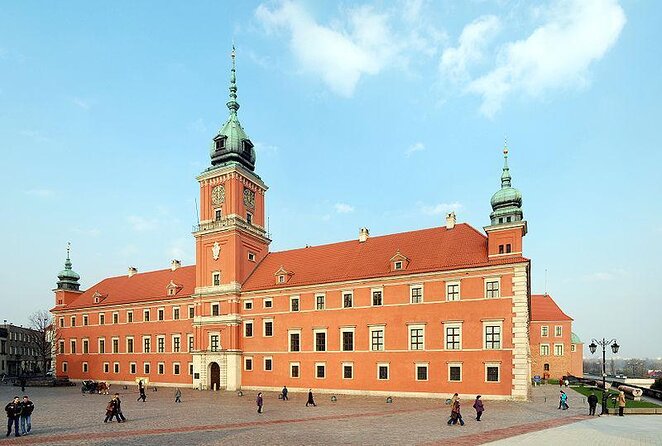
The meeting point is Sigismund’s Column, at plac Zamkowy. This is a practical starting place because the column is easy to identify, and the Royal Castle is directly beside it.
You begin with the Royal Castle, described as a beautiful building and an important witness to Warsaw’s past. The stop lasts about 15 minutes. That is enough time for an outside explanation and orientation, but not enough for a proper museum visit.
The Royal Castle Museum charges its own admission, and that ticket is not included. I would treat this stop as a preview. If royal interiors and collections matter to you, return later with more time rather than trying to squeeze the museum into the walk.
Sigismund’s Column itself receives about 10 minutes. The monument honors one of Poland’s kings and gives the guide a natural way to explain Warsaw’s royal identity. It is also a good place to get your bearings before the route turns into the lanes and squares of the Old Town.
Kanonia, the bell, and a quieter side of the Old Town
Kanonia is a small square behind the Cathedral of Saint John the Baptist. It is one of the more appealing parts of the route because it shows a quieter, more tucked-away side of central Warsaw. The stop lasts about 10 minutes, and the setting gives you a break from the main square’s grander scale.
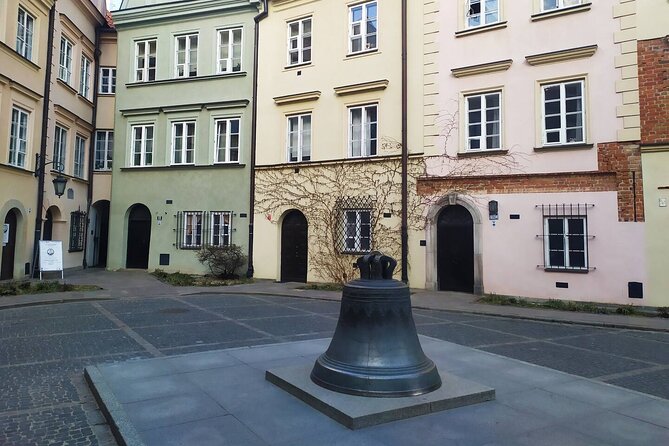
The Wishing Bell takes only five minutes. It is an old 17th-century bell that still draws people who come to make a wish. This is not a major museum stop, and that is the point. Small objects like this help keep the walk from becoming a parade of only famous monuments.
The guide provides visual aids, which can be useful when the story involves buildings, boundaries, or changes that are hard to grasp from the pavement. You are not simply handed a list of dates. You get a walking explanation, with the chance to ask about details as they come up.
Gnojna Gora and the Vistula view
Gnojna Gora is a lesser-known lookout point in the Old Town. From here, you can look toward the Vistula River and the opposite side of the city.
This stop lasts about 10 minutes, making it one of the better pauses for a broader view. Much of the route is close-up: façades, monuments, church walls, and narrow lanes. Gnojna Gora gives you space to see beyond the Old Town and understand its position beside the river.
The name may sound less romantic than the view, but that is part of Warsaw’s appeal. The city has plenty of polished landmarks, yet its character also comes through in places that are not the headline sights. I would keep your camera ready here, but listen closely too. The stop is brief.
More Walking Tours in Warsaw
- Warsaw: Old Town Highlights Walking Tour in English
★ 4.7 · 1,516 reviews - Warsaw: Old Town Guided Walking Tour
★ 4.9 · 599 reviews - Half-Day Polish Food Walking Tour with Guide and Dinner
★ 4.5 · 381 reviews - Warsaw: Warsaw Ghetto Private Walking Tour with Hotel Pickup
★ 4.9 · 369 reviews
The Old Town market square and Warsaw’s mermaid
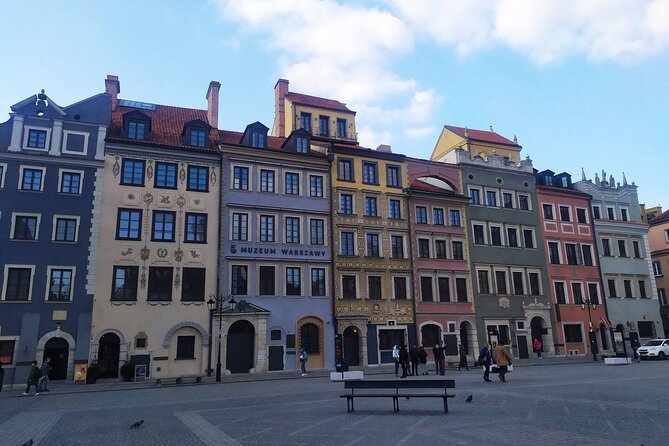
Rynek Starego Miasta is the heart of Warsaw’s Old Town. You spend about 10 minutes among colorful townhouses and the monument of Warsaw’s mermaid, the city’s symbol.
This is the classic picture-postcard part of the walk, but it is more useful with a guide. The colorful façades can blur together when you first arrive. A guide helps you notice the square’s role in the city and gives the mermaid symbol a place in Warsaw’s identity.
The short time here is both a benefit and a limit. You get a clear introduction without losing half the tour in one square. But if you want photographs, a slow look at the façades, or a café break, plan to return later.
The tour is conducted in English. Comments about Olivia describe a guide with a good sense of humor, while Agnieszka is noted for explaining things clearly and answering questions with care. Those qualities matter in a square like this, where a dry list of facts would quickly become forgettable.
Saint John’s Cathedral and the medieval Barbican
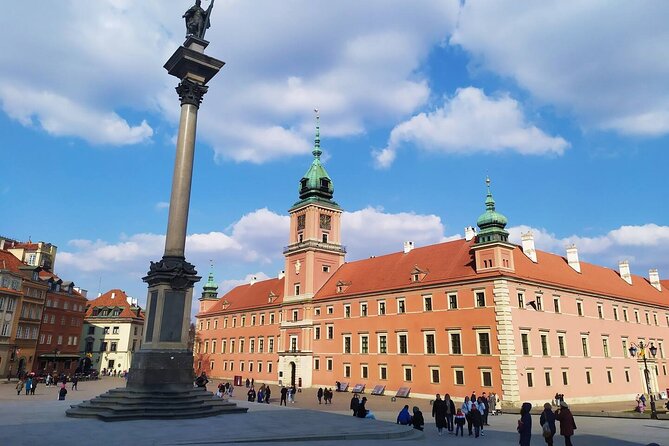
The Archcathedral of Saint John the Baptist is described as the most important church in Warsaw. The visit lasts about 10 minutes. This is a short stop, so expect an introduction rather than a long examination of the interior.
The cathedral adds a solemn note after the lighter stops at Kanonia and the Wishing Bell. It also helps explain the Old Town as a place of civic and religious importance, not simply a collection of attractive buildings.
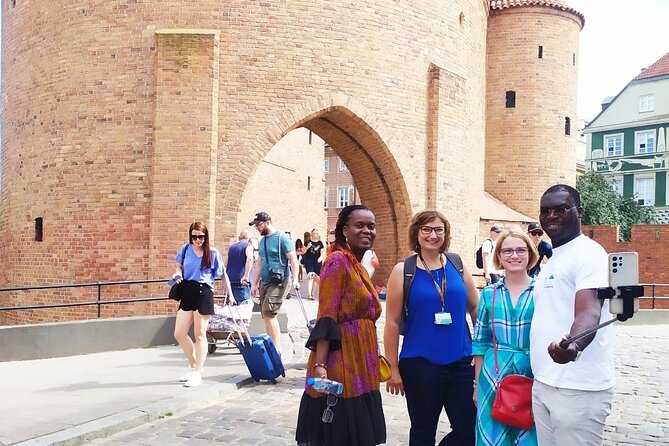
The Warsaw Barbican follows with a five-minute stop. These medieval defensive walls once encircled Warsaw. The brief visit gives you the basic purpose of the structure and a sense of the old city’s defenses.
Do not expect a full archaeological or military lesson in five minutes. The Barbican works best as part of the route’s larger rhythm. You see royal authority, religious authority, market life, and defense in quick succession.
Maria Skłodowska-Curie and a major Polish life
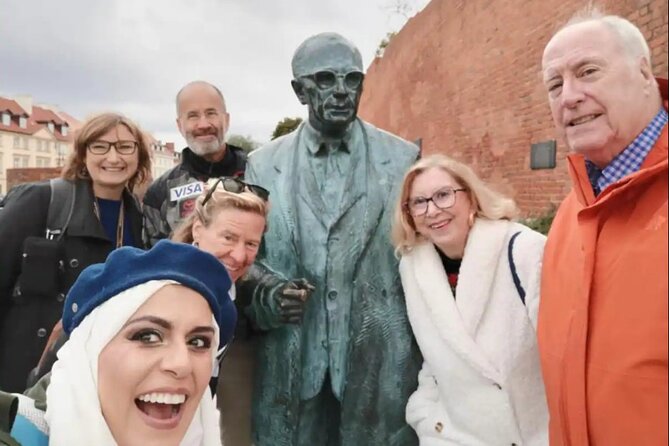
The Maria Skłodowska-Curie Museum is a particularly worthwhile inclusion because it brings one famous Polish figure into the walk. The museum occupies her birthplace, and Maria Skłodowska-Curie was a double Nobel Prize winner.
The stop lasts about 10 minutes. Admission is not included, so you will need a separate ticket if you want to go inside. As with the Royal Castle, the tour gives you an introduction, not a complete museum visit.
I like this stop because it broadens the story beyond kings and wartime monuments. It points to science, personal achievement, and the international importance of a Polish-born figure. If the museum interests you, note its location during the tour and return when you can give it proper attention.
The Warsaw Ghetto boundary markers
The route then turns toward a more painful part of Warsaw’s past. The boundary markers are memorial plaques showing the maximum perimeter of the former Warsaw Ghetto, established in 1940.
This is a quiet, serious stop. You are not looking at a grand building or a scenic viewpoint. Instead, the plaques mark an absence and make the scale of the former boundary easier to understand.
The stop is planned for about 10 minutes. That gives the guide time to explain what the markers mean without turning the moment into a rushed photo opportunity. Be prepared for the tone of the walk to change here.
This part of the route is one reason the tour is more useful than a simple Old Town orientation. Warsaw’s past cannot be understood through royal buildings alone. The ghetto markers bring the city’s wartime story into the walking experience in a direct, physical way.
Ending at the 1944 Warsaw Uprising Monument
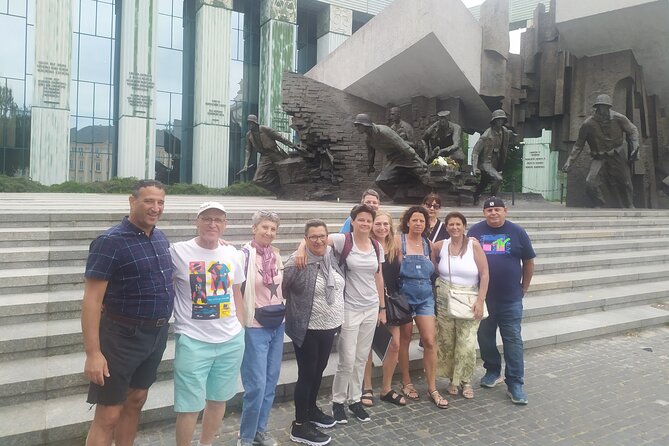
The final stop is the Warsaw Uprising Monument at plac Krasińskich. It is dedicated to the Warsaw Uprising of 1944, and the tour ends in front of it.
Ending here gives the route a clear emotional and historical finish. You begin with royal power at the castle and close with a monument to resistance during the Second World War. The sequence makes the city’s changing identity easier to follow.
The end point is about a 15-minute walk from the meeting point. That is worth remembering when planning your next activity. You may want to continue from the monument, or you can ask the guide for directions back to Castle Square.
The monument stop lasts about 10 minutes. As with the ghetto markers, the value comes from being in the place and hearing the context, not from spending a long time there. A guide who can explain the city plainly and respectfully makes a real difference.
What you get beyond the walking route
The pre-tour information pack includes frequently asked questions and useful links. That may sound basic, but it can help you arrive with a working idea of Warsaw instead of spending the first hour trying to sort out the map.
You also receive recommendations for more places to visit, along with suggestions for where to eat and drink. I would use these as a starting point rather than a full city plan. The tour is a two-hour introduction, and the recommendations can help you decide what deserves a longer visit afterward.
The mobile ticket keeps the booking simple. The tour is offered in English, and confirmation is provided when you book. It is near public transportation, service animals are allowed, and the activity is wheelchair-friendly. Most people can participate, though anyone who needs more detail about surfaces or walking conditions should confirm those needs before booking.
Free cancellation is available up to 24 hours before the start time for a full refund. Changes or cancellations made inside that 24-hour window are not accepted for a refund, with cut-off times based on local time.
Who will get the most from this tour
I would recommend this walk to a first-time visitor who wants a clear framework for Warsaw. It is also a good choice if you have only a short stay and want to cover the main Old Town sights while still reaching the city’s wartime memorials.
History-minded visitors will appreciate the route’s range. You move from royal Warsaw to religious and defensive landmarks, then to Maria Skłodowska-Curie, the ghetto boundary, and the Uprising Monument.
It suits people who like a guide with personality. Olivia and Agnieszka are both associated with comments about humor, clear explanations, and good answers to questions. That is important because the itinerary moves quickly and a dry delivery would make eleven stops feel like a checklist.
Families and mixed-age groups may also find the format useful, since the route changes scenery often and includes both famous monuments and small curiosities. The wheelchair-friendly design and allowance for service animals make it more practical for many visitors, though the exact needs of each participant should still be checked.
I would hesitate if your main goal is extended museum time. The Royal Castle and Maria Skłodowska-Curie Museum are both outside the price, and the schedule allows only short introductions. You may also prefer a slower route if you want long photo stops or extended time inside the cathedral.
Should you book the Historic Heart of Warsaw Walking Tour?
Book it if you want a fast, well-shaped introduction to Warsaw that does not stop at the prettiest streets. The route covers the city’s royal center, Old Town traditions, river view, science heritage, Jewish history, and wartime resistance in roughly two hours.
At $28.75, it is a fair price for an English-speaking guide, visual aids, pre-tour information, and practical suggestions for the rest of your visit. Just remember that the fee pays for the walking experience, not entry to the Royal Castle or Maria Skłodowska-Curie Museum.
If you want a single orientation walk with a serious historical arc, I would book it early. The tour is often reserved well ahead, with an average booking lead time of 68 days. If you prefer a leisurely museum day, use this as an introduction and return to the places that catch your interest.
FAQ
How long is the Historic Heart of Warsaw Walking Tour?
The tour lasts approximately two hours.
What language is the tour offered in?
The tour is offered in English.
Where does the tour begin?
It begins at Sigismund’s Column in plac Zamkowy, Warsaw.
Where does the tour end?
It ends in front of the Warsaw Uprising Monument at plac Krasińskich.
How far is the end point from the meeting point?
The end point is about a 15-minute walk from the starting point.
Is admission to the Royal Castle included?
No. Admission to the Royal Castle Museum is not included.
Is admission to the Maria Skłodowska-Curie Museum included?
No. Admission to the museum is not included.
Is the tour wheelchair-friendly?
Yes, the tour is wheelchair-friendly.
Are service animals allowed?
Yes, service animals are welcome.
How many people can join the tour?
The maximum group size is 15 people.
Can I cancel for a full refund?
Yes. You can cancel at least 24 hours before the start time for a full refund. Cancellations or changes made less than 24 hours before the start time are not refunded.
Just added around Warsaw
- Wolfs Lair and Swieta Lipka Small Group Tour from Warsaw with Lunch★ 4.5 · 21 reviews
- Wolf’s Lair & Treblinka Tour in 1 day from Warsaw★ 5.0 · 37 reviews
- Wolfs Lair “Hitler’s Headquarters” – Full Day Tour from Warsaw by private car★ 4.5 · 4 reviews
- Tour from Warsaw: Wolf’s Lair, Hitler’s HQ Zones I and II★ 5.0 · 32 reviews
- Wolf’s Lair Private Day Trip from Warsaw★ 5.0 · 50 reviews
- Warsaw Must-See Local City Tour with Antek and Tomek★ 5.0 · 51 reviews
- Off the Beaten Track in Warsaw: Private City Tour★ 4.5 · 9 reviews
- Warsaw’s Old Town A Self-Guided Audio Tour★ 4.5 · 10 reviews
Historical Tours, compared.

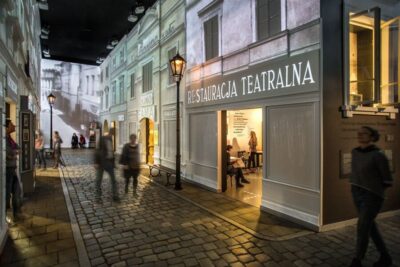
POLIN Museum of the History of Polish Jews Ticket
Read our review →
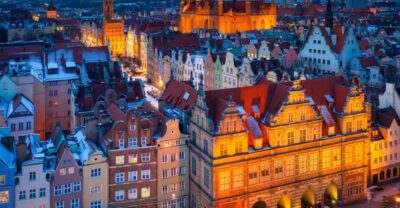
Gdańsk City Sights & History Guided Walking Tour in English
Read our review →


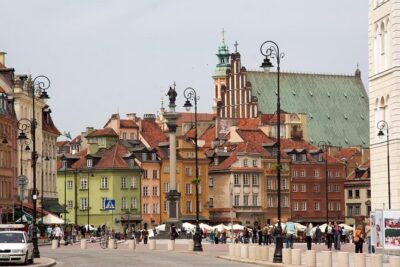
Small-Group Historical Guided Tour of Warsaw with pick up/drop off. Public Tour.
Read our review →Browse the lists this tour appears in