
Reviewed · WWII TOURS
Guided Tour of Plaszow Concentration Camp, Kraków
Plaszow is not a museum of intact barracks and guard towers. It is an open, quiet place where fragments, memorials, graves, and ordinary paths carry the weight of what happened here. I like this tour because the guide helps you read a site that can otherwise seem empty, and because the two-hour pace gives you time to stop at the major memorials rather than rush from one point to the next.
I also like the clear link between Plaszow and Oskar Schindler’s rescue work, a story that becomes more grounded when you see the camp connected to the city around it. The main consideration is simple: you must be ready for a serious walking visit with few preserved buildings and no light entertainment.
Key points at a glance
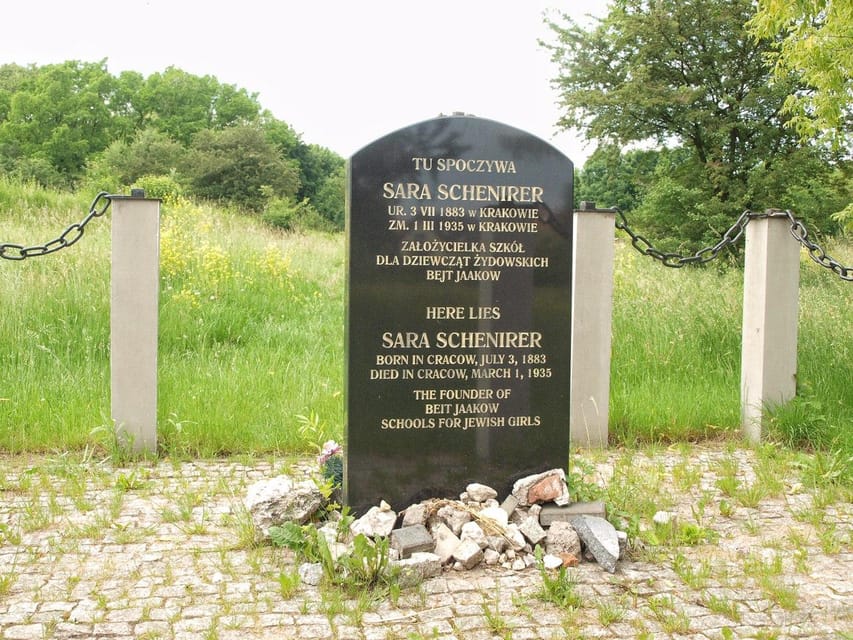
- The camp is built into Kraków’s former Jewish cemeteries: You’ll see traces of the burial grounds and paths once paved with broken gravestones.
- The Grey House and roll-call square anchor the visit: These surviving features help you understand how the camp was organized.
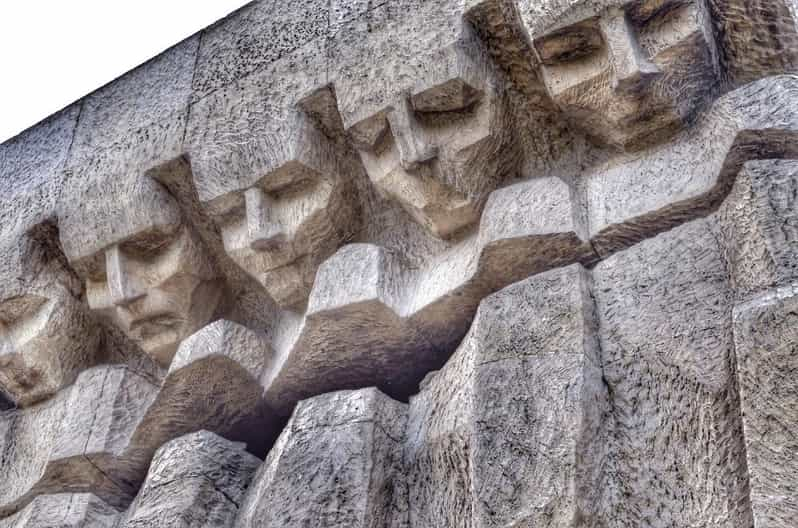
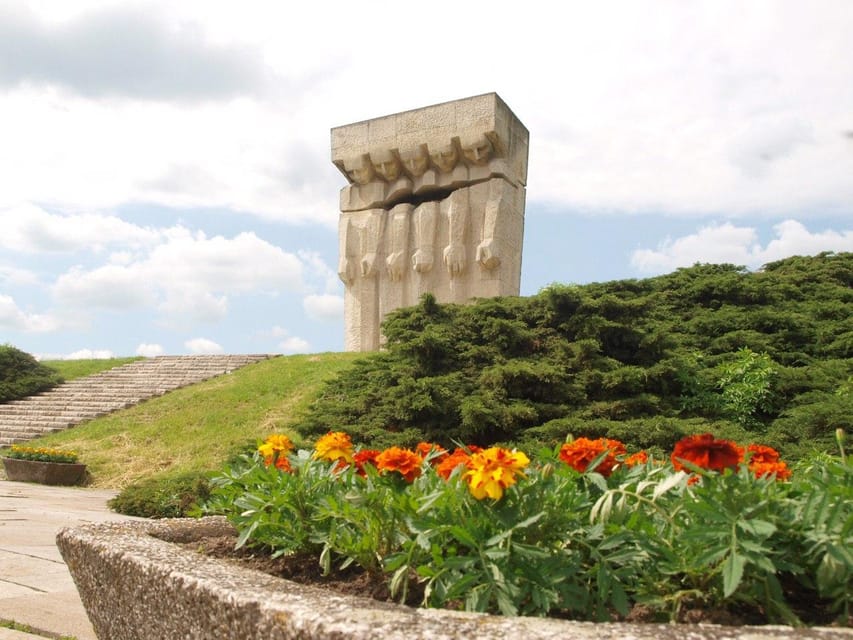
- The Monument of Torn-Out Hearts offers a major moment of remembrance: The route pauses at important memorials rather than treating them as quick photo stops.
- Schindler’s story is explained in its proper setting: You learn how work permits and factory transfers helped save more than 1,000 Jewish prisoners.
- The English-language tour lasts two hours: One tram ticket is included, and you should arrive 10 minutes early.
- The setting calls for reflection, not spectacle: Open ground and silence are central to the experience.
Reading Plaszow when very little remains
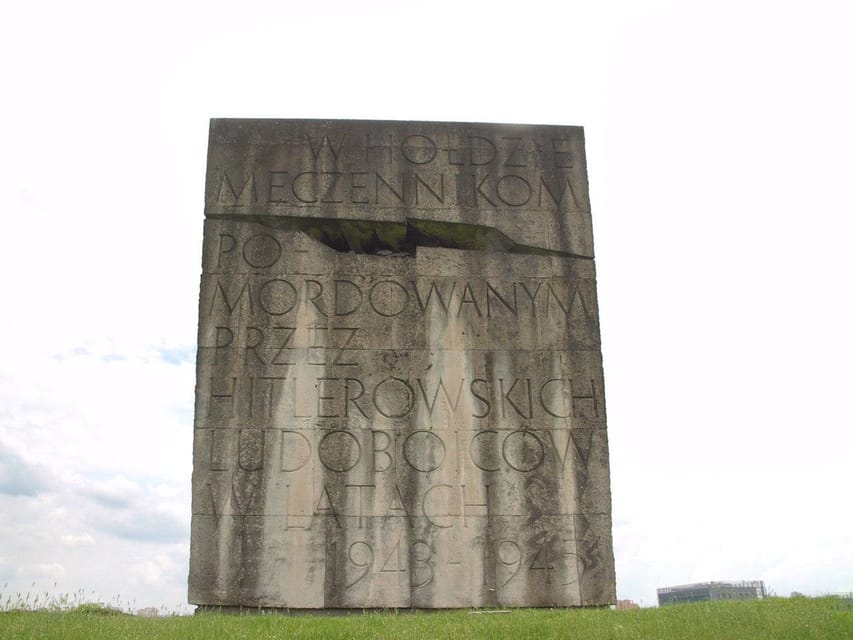
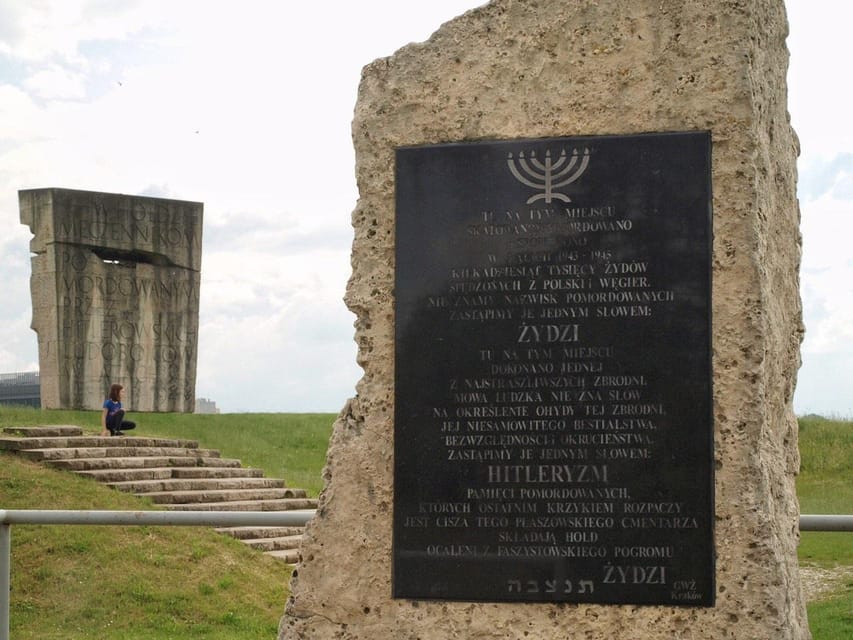
The first challenge at Plaszow is visual. At Auschwitz, surviving blocks and displays give you an obvious sense of place. At Plaszow, much of the camp has disappeared. You see open ground, slopes, traces of old boundaries, memorials, and a few remaining structures.
That can make a guided walk especially useful. Your guide pieces together the site and explains where the living quarters, hospital, administrative area, and industrial sections once stood. Without that help, you might pass a path or ruined building without knowing what it meant.
I find this kind of visit more demanding than a conventional museum tour. You have to listen, picture the missing structures, and accept that the physical remains are limited. In return, the quiet gives you room to think. There is no crowded exhibition competing for your attention.
Plaszow was created by the Nazi German occupiers in October 1942 on the grounds of two Jewish cemeteries. It first served as a forced-labor camp for Jews from the liquidated Kraków Ghetto. From July 1943, a penal-labor section also held Polish prisoners.
In January 1944, Plaszow became a concentration camp. It later served as a transit camp for Hungarian Jews sent onward to Auschwitz. More than 35,000 people were imprisoned here during the camp’s existence, and around 6,000 were murdered.
Those numbers are difficult to grasp on their own. The guide’s job is to connect them to specific parts of the grounds: execution sites, mass graves, the roll-call area, work zones, and memorials. That movement from general facts to particular places gives the history a human scale.
More WWII Tours in Krakow
- Krakow: Plaszow Concentration Camp Walking Tour
★ 4.8 · 39 reviews - Guided Tour in Kraków-Płaszów Former Concentration Camp
★ 5.0 · 19 reviews - Krakow World War II Private Tour
★ 5.0 · 16 reviews
The Grey House and the camp’s remaining structures
The Grey House is one of the key stops because it gives you a concrete link to the camp administration and its daily operation. A surviving building can make the past easier to picture, but it is important not to expect a fully preserved camp complex.
The route also reaches the ruins of the pre-burial hall. Its remains point back to the Jewish cemeteries that existed here before the camp. The site’s history is therefore layered: Jewish burial grounds were transformed into a place of imprisonment, forced labor, and murder.
You’ll also learn about traces of the cemetery boundaries and paths paved with fragments of gravestones. These details are hard to forget because they show how the Nazis treated the existing Jewish burial places. The ground itself became part of the machinery of the camp.
As you walk, the guide explains how different sections functioned. The camp was not one uniform area. It included living quarters, hospital facilities, administrative spaces, and industrial sections, each serving a different purpose in the system of forced labor and control.
The walk’s route is paced for reflection. That matters here. A faster visit might cover the same points but leave you with a list of facts rather than an understanding of how the camp operated.
The roll-call square and execution sites
The roll-call square helps you picture the daily discipline imposed on prisoners. People were gathered, counted, and controlled here. The space may look ordinary now, but the guide’s explanation gives it a clear role in the camp’s routine.
Executions took place at several sites within Plaszow. Mass graves and memorials now mark parts of the grounds, although the camp does not present every location with a large museum display or detailed indoor exhibit.
I appreciate that this tour treats those places with restraint. You are not pushed toward dramatic storytelling. Instead, the guide explains what happened, identifies the sites, and gives you time to consider the victims.
That approach also means you should dress and plan for a walking visit. The route lasts two hours, and the experience depends on moving between several parts of the former camp. The supplied information does not specify the exact walking distance, so you should allow enough time and energy for an outdoor route.
The tour is listed as wheelchair accessible. If accessibility is important for you, it is still sensible to confirm current route conditions when booking, since the site is open ground rather than a polished indoor museum.
The Monument of Torn-Out Hearts
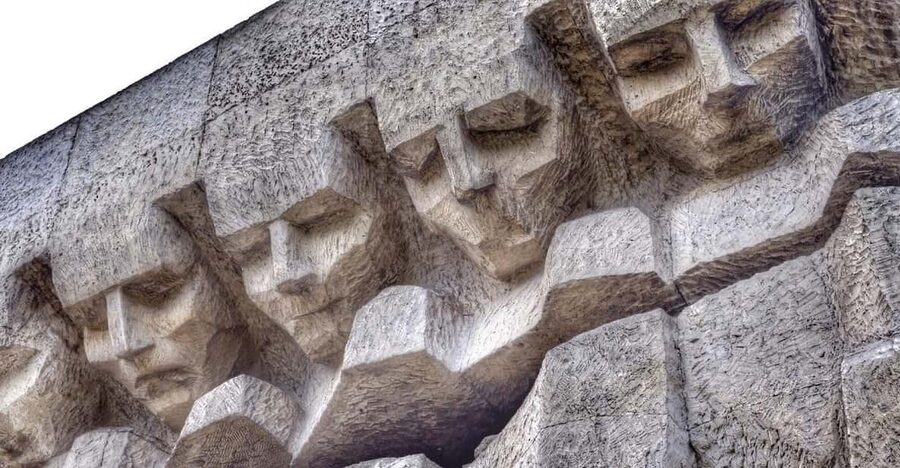
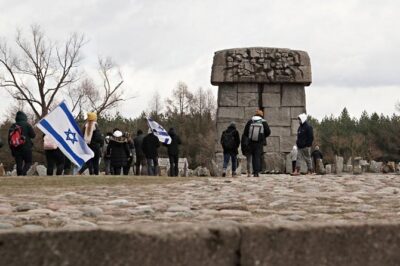
The Monument of Torn-Out Hearts is one of the main memorial stops. Its title alone points to the emotional nature of the visit, but the guide’s explanation gives the monument its place within the wider story of Plaszow.
Memorials matter here because so little of the camp remains. They help mark where memory is being preserved when the original buildings have vanished. They also shift the focus away from the camp’s perpetrators and toward the people who were imprisoned, abused, and murdered.
You should expect moments of silence and a serious tone. This is not a stop where a quick photograph tells the story. The value comes from hearing the context, looking carefully, and giving yourself time to absorb it.
For that reason, I would avoid scheduling this tour immediately before a packed sightseeing appointment. The two-hour duration is fixed, but your attention may need longer afterward. Plaszow is not difficult because of complicated logistics. It is difficult because of what the places represent.
Same city, a completely different kind of day:
- Kraków: Evening or Night River Cruise
★ 4.0 · 7,386 reviews - Krakow: Oskar Schindler’s Factory Entry Ticket & Guided Tour
★ 4.2 · 3,793 reviews - Krakow: City Sightseeing Tour by Electric Golf Cart
★ 4.5 · 3,264 reviews - Krakow: Schindler’s Factory Tour with Entrance Ticket
★ 4.5 · 3,182 reviews
Oskar Schindler’s connection to Plaszow
Oskar Schindler is often the name people bring to Plaszow, largely because of the film Schindler’s List. The connection is real, but the tour places it within the camp’s wider history rather than treating the site as a movie set.
Through his enamelware enterprise, Schindler obtained work permits for Jewish prisoners registered through Plaszow. Those permits helped shield them from further transports. Later, he organized their transfer to his wartime plant in Brünnlitz, saving more than 1,000 lives.
Seeing filming locations from Schindler’s List can add a useful layer for people who know the film. The guide can show where scenes were made and explain how the movie relates to the real camp. Still, the film is only one doorway into the history. Plaszow was much larger and more complex than the story of one rescuer.
I like that distinction. Schindler’s actions deserve attention, but they should not eclipse the tens of thousands of people imprisoned here or the thousands who were murdered. A good visit uses his story to help you understand the camp, then brings your focus back to the victims and the system that held them.
What the two-hour route gives you
Two hours is a useful middle ground. You get enough time for the main remains, memorials, cemetery traces, camp sections, and Schindler connections without committing to a full-day historical program.
The route includes:
- The Grey House
- The ruins of the pre-burial hall
- Traces of the former Jewish cemeteries
- The roll-call square
- Paths paved with fragments of gravestones
- Major memorials, including the Monument of Torn-Out Hearts
- Former living, hospital, administrative, and industrial areas
- Filming locations connected with Schindler’s List
The guide’s explanations are the thread holding these stops together. One highly praised guide was described as passionate and willing to answer detailed questions. Another visit involved a guide who took time to explain the camp carefully and respond to every question.
That is useful information for you, even though a specific guide name is not provided. The quality of this experience depends heavily on the person leading it. You are not simply following signs. You are relying on spoken context to understand a site with few visible remains.
The tour is offered in English, and group tours operate in one language only. Select English when booking if that is your preferred language. Look for the guide holding an excursions.city sign at the meeting point.
Is $29 a fair price?
At $29 per person, the tour is priced below many major guided museum experiences, but value here is not measured by the number of buildings you enter. You are paying for a licensed guide, historical interpretation, route planning, and one tram ticket.
I consider that fair for a two-hour specialist visit. Without a guide, you can walk through the grounds, but you may miss the meaning of the Grey House, the cemetery traces, the camp sections, and the execution sites. The guide turns scattered remains into a connected story.
The tram ticket is a small practical benefit rather than the main reason to book. Its value depends on the route and meeting arrangements for your chosen departure. The important point is that local transport is partly built into the price.
The tour also offers free cancellation up to 24 hours before the start and a reserve-now, pay-later option. Those terms help if your Kraków plans are still moving around, but arrive 10 minutes early. Once the group has left, latecomers cannot join and tickets are not refunded.
Who should book this Plaszow walk?
I would recommend it to you if you want to understand Kraków’s wartime history beyond the famous Schindler story. It suits visitors who prefer a guide’s explanation to reading a few plaques and trying to reconstruct the site alone.
It is also a good choice if you want a quieter memorial visit. The route is not built around spectacle, and the lack of preserved structures encourages a slower, more thoughtful kind of attention.
You may want to choose a different activity if you need a museum-style presentation with indoor exhibits, preserved rooms, and a large collection of objects. Plaszow cannot offer that. Its power comes from open ground, memorials, absence, and the knowledge of what happened there.
Families should consider the serious subject matter before booking. The supplied information does not set an age limit, but this is a Holocaust memorial site and concentration camp history tour, not a casual city walk.
Practical advice before you go
Arrive 10 minutes before the start and look for the guide with the excursions.city sign. The group will not wait for late arrivals, and missed departures are not refundable.
Wear clothing suited to an outdoor walk. The tour information does not give a weather plan or exact surface conditions, so it is sensible to prepare for time outside and walking between memorials and remaining structures.
If you use a wheelchair, the activity is listed as wheelchair accessible. Because Plaszow is an open former camp site, confirm any personal route needs before you arrive if you require specific assistance.
Keep your expectations focused. You are not coming for dramatic ruins or a long list of cinematic locations. You are coming to understand a difficult place through its few remains, its memorials, and a guide’s careful explanation.
Should you book the Plaszow tour?
Book this tour if you want a focused, serious introduction to Plaszow and prefer to have the camp explained as you walk. At $29, the licensed guide and two-hour route offer good value, especially because the site can be hard to interpret alone.
I would make it part of a wider Kraków history day, not your only Holocaust-related visit. The tour gives you the camp’s setting, memorials, victims, and Schindler connection in a manageable format. Just come prepared for open ground, limited remains, and a visit that asks for quiet attention.
FAQ
Where is the Plaszow Concentration Camp tour located?
The tour takes place at Plaszow in Lesser Poland, Poland, near Kraków.
How long does the guided tour last?
The guided walk lasts two hours.
What language is the tour conducted in?
The live tour guide speaks English. Group tours operate in one language, so select English when booking.
How much does the tour cost?
The listed price is $29 per person.
Is a guide included?
Yes. A licensed guide is included.
Is public transportation included?
One tram ticket is included with the activity.
Where do I meet the guide?
Look for the guide holding an excursions.city sign at the meeting point.
How early should I arrive?
Arrive 10 minutes before the tour begins. Latecomers cannot join after the group has departed, and their tickets cannot be refunded.
Is the tour wheelchair accessible?
Yes, the activity is listed as wheelchair accessible.
Can I cancel for a full refund?
Yes. You can cancel up to 24 hours in advance for a full refund.
Can I reserve now and pay later?
Yes. The reserve-now, pay-later option lets you hold a place without paying at the time of booking.
Just added around Krakow
- stag dog chase Krakow prank★ 5.0 · 4 reviews
- Divine Mercy Sanctuary – Private Tour from Krakow★ 5.0 · 4 reviews
- ZALIPIE – painted village, unique small group tour from Krakow★ 5.0 · 7 reviews
- ZALIPIE – painted village, unique PRIVATE tour from Krakow★ 5.0 · 20 reviews
- Zalipie Private Tour from Krakow The Painted Village★ 5.0 · 4 reviews
- Wooden Churches Unesco List Private Tour from Krakow★ 5.0 · 14 reviews
- Guided tour to Salt Mine & Schindler Factory with Pick-Up Options★ 4.0 · 58 reviews
- Wawel Castle, Cathedral, & Rynek Underground Tour with Lunch★ 5.0 · 4 reviews
WWII Tours, compared.
Warsaw for WWII Buffs – private tour with hotel pickup
Read our review →
Treblinka Death Camp 6 Hour Private Tour from Warsaw
Read our review →
Stutthof Concentration Camp English Tour with Gdansk Hotel pickup
Read our review →Browse the lists this tour appears in