
Reviewed · WWII TOURS
Krakow: Plaszow Concentration Camp Walking Tour
Plaszow is not a preserved camp museum. It is a broad, quiet site where much of the evidence is easy to miss unless someone points it out. That makes this two-hour guided walk especially useful: you learn to read the ground, memorials, former work areas, and remaining traces of a place that Nazi authorities first opened as a forced labor camp in 1940.
I like the focus on the victims and the camp itself, rather than treating Schindler’s List as the main attraction. I also like the nearby Liban Quarry stop, where a replica camp was built for Steven Spielberg’s film. The main drawback is simple: this is an outdoor tour, and little of the original camp remains, so cold, rain, or poor footwear can make the visit harder.
Key points to know before you book
- A guide matters here: Much of Plaszow is no longer visibly marked, so the tour helps you understand where the camp’s sections and work areas once stood.
- The site changed over time: You’ll follow its development from forced labor camp in 1940 to concentration camp in 1941.
- The memorials are central: Several memorials provide places to pause and remember people murdered and imprisoned here.
- Schindler’s story is part of the visit: You’ll hear about Oskar Schindler and the camp’s place in the 1993 film.
- The Liban Quarry is nearby: The film replica sits roughly a hundred meters from the former camp area.
- Plan for an outdoor walk: The tour takes about two hours, costs $23 per person, and does not include the tram ticket.
Why Plaszow feels different from Auschwitz
If you have visited Auschwitz, Plaszow gives you a different kind of historical encounter. Auschwitz has preserved buildings, exhibitions, barracks, and a carefully ordered visitor route. Plaszow is more open and less obvious. You do not simply walk into a row of intact buildings and read the story from wall panels.
That absence is part of the lesson. The former camp was damaged, altered, and left without the visual structure many people expect from a memorial site. A guide helps you understand what you are seeing and, just as important, what is no longer there.
The camp opened in 1940 as a forced labor camp. In 1941, the Nazis converted it into a concentration camp. From 1942, Jews from the Krakow ghetto were deported there as Nazi rule tightened its grip on the city.
You will hear how prisoners were forced to work in the quarry and military factories. The guide also explains what daily camp life involved and how the camp fitted into the wider system of deportation, imprisonment, and forced labor. The value of the tour is not just in the facts. It is in connecting those facts to the actual ground beneath your feet.
More Walking Tours in Krakow
- Old Town Krakow & Wawel Castle Walking Tour
★ 5.0 · 1,508 reviews - Creepy Krakow: 2-Hour City Walking Tour
★ 4.7 · 1,131 reviews - Krakow: The Old Town Walking Tour
★ 4.8 · 794 reviews
Starting at the former camp site
The meeting point is marked by a guide holding an excursions.city sign. The walk begins and ends there, which makes the arrangement fairly simple. You will need to arrange your own tram ticket, since public transport is not included in the $23 price.
The opening part of the tour sets the scene. Your guide explains how Krakow-Plaszow developed and why its role changed so quickly. This is useful because the site can otherwise seem like a collection of unrelated memorials and open areas.
The guide’s job is particularly important at the beginning. You may find only limited visible remains, so the tour depends on spoken explanation and careful orientation. One guide, Barbara, is noted for giving visitors time to take in the former camp and reflect. That slower approach suits the subject well.
Memorials that ask for quiet attention
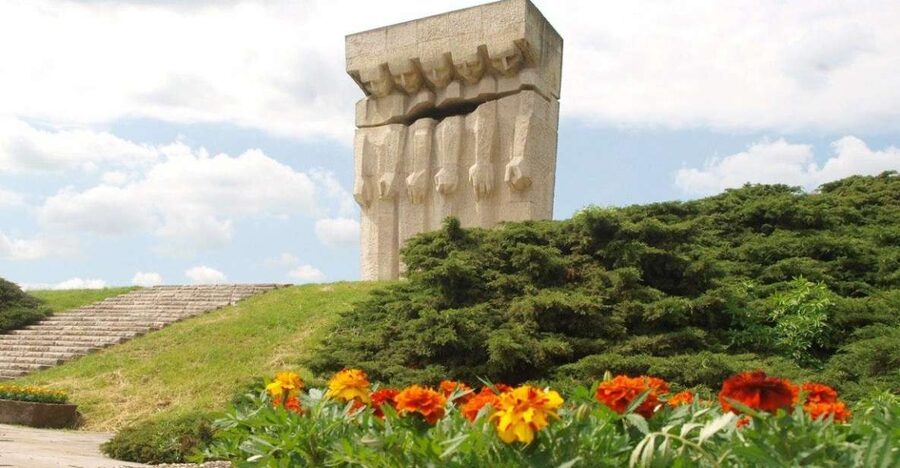
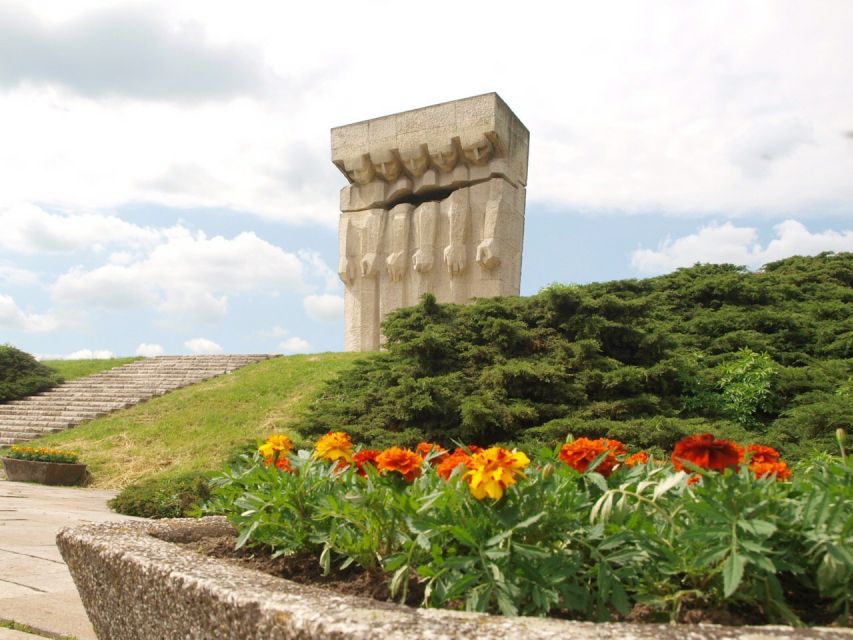
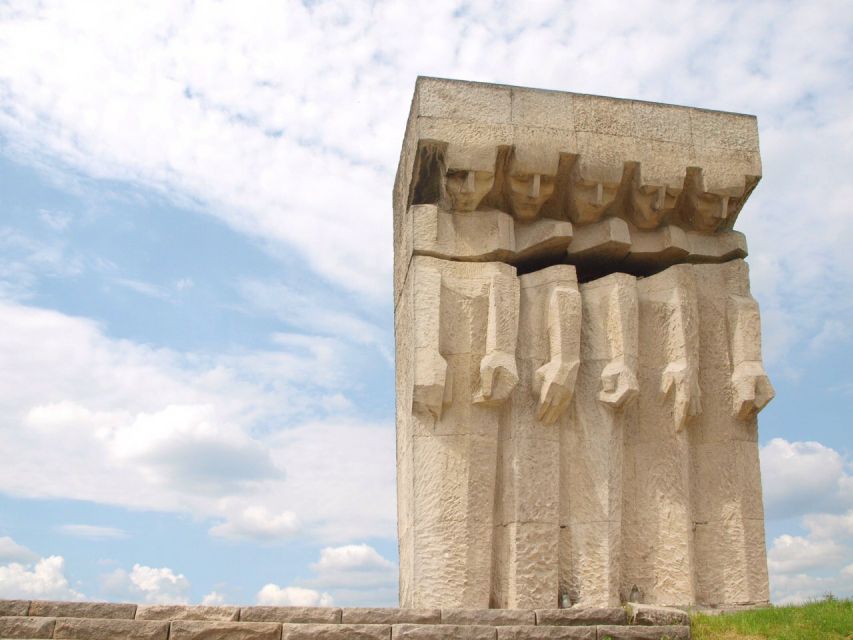
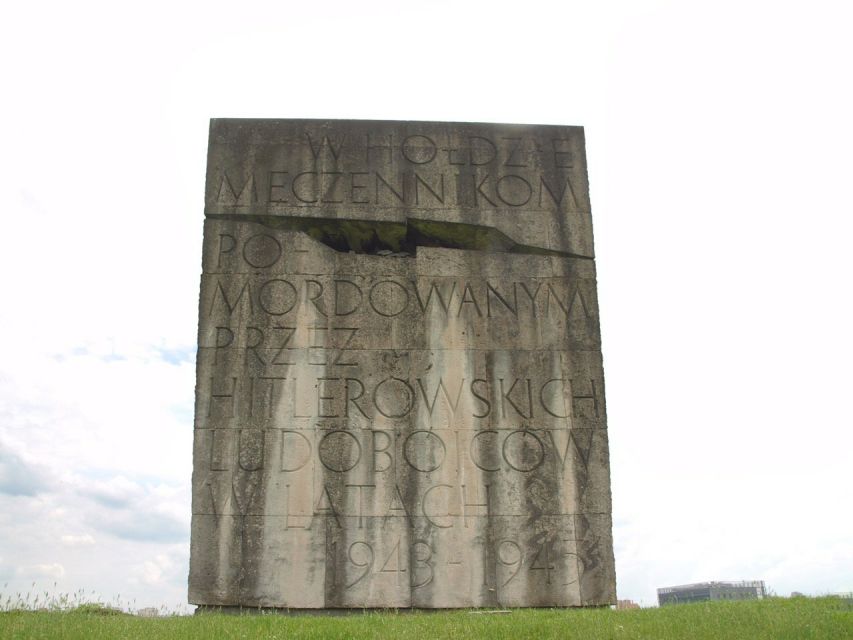
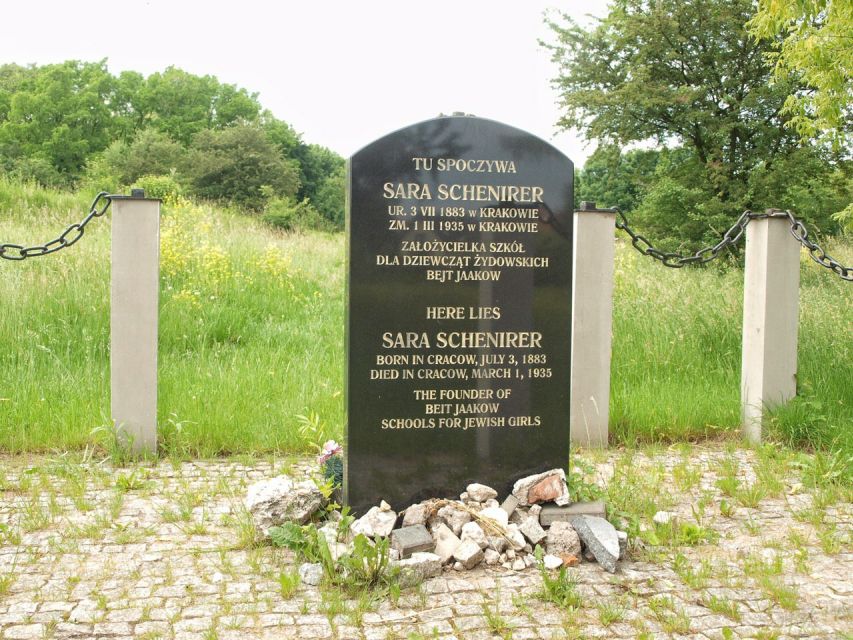
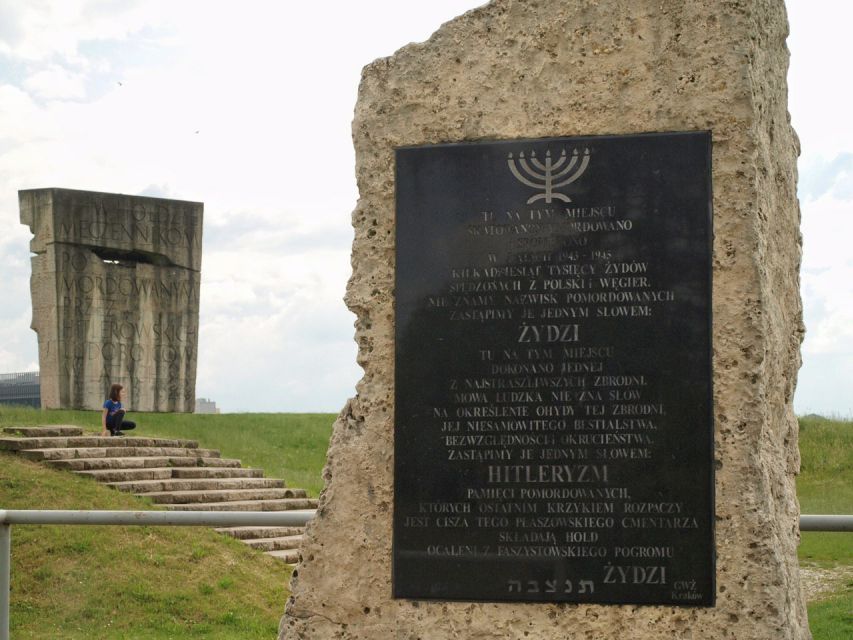
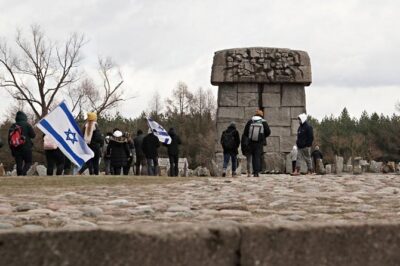
Several memorials mark the suffering and deaths connected with Plaszow. They are not decorative stops to rush through. They give the visit a clear purpose and remind you that this is a place of mourning, not simply a film location.
I appreciate that the tour makes room for paying respects. The guide discusses the victims and the impact of Nazi rule in Krakow, while allowing time for silence and thought. That balance matters. A good memorial visit should give you facts, but it should not turn grief into a fast checklist.
The memorials also help you understand the scale of what happened, even when the former camp itself is difficult to picture. As you move between them, the guide explains how different parts of the camp were used and how prisoners were treated.
Because the tour is outside, there is no indoor shelter built into the experience. Check the forecast and wear shoes suitable for a two-hour walk. The site’s open character is historically important, but it also means weather will affect your comfort.
The quarry and military factories
One of the most important parts of the walk concerns forced labor. Prisoners worked in the quarry and in military factories, under a system designed to exploit people until they were exhausted.
The quarry helps explain the camp’s practical role. It was not only a place of confinement. It was also a labor site tied to Nazi industrial and military needs. Your guide points out the relevant areas and explains how work shaped the prisoners’ daily lives.
The former military factory areas add another layer. They show how the camp was tied to production, not isolated from the war economy. You will learn how labor, imprisonment, and deportation worked together in occupied Krakow.
Do not expect intact factory interiors or a museum-like display. The guide supplies much of the detail. This is why I would not recommend visiting Plaszow alone if you want to understand the site rather than simply walk through it.
More WWII Tours in Krakow
- Guided Tour in Kraków-Płaszów Former Concentration Camp
★ 5.0 · 19 reviews - Krakow World War II Private Tour
★ 5.0 · 16 reviews - Krakow: Former Concentration Camp Plaszow Guided Tour
★ 4.8 · 10 reviews - Krakow: Plaszow Concentration Camp Guided Walking Tour
★ 5.0 · 8 reviews
Krakow’s ghetto and the 1942 deportations
The tour also connects Plaszow to the destruction of Krakow’s Jewish community. Beginning in 1942, Jews were deported from the Krakow ghetto to the camp as Nazi persecution entered a more violent phase.
This wider context is one of the strongest reasons to take the walk with a licensed guide. Plaszow did not operate as a separate story. Its history is tied to the ghetto, the occupation of Krakow, forced labor, and the wider Nazi camp system.
You will hear how the camp changed and how its prisoners experienced that change. The guide’s explanation helps you place individual locations within the larger sequence of events, instead of treating each memorial or work area as an isolated point.
That context can be difficult, but it is necessary. The tour is serious throughout, and you should allow yourself time afterward to process what you have heard.
Oskar Schindler and the story behind the film
Oskar Schindler is an important part of the visit, but he is not the whole story. The guide explains his life and his connection to people imprisoned in the camp. You will also hear how Plaszow appeared in the 1993 film Schindler’s List.
This is helpful if the movie sparked your interest in Krakow, but the tour does not reduce the former camp to a cinema stop. The real history is broader and far more painful than the film narrative.
The contrast between film and place is worth considering. A movie can show camp scenes with sets, actors, and a clear storyline. Plaszow itself is quieter and harder to read. The guide helps separate the filmed version from the actual camp and explains why certain locations were chosen for the production.
The Liban Quarry film replica
The tour includes a visit to the Liban Quarry, about a hundred meters from the former camp area. A replica of the camp was built there under Steven Spielberg’s direction for Schindler’s List.
This is an unusual part of the route. You are not looking at an original camp structure. You are seeing a film construction created to represent the camp on screen. Your guide explains that difference, which prevents confusion between the historical site and the movie set.
The stop works best as a comparison. At Plaszow, you confront a real place with few obvious remains. At Liban Quarry, you see a constructed version designed for visual storytelling. Together, the two locations show how film can bring attention to history while also simplifying or reshaping it.
If your main interest is cinema, this will be a welcome addition. If you are visiting for Holocaust remembrance, it remains a secondary stop. The memorials and the camp’s real history deserve your main attention.
What the guides add to the experience
The tour is available in English, German, French, Russian, Italian, and Spanish. The guide is licensed, and the quality of the explanation is central because the site provides few easy visual clues.
Guides who have led this experience include Krzysztof, Phil, Anna, and Barbara. Their roles are not identical, but the useful qualities are clear: clear explanations, patience, warmth, and a willingness to connect the camp to wider events.
Phil is described as friendly and informative. Anna is noted for linking other events to the camp, which is valuable when you want more than a list of dates. Barbara’s approach includes time for reflection, while Krzysztof has been praised for making the experience engaging and easy to follow.
Group size can affect how well you hear and how much time the guide can give to questions. One small-group experience was especially easy to understand. The exact group size is not specified, so ask at booking if that matters to you.
Is $23 a fair price?
At $23 per person, the tour is reasonably priced for a licensed two-hour guide at a site where orientation is difficult. You are paying less for access to buildings than for the explanation that gives the place meaning.
The price does not include a tram ticket, so add that transport cost to your plans. Still, the main value is clear: without guidance, you might walk past important areas without knowing what they represent.
I would see this as an addition to, not a replacement for, a visit to Auschwitz. The experiences are different. Plaszow is shorter, more open, and less preserved. Its lower price makes it a practical choice if you want to understand Krakow’s own wartime history and the setting connected with Schindler’s story.
Free cancellation up to 24 hours before the tour and the reserve now, pay later option also make the booking fairly flexible. Wheelchair access is available, though the outdoor character of the site means you should confirm that the route suits your needs.
Who should take this walking tour?
This tour suits you if you want to understand Krakow beyond its handsome center and famous museums. It is also a strong choice if you have seen Schindler’s List and want to separate the movie from the historical places that inspired it.
You should take it if:
- You want a guided introduction to Plaszow’s camp history.
- You value memorials and time for reflection.
- You have already visited Auschwitz and want Krakow-specific context.
- You want to see the Liban Quarry film replica.
- You are comfortable spending two hours outdoors.
- You prefer a guide to explain a site with few obvious remains.
You may want to skip it if you are looking only for preserved buildings, indoor exhibitions, or a light sightseeing stop. Plaszow is serious, exposed, and sometimes visually subtle. Its impact comes from the story and the guide’s ability to point out what the site no longer plainly shows.
Should you book the Plaszow walk?
I would book this tour if you have the time for a quieter and more demanding historical visit in Krakow. The guide turns a difficult-to-read former camp into a place you can understand, while the memorials keep the focus on the people who suffered there.
The best reason to go is not the film replica, though that is an interesting extra. Go because Plaszow explains an important part of Krakow’s wartime story, from forced labor and factory work to ghetto deportations and Nazi persecution.
At $23, the tour offers good value, especially if you are also planning Auschwitz and want a different kind of visit. Bring weather-ready clothing, allow time for reflection, and do not expect a polished museum site. If those conditions suit you, this is a thoughtful and worthwhile addition to a Krakow itinerary.
FAQ
How long does the Plaszow walking tour last?
The tour lasts two hours. Check availability when booking for the starting times offered on your date.
What is the price of the tour?
The listed price is $23 per person.
Is a guide included?
Yes. A licensed live guide is included.
Which languages are available?
The tour is available in English, German, French, Russian, Italian, and Spanish.
Does the tour include a tram ticket?
No. The tram ticket is not included, so you need to arrange and pay for it separately.
Where does the tour start?
Meet the guide at the stated meeting point by looking for the excursions.city sign.
Where does the tour end?
The activity ends back at the meeting point.
Does the tour visit the memorials at Plaszow?
Yes. The route includes several memorials dedicated to remembering the victims of the camp and Holocaust.
Does the tour include places connected with Schindler’s List?
Yes. You will learn about Oskar Schindler, hear how the camp was shown in the 1993 film, and visit the replica camp built at the nearby Liban Quarry.
Is the tour wheelchair accessible?
Yes. The activity is listed as wheelchair accessible.
Just added around Krakow
- stag dog chase Krakow prank★ 5.0 · 4 reviews
- Divine Mercy Sanctuary – Private Tour from Krakow★ 5.0 · 4 reviews
- ZALIPIE – painted village, unique small group tour from Krakow★ 5.0 · 7 reviews
- ZALIPIE – painted village, unique PRIVATE tour from Krakow★ 5.0 · 20 reviews
- Zalipie Private Tour from Krakow The Painted Village★ 5.0 · 4 reviews
- Wooden Churches Unesco List Private Tour from Krakow★ 5.0 · 14 reviews
- Guided tour to Salt Mine & Schindler Factory with Pick-Up Options★ 4.0 · 58 reviews
- Wawel Castle, Cathedral, & Rynek Underground Tour with Lunch★ 5.0 · 4 reviews
WWII Tours, compared.
Warsaw for WWII Buffs – private tour with hotel pickup
Read our review →
Treblinka Death Camp 6 Hour Private Tour from Warsaw
Read our review →
Stutthof Concentration Camp English Tour with Gdansk Hotel pickup
Read our review →Browse the lists this tour appears in