
Reviewed · HISTORICAL TOURS
Warsaw Praga Guided Historical Walking Tour
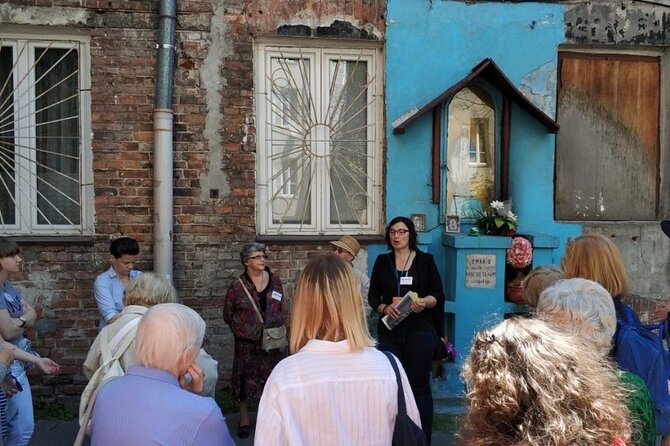
Praga gives you a different Warsaw: less polished, more layered, and full of clues to the city’s working-class past. This walk moves from an old vodka factory to Ząbkowska Street, then through streets known for films, murals, churches, and traces of horse-drawn transport. I like the small group of no more than 10 and the way guides such as Oliwia connect local history with their own experience of growing up in Warsaw. I also like the honest look at gentrification and dispossession, not just the cheerful story of urban renewal.
The main drawback is that this is an outdoor history walk, so you will spend two and a half hours on foot with no major indoor attraction included. The Polish Vodka Museum is nearby, but its 70 PLN admission costs extra. Also, this booking is offered in English, so confirm the language before you go.
Key points before you book
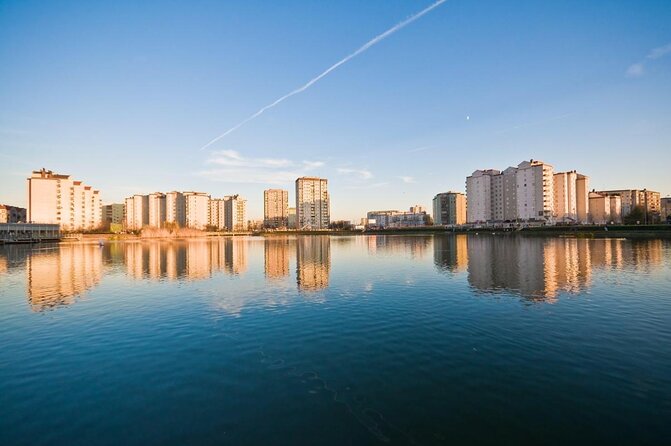
- A small Praga group: The maximum is 10 people, which gives you a better chance to ask questions and hear the guide clearly.
- A useful local angle: Oliwia, Olivia, and Aga are named in the available feedback, with particular praise for personal stories and strong knowledge of Praga.
- Old and new Warsaw together: You will see a former vodka factory, renovated public spaces, old streets, murals, churches, and signs of change.
- A frank look at redevelopment: The walk addresses how residents feel about dispossession and gentrification.
- Practical extras included: You receive a Warsaw information pack, visual aids, and suggestions for food, drinks, shopping, and further sightseeing.
- Easy finish: The tour ends near buses, trams, and the metro at the Cathedral of St. Michael the Archangel and St. Florian.
Why Praga deserves an afternoon
Many first-time visits to Warsaw focus on the rebuilt Old Town, royal residences, and the former Jewish district. Praga gives you another piece of the city. Located on the eastern side of the Vistula, it has a different look and feel, with older street patterns, industrial buildings, religious landmarks, and streets that have changed slowly, then quickly.
This tour is useful because it does not treat Praga as a collection of photogenic old buildings. The guide explains how the district has changed and how local people view those changes. That matters. A renovated factory or fashionable cafe can look like simple progress until you learn what has been lost, who can still afford to live there, and how residents feel about the new version of their neighborhood.
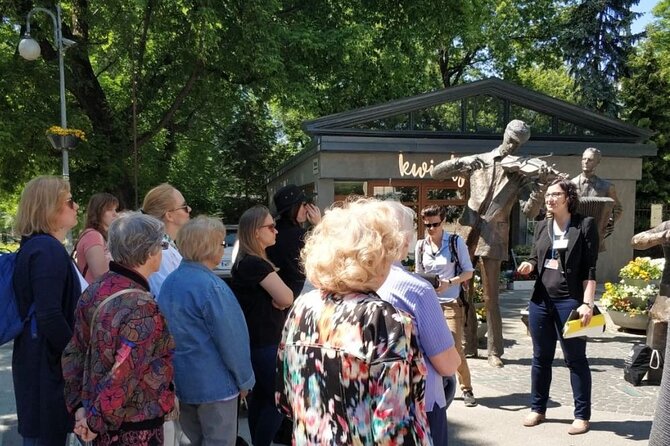
I especially like that the experience includes both popular sights and less obvious details. You will see famous places such as Centrum Praskie Koneser and the Cathedral of St. Florian, but you will also hear about a former horse-drawn tram depot, a street band memorial, and the film connections of Stalowa Street.
The price is $28.68 per person. For a two-and-a-half-hour guided walk, a small group, visual material, and practical Warsaw suggestions, that is a fair price. It is not the cheapest way to walk around Praga, but the value rests in the explanation. You can pass many of these streets on your own, yet you may miss why they matter.
More Historical Tours in Warsaw
- Warsaw: POLIN Museum of the History of Polish Jews Ticket
★ 4.7 · 1,142 reviews - Warsaw: Chopin Concert at Historical Venue in Old Town
★ 4.7 · 445 reviews - Small-Group Historical Guided Tour of Warsaw with pick up/drop off. Public Tour.
★ 4.5 · 343 reviews
Starting at Strzelecka 46
The walk begins at Strzelecka 46 with a short introduction to Praga. This opening is brief, only about five minutes, but it gives you a frame for the rest of the outing.
That is helpful because Praga can seem confusing at first. You are not simply walking from one famous building to another. The guide is setting up a district shaped by industry, religion, ordinary working life, war, postwar change, and recent redevelopment.
The meeting point is in the Praga district, and the tour ends on the opposite side of the route near the cathedral. Since the tour uses a mobile ticket and confirmation is provided at booking, keep the booking details easy to reach on your phone. The operator also provides a pre-tour information pack with frequently asked questions and useful links, so read it before arrival.
Koneser, where factory walls meet new Warsaw
The next stop is Centrum Praskie Koneser, the former vodka factory. You spend about 15 minutes here, looking at the original industrial architecture and hearing the stories connected with the site.
Koneser is a good early stop because it shows the central tension of modern Praga. Old industrial buildings have been given new uses, and the area now represents the district’s changing face. The guide’s stories add context to what you see, including the slightly tipsy history linked to vodka production.
The Polish Vodka Museum is located here, but admission is not included. The extra cost is 70 PLN. You do not need to enter the museum to take part in this walking tour, so decide based on your interests and schedule. If vodka history is a major reason for choosing Praga, you may want to allow extra time and budget for it. If you mainly want architecture and neighborhood history, the outdoor visit still gives you a useful introduction.
Ząbkowska Street and the everyday side of Praga
The walk continues to Ząbkowska, one of Praga’s best-known streets. You have about 20 minutes to see its cafes, older buildings, and the stories attached to them.
This is the part of the route where the district’s old and new sides are easy to compare. Cafes and attractive street scenes make the street pleasant to explore, but the guide helps you see more than a row of places to eat. The buildings and street layout carry memories of daily life, commerce, and neighborhood change.
The included suggestions for places to eat and drink are useful here. You are not handed a generic list of city sights. The guide can point you toward options in and around Praga, which is especially handy if you plan to stay in the district after the walk.
I would treat Ząbkowska as a place to notice details rather than rush through for photographs. Look at the older architecture, the mix of restored and less polished facades, and the way new businesses fit into the street. The guide’s explanation is what turns those details into a story.
More Walking Tours in Warsaw
- Warsaw: Old Town Highlights Walking Tour in English
★ 4.7 · 1,516 reviews - Warsaw: Old Town Guided Walking Tour
★ 4.9 · 599 reviews - Half-Day Polish Food Walking Tour with Guide and Dinner
★ 4.5 · 381 reviews - Warsaw: Warsaw Ghetto Private Walking Tour with Hotel Pickup
★ 4.9 · 369 reviews
The long Praga Północ walk
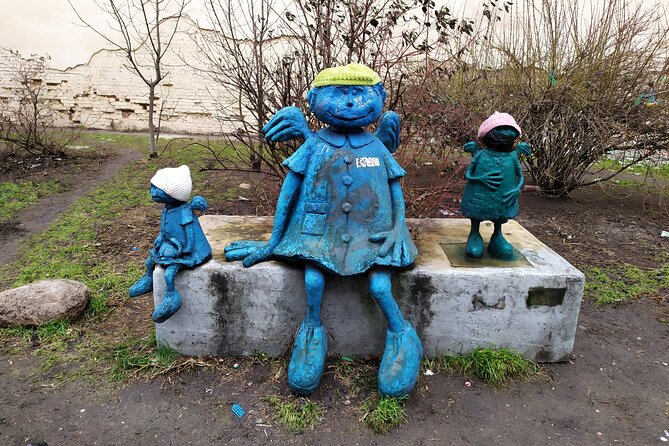
Most of the tour, about 90 minutes, takes place in Praga Północ. This is the heart of the experience, and the route brings together several different subjects rather than focusing on one landmark.
You will see Szwedzka Street, the Konopacki Palace, street art, Stalowa Street, the remains of a horse-drawn tram depot, and a memorial to a street band. Each stop adds a different layer. The palace points toward the district’s more formal architecture. The murals show its creative side. The tram depot recalls an earlier form of city transport, while the street band memorial connects the area with local music and public life.
Stalowa Street is described as the street of films. That detail gives the walk a playful angle, but it also helps explain why certain Praga streets have attracted filmmakers. The older streetscape can offer a strong sense of place, and the guide can show you how the area has been used as more than a backdrop.
The guide’s use of visual aids is valuable during this section. Old photographs or other images can help you compare what stood here before with what you see now. You are not relying only on a spoken lecture while looking at unfamiliar streets.
This is also where the tour’s social history matters most. The guide does not present every new cafe, renovation, or art project as an automatic improvement. You hear about local reactions to redevelopment, including concerns about residents being pushed out. That balanced approach is one of the best reasons to choose this walk over a simple photo tour.
The route may suit you if you enjoy asking questions. One family specifically praised the guide for adapting to a slower pace and answering many questions while accommodating a family member with mobility difficulties. That is encouraging, but it does not guarantee that every group will move at exactly the same pace. If you have mobility concerns, contact the provider before booking and explain what you need.
Two cathedrals and a Russian Orthodox landmark
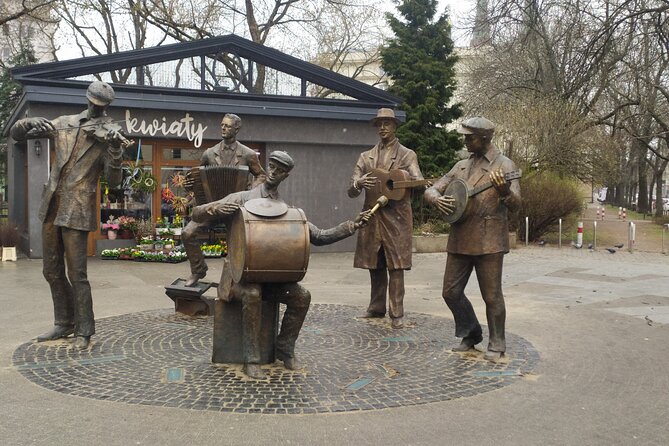
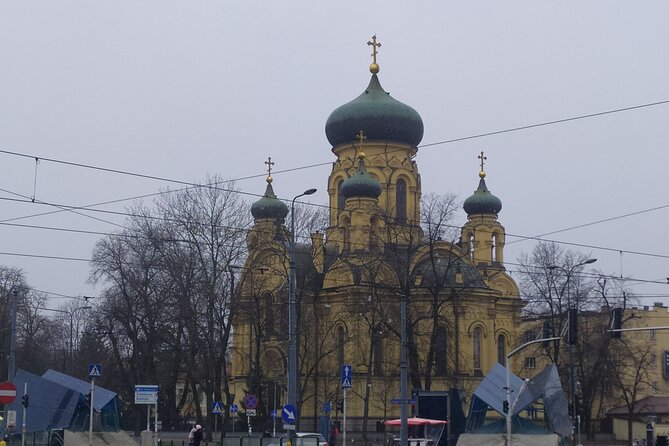
The religious buildings arrive toward the end, giving the walk a strong finish. First comes Warsaw’s Metropolitan Cathedral of St. Mary Magdalene, a Russian Orthodox cathedral and one of the few Russian Orthodox sites remaining in Warsaw. You spend about 10 minutes here.
Its importance is not only architectural. The cathedral points to Warsaw’s connections with the Russian Empire and to the complex political and religious history of the city. The guide’s broader explanation helps place the building in Praga rather than treating it as an isolated church.
The final stop is the Cathedral of St. Michael the Archangel and St. Florian the Martyr, where the tour ends after another 10 minutes. This Catholic cathedral gives you a useful contrast with St. Mary Magdalene. Seeing both religious sites on one walk makes it easier to understand Praga as a district shaped by more than one tradition.
The endpoint at Floriańska 3 is practical. You have access to buses, trams, and the metro after the tour, so you can continue sightseeing or return to your accommodation without arranging a separate transfer. Ending here also makes it easy to explore more of the area on your own.
What the guide adds
The strongest part of this experience is the guide’s role. The named guides include Oliwia, Olivia, and Aga, and the most consistent praise focuses on clear explanations, good pacing, local insight, and helpful recommendations.
Oliwia’s personal connection to Warsaw has been especially valuable. Her stories about growing up in the city make the material feel less like a prepared list of dates. That personal angle can help you understand how Praga is lived in, not just how it appears in guidebooks.
You should also expect a guide who can discuss uncomfortable subjects. The inclusion of residents’ feelings about gentrification is important because Praga is changing. A good neighborhood walk should let you enjoy the architecture and cafes while still asking what those changes mean for people who already live there.
The group size helps. With no more than 10 people, the guide can respond to questions without turning the walk into a private tour price. The experience is offered in English. One booking problem involved a request for Spanish when the reservation was made for the English tour, so check your confirmation and messages carefully. Other languages are subject to availability.
Pace, comfort, and practical details
The total duration is approximately two hours and 30 minutes. That is long enough for a useful introduction to Praga, but short enough to fit into a day of sightseeing.
Wear comfortable shoes and plan for outdoor conditions. The tour is mainly a walking route through streets and public areas, with short stops at buildings and landmarks. No entrance tickets are included, and the regular route does not require admission payments.
Most people can participate, and service animals are allowed. Still, this is not a fully accessible sightseeing bus or a seated lecture. If you walk slowly, have pain, or need regular breaks, tell the provider in advance. The guide has accommodated a slower pace before, but the route remains a walking tour.
The tour is often booked about 28 days ahead. That suggests you should reserve early if your Warsaw dates are fixed, especially because the group is limited to 10 people. Free cancellation is available if you cancel at least 24 hours before the start time. Changes or cancellations inside that window are not accepted, and the local time cutoff applies.
Who will enjoy this Praga walk?
I would choose this tour if you have already seen central Warsaw and want a district with more local texture. It also works well as an introduction to Praga if you are staying nearby and want a guide to help you get oriented.
It suits you especially well if you enjoy:
- Neighborhood history rather than only major monuments
- Industrial architecture and urban change
- Street art, old streets, and film locations
- Religious history and contrasting traditions
- Personal stories from a local guide
- Practical advice on food, drinks, shopping, and further sightseeing
It may be less suitable if you want a museum-heavy outing, a fast list of photo stops, or a tour in Spanish without confirming availability. You should also consider the extra 70 PLN if you want to enter the Polish Vodka Museum.
Should you book it?
Book this tour if you want to understand why Praga feels different from Warsaw’s polished center. The route has variety, the group is small, and the guides bring personal knowledge along with the basic facts. I particularly value the honest treatment of redevelopment, since it gives you a more useful picture of the neighborhood than a simple celebration of its new cafes and renovated buildings.
Skip it if you prefer to explore independently and do not want two and a half hours of walking. But if you have room in your Warsaw schedule, $28.68 is a reasonable price for a focused introduction to Praga, with practical advice that can improve the rest of your stay.
FAQ
How long does the Warsaw Praga walking tour last?
The tour lasts approximately two hours and 30 minutes.
Where does the tour begin?
It begins at Strzelecka 46 in Warsaw, Poland.
Where does the tour end?
The tour ends in front of the Cathedral of St. Michael the Archangel and St. Florian the Martyr at Floriańska 3. Buses, trams, and the metro are nearby.
Is the Polish Vodka Museum included?
No. Entry to the Polish Vodka Museum is not included. Admission costs 70 PLN.
Is the tour offered in English?
Yes. The tour is offered in English. Other languages are subject to availability, so confirm the language before booking.
What is the maximum group size?
The maximum group size is 10 people.
Just added around Warsaw
- Wolfs Lair and Swieta Lipka Small Group Tour from Warsaw with Lunch★ 4.5 · 21 reviews
- Wolf’s Lair & Treblinka Tour in 1 day from Warsaw★ 5.0 · 37 reviews
- Wolfs Lair “Hitler’s Headquarters” – Full Day Tour from Warsaw by private car★ 4.5 · 4 reviews
- Tour from Warsaw: Wolf’s Lair, Hitler’s HQ Zones I and II★ 5.0 · 32 reviews
- Wolf’s Lair Private Day Trip from Warsaw★ 5.0 · 50 reviews
- Off the Beaten Track in Warsaw: Private City Tour★ 4.5 · 9 reviews
- Warsaw’s Old Town A Self-Guided Audio Tour★ 4.5 · 10 reviews
- Warsaw Must-See Local City Tour with Antek and Tomek★ 5.0 · 51 reviews
Historical Tours, compared.

POLIN Museum of the History of Polish Jews Ticket
Read our review →
Gdańsk City Sights & History Guided Walking Tour in English
Read our review →


Small-Group Historical Guided Tour of Warsaw with pick up/drop off. Public Tour.
Read our review →Browse the lists this tour appears in