
Reviewed · WWII TOURS
Warsaw: WWII Private Tour by Retro Minibus with Hotel Pickup
Warsaw’s wartime story is best understood street by street, and this private WWII tour takes you far beyond the usual city center sights. In a retro Żuk minibus, you trace the Nazi occupation, the Jewish Ghetto, Soviet repression, and the 1944 Warsaw Uprising while archival photographs show how these places looked during the war.
I like the small private group, which allows the guide to adjust the pace and answer questions, and I like the old minibus itself: it adds atmosphere without forcing you to walk between every distant stop. The main consideration is that this is a serious, emotionally heavy history tour, not a light sightseeing ride, and some vintage vehicles lack air conditioning or seat belts.
Key points to know
- A focused three-hour route: Cover major WWII sites across Warsaw without spending the whole day on foot.
- The Jewish Ghetto in physical detail: See a preserved fragment of the Ghetto Wall, Waliców Street, Chłodna Street, Muranów, and the Ghetto Heroes area.
- Archival photographs at the stops: Compare wartime images with the streets and ruins in front of you.
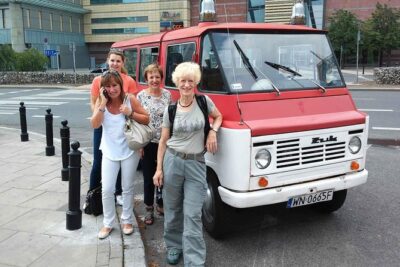
- A private ride for up to eight people: Each Żuk minibus carries no more than eight passengers, with five vehicles available.
- Strong guide-led storytelling: Guides including Konrad, Lucas, and Adam have been praised for clear explanations, humor, and engaging stories.
- Pickup has a time tradeoff: Hotel pickup is included within three kilometers of the center, but transfer time counts toward the three hours.
Why a Retro Żuk Makes Warsaw’s War History More Immediate
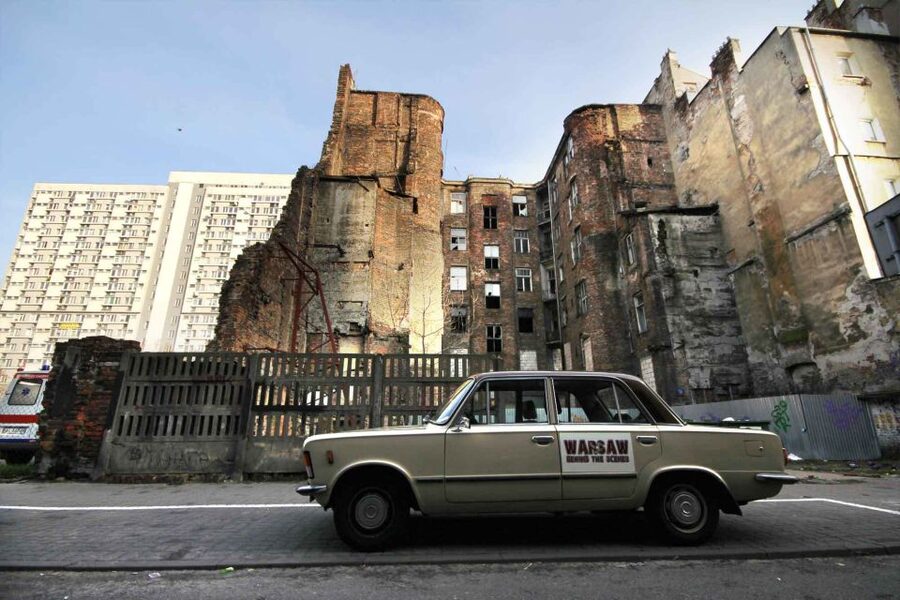
The vehicle is not just a way to get from one memorial to the next. The classic Żuk minibus is a piece of Poland’s recent past, with a boxy shape and old-fashioned character that fits a tour dealing with occupation, destruction, and the decades that followed.
You ride between sites, then get out for walking sections and explanations. That matters in Warsaw, where the major locations are spread across several districts. You cover more ground than you would on foot, but you still have time to look closely at walls, monuments, ruins, and street layouts.
The minibus is not a modern coach. Classic vehicles do not have air conditioning, and some do not have seat belts, which is permitted for historic vehicles. Heating is provided in winter. If you are sensitive to heat or want modern transport fittings, consider this before booking.
More WWII Tours in Warsaw
- World War 2 in Warsaw walking tour in English
★ 4.7 · 237 reviews - Warsaw for WWII Buffs – private tour with hotel pickup
★ 5.0 · 166 reviews - From Warsaw: Tour of the Wolf’s Lair, Hitler’s HQ by Car
★ 4.7 · 116 reviews
Setting the Stage: Poland Before the Invasion
The tour begins with the international situation before 1939. That opening context helps you understand why Poland was attacked from two directions and why the war did not end with German occupation alone.
Your guide explains the German invasion and the simultaneous Soviet occupation of Poland’s eastern territories. The focus then shifts from military events to daily life in Warsaw: restrictions, fear, displacement, repression, and the growth of resistance.
This is one of the strongest reasons to choose a guide-led tour rather than simply visiting memorials on your own. A monument can tell you what happened, but it cannot always explain how separate events connected. The guide links German rule, Soviet crimes, the growth of underground resistance, and the later destruction of the city.
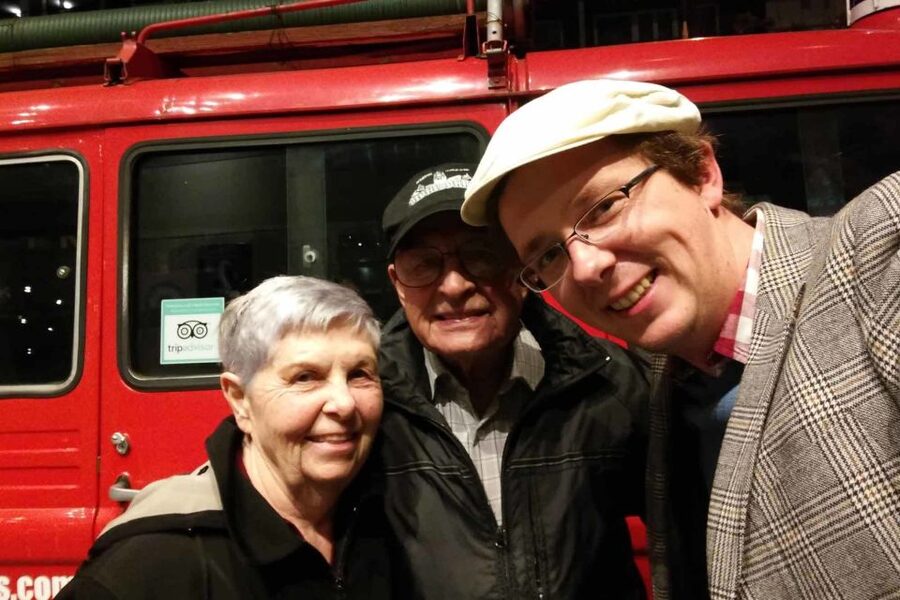
The storytelling quality matters here. Konrad has been praised for combining humor and kindness with serious history, while Lucas has been described as an engaging historian and storyteller. Adam is also associated with a particularly detailed route. Guide assignments can vary, so treat those names as examples rather than a promise of who will lead your tour.
The Warsaw Ghetto: Walls, Bridges, and Daily Survival
A central section follows the history of Warsaw’s Jewish population, which numbered around 300,000 before the war. In 1940, Nazi authorities created the Warsaw Ghetto and confined hundreds of thousands of people in brutal conditions.
You visit a preserved fragment of the former Ghetto Wall. It is a modest physical remnant, but that is part of its force. Much of wartime Warsaw was destroyed or rebuilt, so even a surviving fragment can help you grasp how the ghetto was sealed off from the rest of the city.
The guide also explains the wooden bridge once built over Chłodna Street. The bridge connected the two closed sections of the ghetto above normal street traffic. It is no longer there, but the location makes the strange geography of the ghetto easier to picture. Archival photographs are especially useful at this point, since the bridge and wartime street scenes can be compared with the modern view.
You should expect walking at the stops, not a continuous ride with commentary through the windows. Wear shoes you can use comfortably on city streets, and dress for the weather. There is no food or drink included, so bring water if you need it.
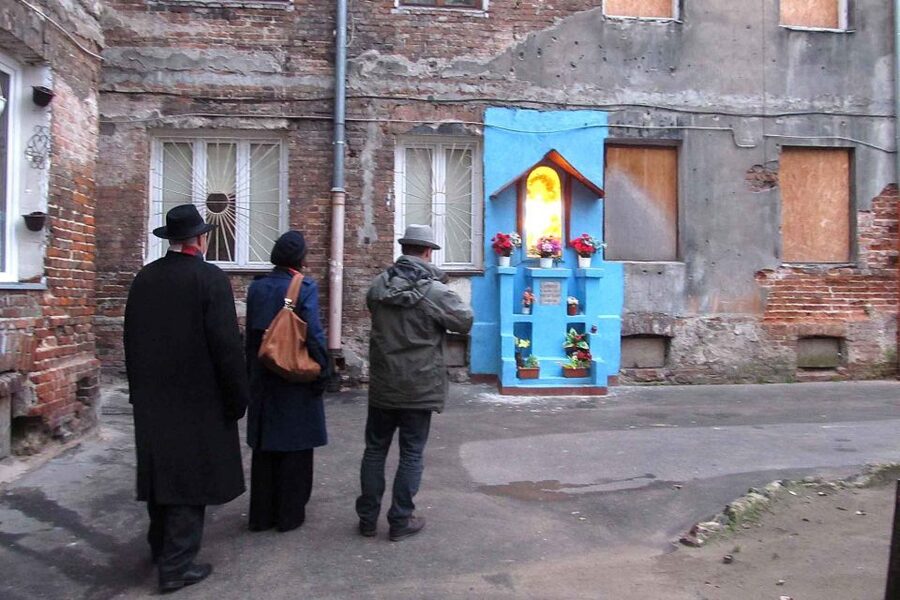
Waliców Street and the Ruins Left in Place
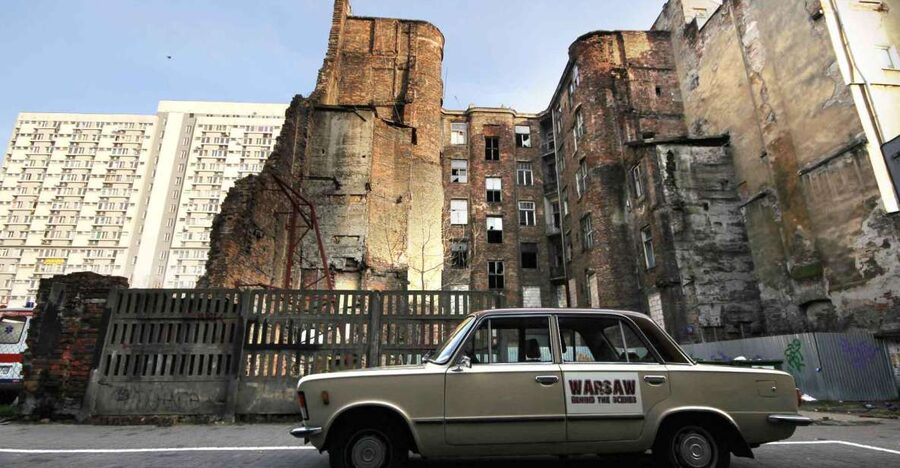
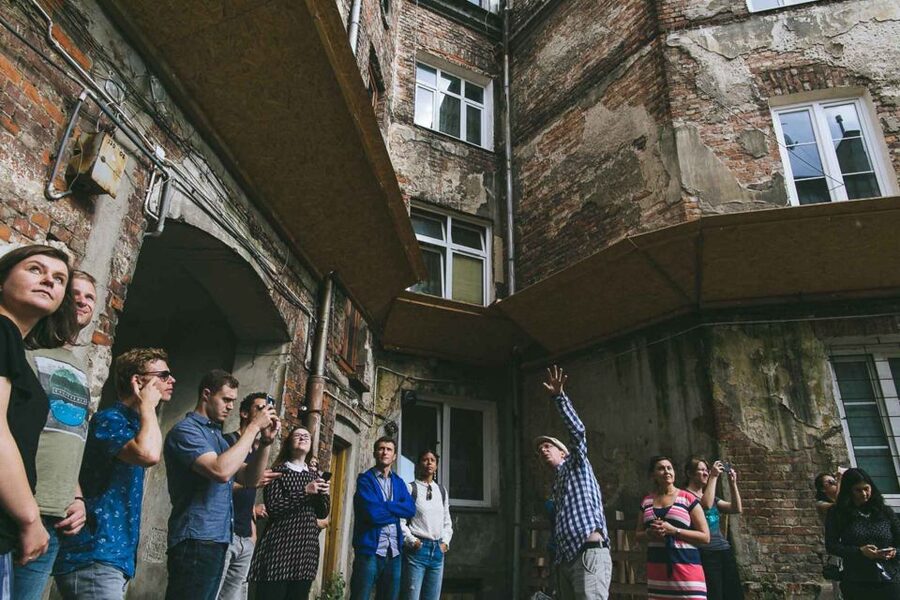
At Waliców Street, the tour visits one of the last ruined tenement houses intentionally left unrestored. In a city that was rebuilt on a vast scale, this kind of damaged structure carries a different weight from a polished museum display.
The ruin helps you see the war as a physical event. You are not only hearing about destroyed homes and streets. You are looking at a building that still communicates damage, abandonment, and the decision to preserve part of that evidence.
This stop is also a useful reminder that Warsaw does not present its wartime past in one single style. Some places are carefully designed memorials. Others are fragments left in the urban fabric. The contrast gives the tour texture without turning the destruction into scenery.
More retro car tours around Warsaw:
- Discover the Dark Side of Warsaw in Praga District by Retro Bus
★ 5.0 · 327 reviews - Warsaw: 2.5-Hour Dark Side – Praga District by a Retro Bus
★ 4.5 · 248 reviews - Warsaw City Sightseeing in a Retro Bus
★ 5.0 · 196 reviews - Best of Warsaw – private tour by retro minibus with hotel pickup
★ 5.0 · 111 reviews
Muranów, the Ghetto Heroes Monument, and POLIN
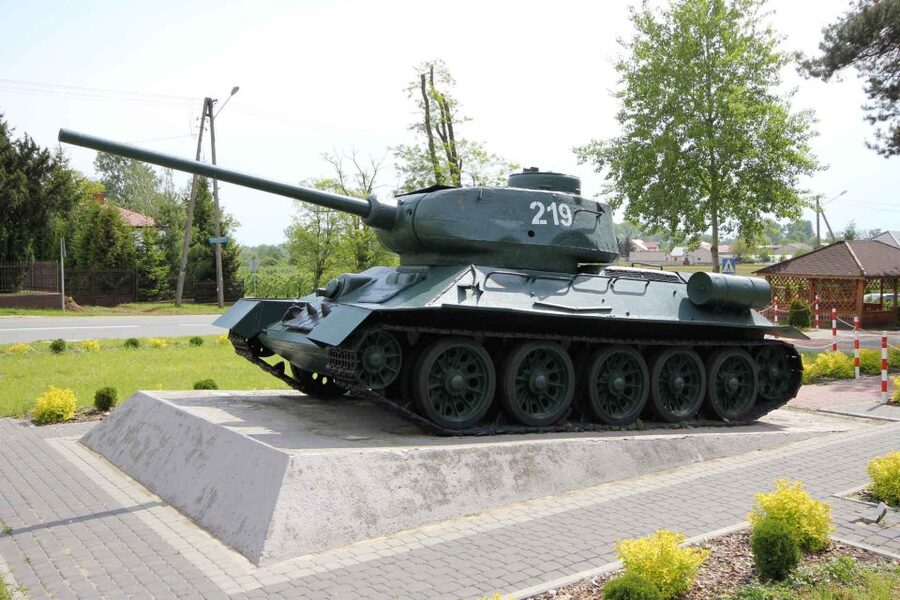
The Muranów district was built on wartime rubble. That fact changes how you read the area. Modern streets and buildings sit above the remains of a destroyed neighborhood, so the present-day district cannot be separated from what came before it.
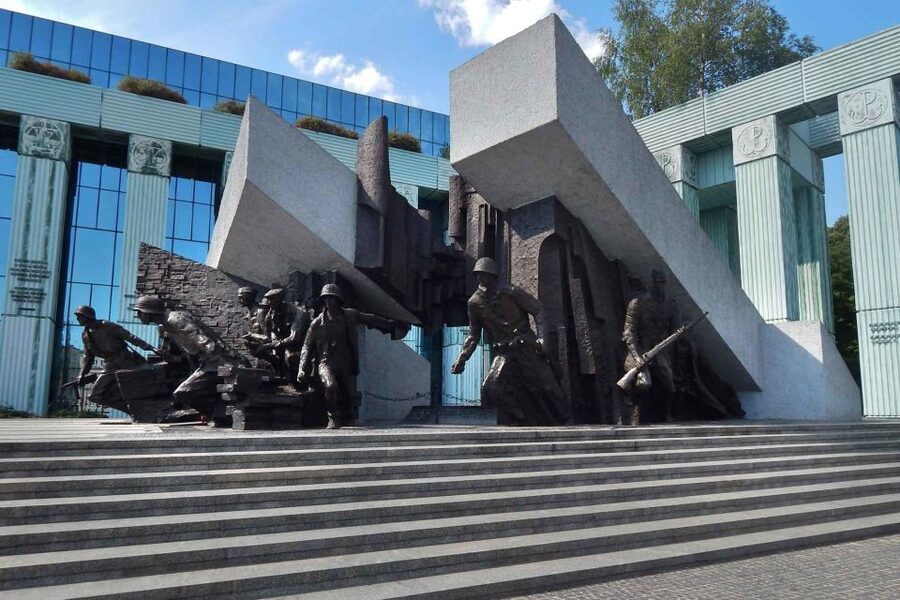
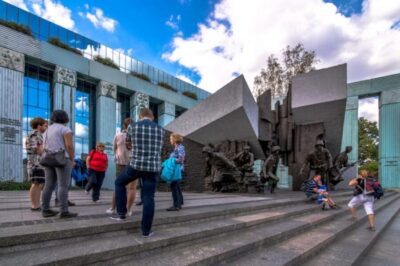
The route continues around the Monument to the Ghetto Heroes and the POLIN Museum of the History of Polish Jews. The monument area is linked to the first armed clashes of the 1943 Ghetto Uprising. It is now a place for remembrance and dialogue, but the guide keeps the focus on the people and events that shaped the site.
The tour does not include entry to the POLIN Museum, so do not expect an indoor museum visit as part of the three-hour route. Instead, you see the surrounding area and receive context from the guide. If you want a full museum experience, plan a separate visit.
I like this part of the route because it shows how memory works in modern Warsaw. You see a memorial, a museum, a residential district, and traces of rubble all within the same broad area. The guide’s archival images help you compare the wartime setting with the city you see now.
Soviet Repression and the Monument to the Fallen and Murdered in the East
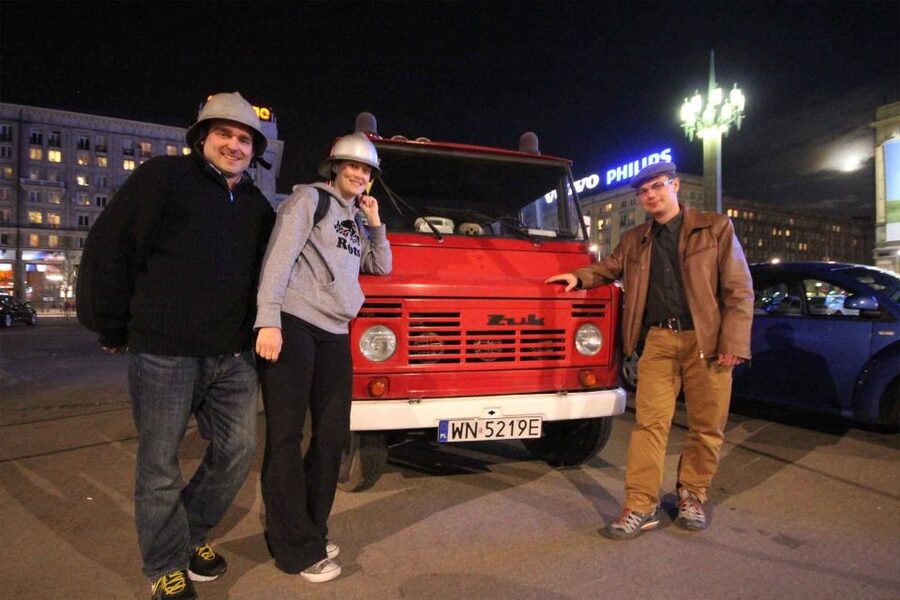
The Nazi occupation is only one part of the story. The tour also covers Soviet crimes against Polish citizens, including mass deportations to Siberia and the Katyń massacres.
At the Monument to the Fallen and Murdered in the East, the subject shifts from the destruction caused by Nazi Germany to the violence and repression connected with Soviet rule. This gives the tour a wider frame and helps explain why Poland’s wartime experience cannot be reduced to one occupying power.
The distinction matters. Poland was caught between two totalitarian systems, and the political changes after 1945 did not simply bring an uncomplicated return to freedom. The guide places this memorial within that larger story rather than treating it as an isolated stop.
For many people, this is the point where the tour becomes especially valuable. Warsaw’s memorials can be spread far apart, and the meaning of each one is easier to grasp when a guide explains who is remembered and why.
The 1944 Warsaw Uprising and the City’s Destruction
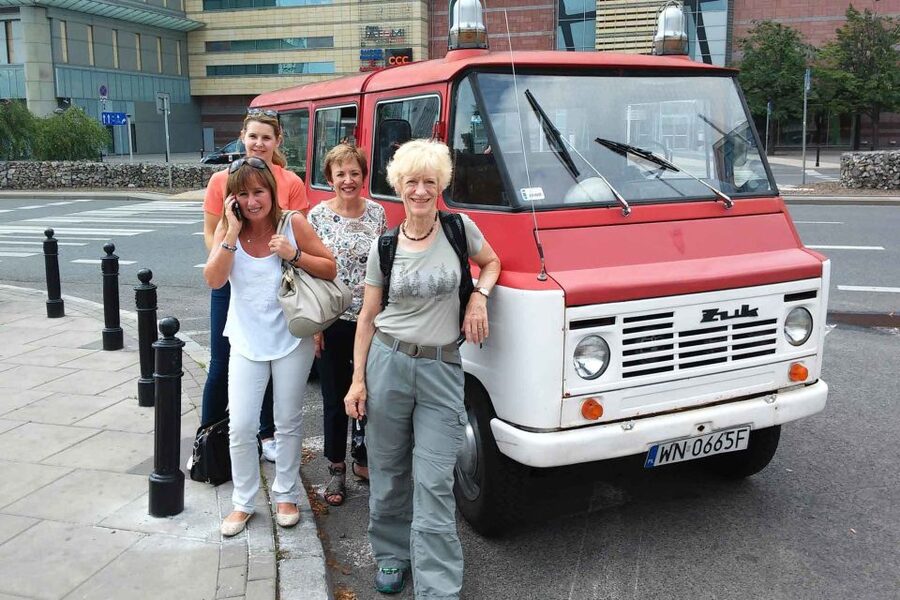
The final major chapter focuses on the Warsaw Uprising of 1944. The uprising was the city’s last attempt to regain independence before the Red Army arrived.
After the uprising failed, Nazi forces deliberately destroyed most of Warsaw. The Soviet army entered the ruins in January 1945, beginning a new political era. The tour connects these events rather than stopping at the military defeat itself. You learn how the uprising, the deliberate destruction, and the arrival of Soviet power shaped the city that had to be rebuilt afterward.
This section is especially useful if you plan to visit the Warsaw Uprising Museum separately. The tour does not replace the museum, but it can give you a better geographic sense of the city and the events before you enter its galleries.
The emotional tone is serious. There are no easy conclusions here, and the tour does not soften the scale of loss. That is a strength if you want historical substance, but it may not suit you if you are looking for a casual introduction to Warsaw.
Archival Photographs Turn Streets into Evidence
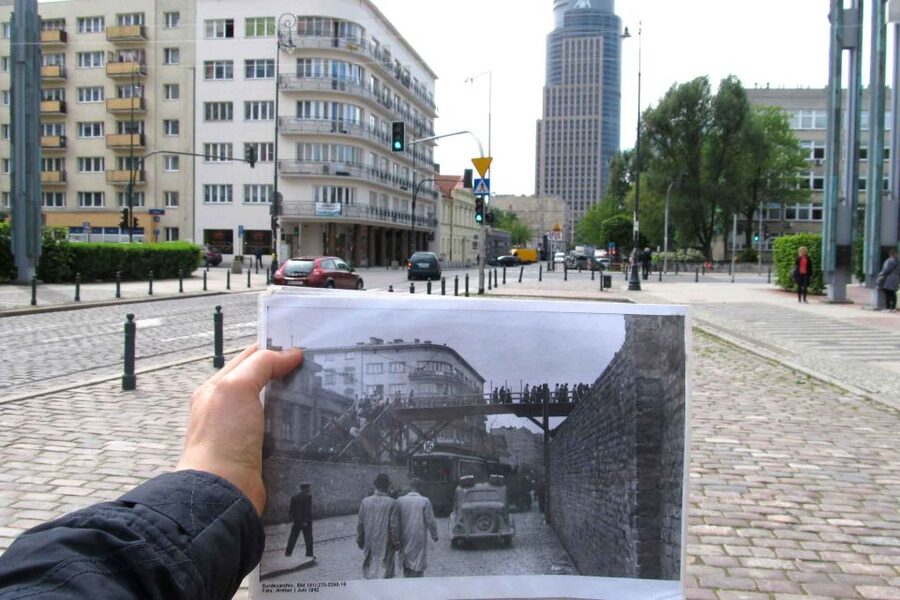
The archival photographs are one of the most useful tools on the route. Instead of hearing only a date and a name, you can compare a wartime image with the street in front of you.
This approach works particularly well at the former Ghetto Wall, Chłodna Street, Waliców Street, and Muranów. Warsaw changed so much after the war that the present-day view can otherwise feel disconnected from the past. Photographs help bridge that gap.
You may already know some of the broad events, but the images add detail: the scale of a demolished block, the position of a bridge, the shape of a street, or the relationship between neighborhoods. The guide’s job is to make those comparisons clear, and the strongest feedback about this tour centers on stories, detail, and explanations that go beyond basic textbook facts.
Private Group Size and Guide Style
Each minibus holds up to eight passengers, and the tour operates with a fleet of five minibuses. This is a real private group rather than a large shared coach outing.
The small size gives you a better chance to hear the guide clearly and ask questions. It also makes the experience more flexible than a large group tour, although the exact pace still depends on the route and transfer time.
The guides are English-speaking local professionals. The strongest praise has gone to their storytelling and personal manner. Konrad has been described as funny, kind, and able to connect with a quiet teenager through a soccer conversation. Lucas has been singled out for his work as an engaging historian, and Adam has led a route noted for its many facts and locations beyond standard tourist maps.
That combination matters. A history tour can become a lecture if the guide simply recites dates. Here, the aim is to connect the history with the streets, and the guide’s ability to keep you involved will shape the experience.
Is $165 Per Person a Fair Price?
At $165 per person, this is not a budget sightseeing ride. You are paying for a private group, a local English-speaking guide, transportation, hotel pickup and drop-off within the stated area, and a tightly organized three-hour route.
The value is strongest for two to eight people who want a focused experience without joining a large bus. If you are traveling alone, the cost is harder to justify unless the subject is a major priority. For a couple or small family group, the private format can make the price more reasonable, especially because you cover several districts in one outing.
The minibus also saves time and energy. You still walk at each stop, but you do not need to plan separate transit between distant memorials. That convenience is useful in Warsaw, where sites connected to the war are not all clustered together.
Pickup is included for hotels and apartments within three kilometers of the city center. The catch is important: transfer time counts within the three-hour tour. If your accommodation is near the outer edge of the pickup area, meeting the guide in the center may give you more time at the historic locations.
Practical Tips Before You Book
The tour is listed as unsuitable for children under 15. Children over 150 centimeters can be booked online, while a child under that height requires advance contact with the operator to check booster-seat availability. Polish law requires a booster in that situation.
Do not bring luggage or large bags. This is a short city tour, not a transfer service with room for suitcases.
Dress for the weather and wear comfortable footwear. The minibus handles the longer connections, but the stops include walking. In warm weather, remember that the historic vehicles are not air-conditioned. In winter, heating is available.
The activity is offered in English and can be canceled up to 24 hours in advance for a full refund. Reserve-now, pay-later booking is also available, which helps if your Warsaw plans may shift.
Who Will Get the Most from This Tour?
I would choose this tour if you want to understand how Warsaw’s WWII sites fit together rather than simply tick off monuments. It is particularly suited to history-minded adults, first-time visitors who want context, and anyone interested in the Jewish Ghetto, both uprisings, Nazi destruction, and Soviet repression.
It also works well for a small family group with older teenagers, provided they meet the age and height rules and are ready for serious subject matter. The private format gives a guide more room to respond to questions and adjust the explanation.
I would choose something else if you want a relaxed panoramic city tour, a modern air-conditioned vehicle, or a museum-heavy experience. This tour is about outdoor sites, street-level history, and spoken interpretation. The old minibus adds character, but it comes with the comfort limits of a historic vehicle.
Should You Book the Warsaw WWII Minibus Tour?
Book it if Warsaw’s wartime history is a main reason for your visit and you want a guide to connect the Jewish Ghetto, Soviet repression, the 1944 Uprising, and the city’s destruction in one compact route. The archival photographs, preserved ruins, and small private group make the experience more meaningful than a simple drive past memorials.
Skip it if you dislike somber history, need modern vehicle comforts, or have only a passing interest in WWII. For the right audience, though, the $165 price buys more than transport. It buys structure, local explanation, and a clear way to read a city whose present streets often hide the scale of what happened there.
FAQ
How long does the Warsaw WWII private tour last?
The tour lasts three hours, including hotel pickup and drop-off when those services are used.
What language is the tour offered in?
The tour is offered with a live English-speaking guide.
How many people can ride in one minibus?
Each retro minibus accommodates up to eight passengers.
Is hotel pickup included?
Yes. Pickup and drop-off are available for hotels and apartments located within three kilometers of Warsaw city center.
Does hotel transfer time count toward the tour?
Yes. Time spent traveling to and from a more distant hotel is included in the total three-hour duration. Meeting in the city center may give you more time at the historic stops.
What places connected with the Jewish Ghetto are included?
The route includes a preserved fragment of the former Ghetto Wall, Waliców Street, the area around Chłodna Street, Muranów, and the area around the Monument to the Ghetto Heroes and POLIN Museum.
Does the tour include entry to the POLIN Museum?
The provided tour details do not include museum admission. The route visits the area around the museum and provides historical explanation there.
Are children allowed on the tour?
The tour is not suitable for children under 15. Children over 150 centimeters can be booked online. For a child under 150 centimeters, contact the operator in advance to check booster-seat availability.
Are the minibuses air-conditioned and equipped with seat belts?
The classic minibuses do not have air conditioning, and some do not have seat belts, as permitted for historic vehicles. All vehicles have heating for winter.
Just added around Warsaw
- Wolfs Lair and Swieta Lipka Small Group Tour from Warsaw with Lunch★ 4.5 · 21 reviews
- Wolf’s Lair & Treblinka Tour in 1 day from Warsaw★ 5.0 · 37 reviews
- Wolfs Lair “Hitler’s Headquarters” – Full Day Tour from Warsaw by private car★ 4.5 · 4 reviews
- Tour from Warsaw: Wolf’s Lair, Hitler’s HQ Zones I and II★ 5.0 · 32 reviews
- Wolf’s Lair Private Day Trip from Warsaw★ 5.0 · 50 reviews
- Warsaw Must-See Local City Tour with Antek and Tomek★ 5.0 · 51 reviews
- Off the Beaten Track in Warsaw: Private City Tour★ 4.5 · 9 reviews
- Warsaw’s Old Town A Self-Guided Audio Tour★ 4.5 · 10 reviews
WWII Tours, compared.
Warsaw for WWII Buffs – private tour with hotel pickup
Read our review →
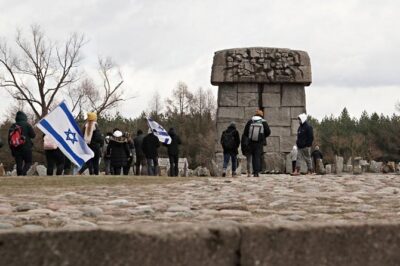
Treblinka Death Camp 6 Hour Private Tour from Warsaw
Read our review →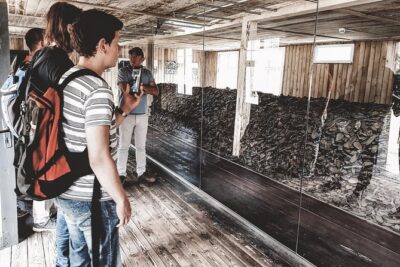
Stutthof Concentration Camp English Tour with Gdansk Hotel pickup
Read our review →Browse the lists this tour appears in