
Reviewed · JEWISH HERITAGE TOURS
A unique walking tour of Jewish Warsaw — past and present
The most powerful part of this Warsaw walk is the contrast between what remains and what has vanished. You move from the only Warsaw synagogue that survived the war to the former ghetto area, where fragments of wall, memorials, and empty spaces carry the story forward. Oliwia’s clear, expressive guiding is a major reason to choose this tour. She explains difficult events with care, detail, and a touch of humor when the subject allows it.
I like the route’s honest shape. It covers nearly 1,000 years of Jewish life in Poland, not just the Holocaust, and it ends by asking what Jewish Warsaw looks like today. I also like the small group limit of 10, which makes a serious subject easier to follow and leaves room for questions. The main drawback is the walking: about 4.5 to 5 kilometers over three hours, with long periods on foot. Entry to Nożyk Synagogue and the POLIN Museum is not included in the $32 price.
Key points to know before you book
- The route begins at Sienna 53: Meet in front of Baguette Mi and look for the guide carrying a white and green umbrella.
- Nożyk Synagogue is the rare surviving landmark: The tour includes a guided stop of about 15 minutes, but the entry fee is extra.
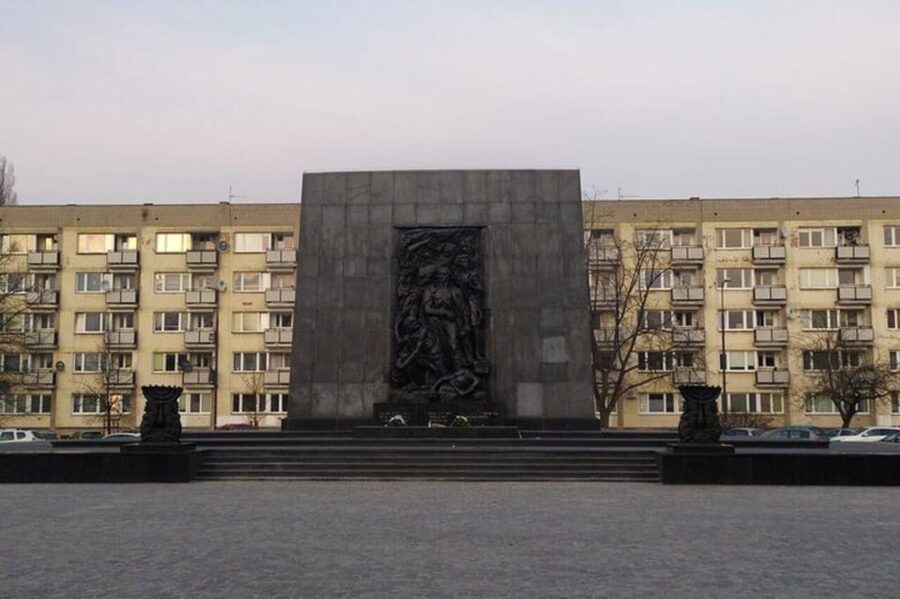
- Muranów gives the story its hardest setting: You see a remaining section of ghetto wall and several memorials connected with the Warsaw Ghetto.
- The tour reaches Miła 18 and Umschlagplatz: These places explain both the 1943 Jewish Uprising and the deportation of roughly 300,000 Jews to Treblinka.
- Oliwia receives the strongest praise: Her delivery, humor, intonation, and command of the subject make the history easier to follow.
- The group stays small: A maximum of 10 people suits anyone who prefers a focused walk over a large sightseeing crowd.
Why Jewish Warsaw needs a walking tour
Before World War II, about one third of Warsaw’s population identified as Jewish. Warsaw was home to the largest Jewish population in Europe, with Jewish neighborhoods, religious institutions, businesses, schools, political groups, and cultural life woven into the city.
That world was destroyed during the German occupation. The ghetto, deportations, starvation, executions, and the destruction of the city left few visible buildings behind. You cannot simply walk into a preserved old Jewish quarter here and read the story from intact streets.
That is why this tour works best as a guided walk. The physical evidence is often small: a section of wall, a memorial stone, a building that survived, or an empty patch of ground. Your guide supplies the connections between those places and explains what happened there.
The route also avoids treating Jewish Warsaw as a story that ended in 1945. It begins with settlement in Poland and the growth of Jewish life, covers the Holocaust and the 1943 uprising, then turns toward the Jewish community in Warsaw today. That wider frame gives the tour more meaning than a two-hour visit focused only on wartime destruction.
More Jewish Heritage Tours in Warsaw
- Warsaw: Warsaw Ghetto Private Walking Tour with Hotel Pickup
★ 4.9 · 369 reviews - Warsaw: Jewish History Guided Walking Tour in English
★ 4.7 · 324 reviews - Private Tour: Warsaw’s Jewish Heritage by Retro Fiat
★ 5.0 · 208 reviews
Starting at Sienna 53 and Nożyk Synagogue
The meeting point is in front of Baguette Mi at Sienna 53. Look for a guide with a white and green umbrella. That detail matters in a busy city, especially if several walks are beginning nearby.
Nożyk Synagogue is the first major stop. It is the only Warsaw synagogue that survived the war and remains in use today. The guided visit lasts about 15 minutes, so you get a focused introduction rather than a long service or architectural tour.
This stop helps you picture Jewish religious life as part of Warsaw’s normal city fabric. It also gives the walk a physical starting point. After hearing about a community that once formed a third of the city, you are standing inside one of its surviving institutions.
The synagogue entry fee is not included. Check the current charge when booking, and dress and behave respectfully in this active place of worship. The supplied information confirms that the tour includes a guided visit, but it does not specify the exact entry price or whether photography is allowed.
Hala Mirowska and the city’s everyday Jewish life
The next stop is Hala Mirowska, with about 10 minutes of guiding. This is a useful change of scale. Instead of focusing only on religious buildings and wartime memorials, the route considers the practical city where people bought food, worked, traded, and went about daily business.
A short stop cannot explain every part of the market’s past, so expect a concise piece of the larger story. Its value is in showing that Jewish Warsaw was not a separate museum subject. It was part of ordinary urban life.
I appreciate this kind of stop because it prevents the past from becoming a list of tragedies. A community is made of shops and meals as much as synagogues and monuments. The tour uses Hala Mirowska to keep that human scale in view.
Muranów and the few pieces left behind
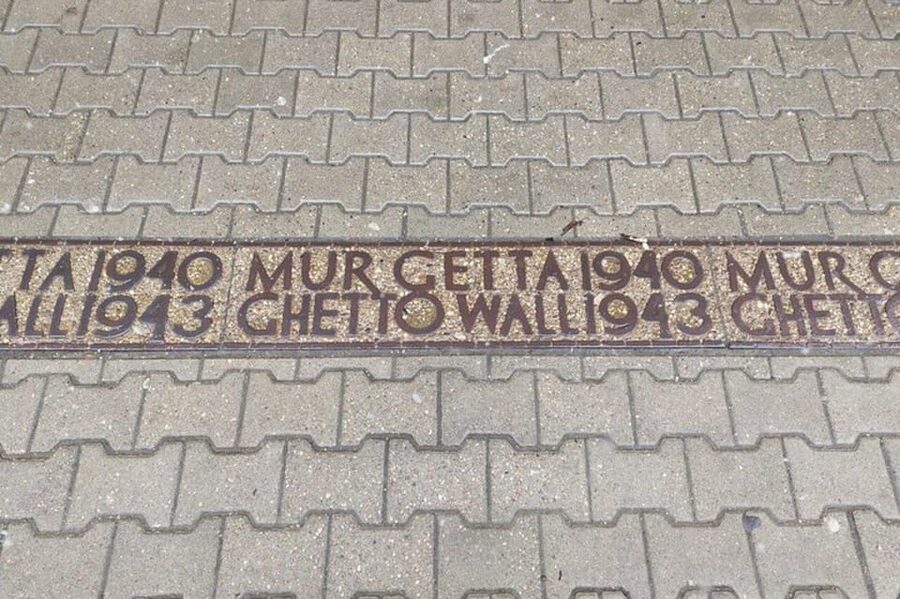
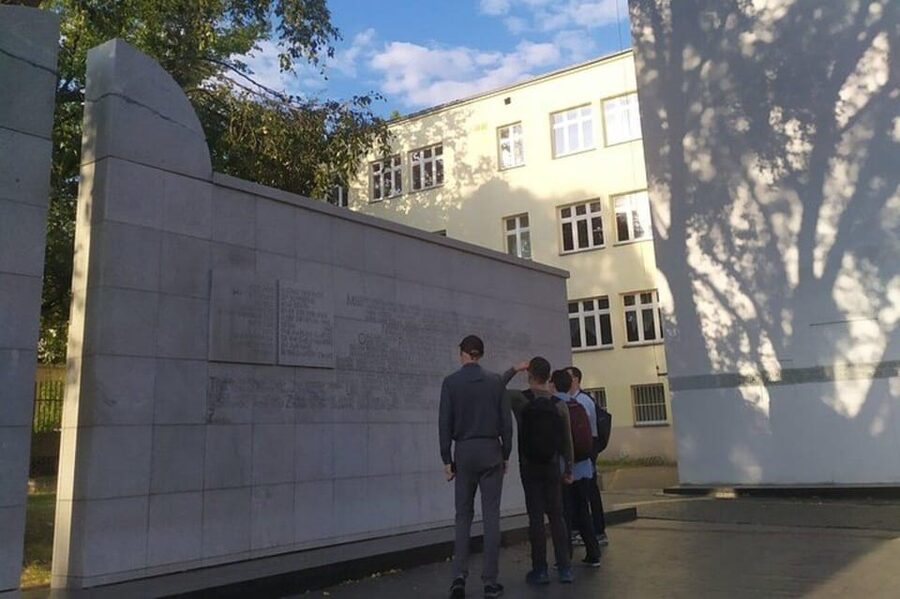
Muranów receives about 30 minutes, making it one of the central sections of the walk. Here you see one of the few remaining parts of the ghetto wall and hear how the district changed during and after the war.
This is likely the point where the walk becomes most demanding emotionally. The ghetto is not preserved as a complete historic quarter. You are asked to understand an almost erased place through fragments and explanation. A guide who can describe scale, events, and personal accounts clearly makes a major difference.
The walk includes first-hand accounts from Jews who survived life in the ghetto. Those accounts give weight to the facts without turning the tour into a simple sequence of dates. You hear about people making choices under conditions where normal choices had disappeared.
The remaining wall fragment is small. Do not expect a grand ruin or a complete boundary. Its importance comes from what it represents and from the location around it. Bring patience and allow the guide to build the setting for you.
More Walking Tours in Warsaw
- Warsaw: Old Town Highlights Walking Tour in English
★ 4.7 · 1,516 reviews - Warsaw: Old Town Guided Walking Tour
★ 4.9 · 599 reviews - Half-Day Polish Food Walking Tour with Guide and Dinner
★ 4.5 · 381 reviews - Old Town Warsaw Walking Tour
★ 4.5 · 333 reviews
The Ringelblum Archive memorial
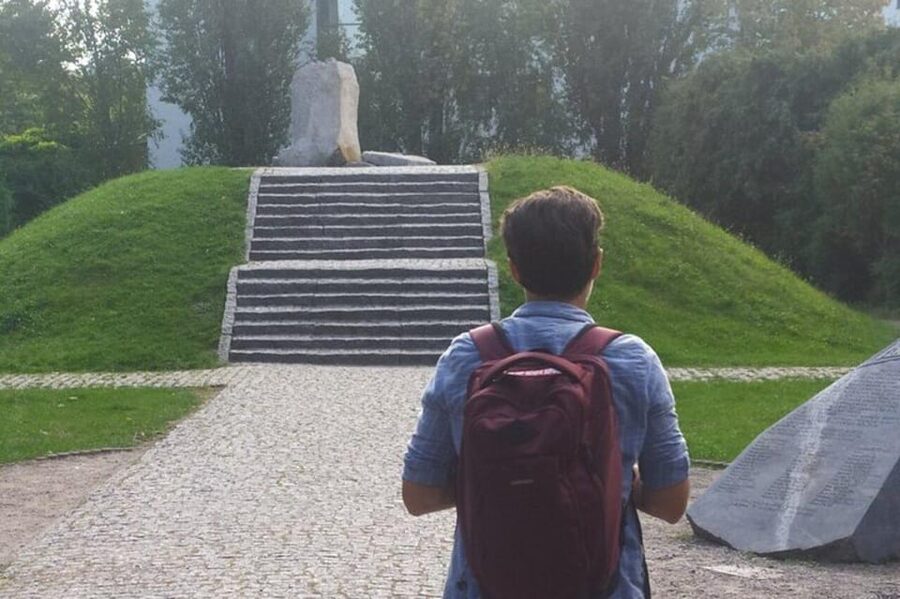
The stop at the memorial for the Ringelblum Archive lasts about 10 minutes. The archive is tied to the effort to record Jewish life and the destruction of the ghetto from inside the community itself.
This stop adds an important idea: people were not only trying to survive. They were also trying to preserve evidence, names, observations, and testimony for a future they might never see. That makes the tour’s use of personal accounts especially fitting.
You should expect a short explanation rather than a full archive visit. The route gives you the historical purpose of the archive and places it within the walk. If you want to spend serious time with documents and exhibits, you will need a separate museum visit.
POLIN Museum and a broader story
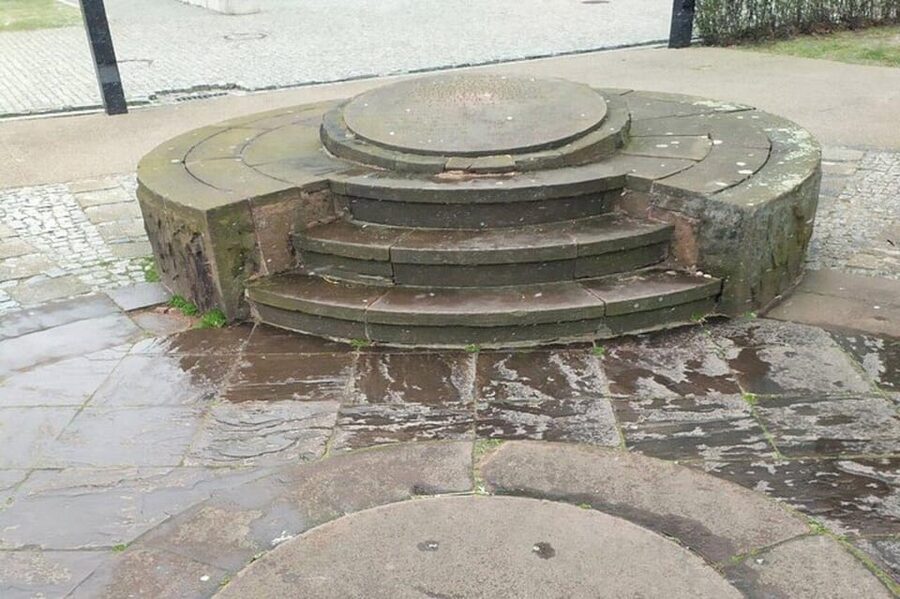
The walk continues to the POLIN Museum of the History of Polish Jews, with about 10 minutes of guiding. The museum covers the long history of Jewish life in Poland, so its presence reinforces the tour’s full time span, from arrival and settlement through expansion, persecution, destruction, and renewal.
The itinerary lists a guided stop, but the museum entry fee is not included. The information provided does not say that a full museum visit forms part of the three-hour walk. Plan on this being an introduction or exterior stop unless your booking details say otherwise.
I would treat the museum as a strong follow-up rather than assume the tour can cover it in 10 minutes. The walk gives you context for choosing what to see inside later. The museum can then supply the documents, objects, and longer explanations that a street tour cannot.
This is one of the tour’s best practical features. You get a route through the city and a clearer idea of how to use one of Warsaw’s main history museums afterward.
Miła 18 and the 1943 uprising
Miła 18 is one of the most important stops. The guide explains why Jewish fighters launched the Warsaw Ghetto Uprising in 1943 even though they knew they could not defeat the German forces.
That question matters. The uprising was not a military plan with a likely victory. It was an act of resistance, dignity, and refusal to cooperate with certain destruction. The stop helps you understand the choice on its own terms rather than judging it only by the outcome.
The tour also visits several monuments connected with the heroic struggle in the ghetto. These memorials are not interchangeable. A good guide explains who and what each one remembers, and how the uprising fits into the wider destruction of Jewish Warsaw.
Expect this part of the tour to be serious and reflective. The route does not present the uprising as a neat adventure story. It deals with defeat, loss, and the limited choices available to people trapped in the ghetto.
Ending at Umschlagplatz
The walk ends at the Umschlagplatz monument. From here, about 300,000 Jews were transported to Treblinka. Ending at this place gives the route a stark final point: you move from the community’s life and institutions to the location used for mass deportation.
The final stop also ties together the route’s recurring themes. Nożyk Synagogue represents survival. Muranów and the wall show physical remnants. The Ringelblum Archive represents testimony. Miła 18 represents resistance. Umschlagplatz confronts you with the machinery of deportation.
This is not a light sightseeing walk, and the final stop is not designed to leave you cheerful. It is designed to leave you informed and aware of what happened in the streets you have just crossed.
Guide Oliwia and the small-group format
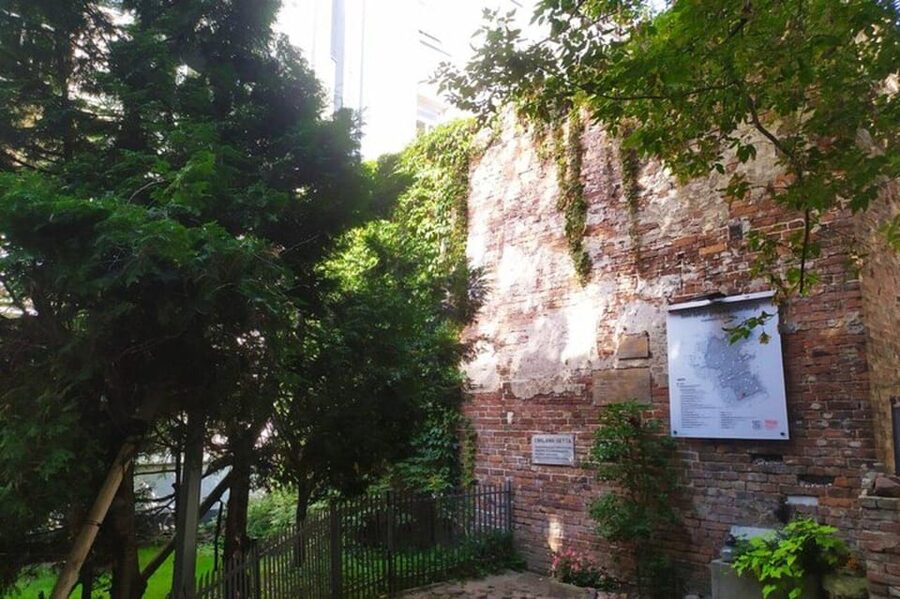
The guide can vary, but Oliwia is specifically identified in the feedback and receives repeated praise for her delivery. You can expect a guide who explains details carefully, uses changes in tone and intonation, and brings in personal accounts rather than reciting a dry script.
Her humor is also mentioned, but that does not mean the tour treats the subject casually. Used carefully, a little humor can help you stay attentive during three hours of painful material. Several ratings describe the walk as highly informative and interesting, with particular praise for Oliwia’s command of the ghetto’s history.
The group is limited to 10 people. That is a good size for a walking tour through memorial sites. You are close enough to hear the guide, and the experience should feel less anonymous than a large coach group. A small group cannot make the subject easier, but it can make the explanations more direct.
The tour is in English. If you want to ask questions about dates, names, or the present-day community, a small English-speaking group gives you a better chance to do so.
Is $32 a fair price?
At $32 per person, this is a reasonable price for a three-hour guided walk with a small group and a route of about 4.5 to 5 kilometers. You are paying for interpretation, not entry to a series of attractions.
That distinction matters. The Nożyk Synagogue and POLIN Museum charge separate admission, and those costs are not part of the tour. The price works best if you want a guide to connect scattered sites and give you a framework for exploring the synagogue or museum on your own afterward.
The included information pack adds practical value. It contains frequently asked questions, useful links, and recommendations for other places to visit, eat, and drink. Visual aids are also included, which can help when the modern city no longer looks like the place being described.
If you prefer to move quickly and read signs independently, you may find the price less attractive. If you want the city’s surviving traces explained in context, the cost is modest for the time and subject matter.
Walking conditions and who should book
You should be comfortable walking several kilometers over three hours. The activity is wheelchair accessible, but the supplied information specifically says it is not recommended for people who have problems walking long distances. Ask for current route details if you use a wheelchair and need to confirm surfaces, access, or restroom arrangements.
Wear comfortable shoes and allow the full three hours. This is not a stop, photo, and move-on sightseeing trip. The guide spends time at each location, and the subject deserves that slower pace.
I would recommend it to first-time visitors who want to understand Warsaw beyond its rebuilt center, history-minded travelers, and anyone planning to visit POLIN Museum. It also suits people who prefer a personal guide to a self-guided audio route.
You may want to skip it if you have very limited time, dislike serious historical subjects, or cannot manage a long urban walk. The experience is focused on Jewish Warsaw and the ghetto, not a general tour of Warsaw’s main landmarks.
Should you book this Jewish Warsaw walk?
Book it if you want the past and present placed in the same frame. The route covers settlement, community life, destruction, resistance, deportation, and the Jewish community’s reappearance in modern Warsaw. That range is the tour’s greatest strength.
The clearest reason to choose it is the guiding, especially if Oliwia leads your group. Her praised delivery and careful explanations are important because so much of the evidence is fragmentary. The main caution is practical and emotional: you will walk 4.5 to 5 kilometers, and the final sections deal directly with mass murder and loss.
For $32, this is a strong choice for a small, serious introduction to Jewish Warsaw. Add the synagogue or POLIN Museum entry fee to your budget, wear good shoes, and leave room afterward to process what you have seen.
FAQ
How long does the Jewish Warsaw walking tour last?
The tour lasts approximately three hours.
How far does the route cover?
The walking distance is approximately 4.5 to 5 kilometers.
Where does the tour begin?
The meeting point is at Sienna 53, in front of Baguette Mi. Look for a guide with a white and green umbrella.
Where does the tour finish?
The tour finishes at the Umschlagplatz monument.
Is the tour conducted in English?
Yes. The tour has a live English-speaking guide.
Is entry to Nożyk Synagogue included?
No. The entry fee to Nożyk Synagogue is not included in the tour price.
Is entry to the POLIN Museum included?
No. The entry fee to the POLIN Museum is not included.
Is the tour suitable for people with walking difficulties?
The tour is wheelchair accessible, but it is not recommended for people who have problems walking long distances.
Just added around Warsaw
- Wolfs Lair and Swieta Lipka Small Group Tour from Warsaw with Lunch★ 4.5 · 21 reviews
- Wolf’s Lair & Treblinka Tour in 1 day from Warsaw★ 5.0 · 37 reviews
- Wolfs Lair “Hitler’s Headquarters” – Full Day Tour from Warsaw by private car★ 4.5 · 4 reviews
- Tour from Warsaw: Wolf’s Lair, Hitler’s HQ Zones I and II★ 5.0 · 32 reviews
- Wolf’s Lair Private Day Trip from Warsaw★ 5.0 · 50 reviews
- Warsaw Must-See Local City Tour with Antek and Tomek★ 5.0 · 51 reviews
- Off the Beaten Track in Warsaw: Private City Tour★ 4.5 · 9 reviews
- Warsaw’s Old Town A Self-Guided Audio Tour★ 4.5 · 10 reviews
Jewish Heritage Tours, compared.

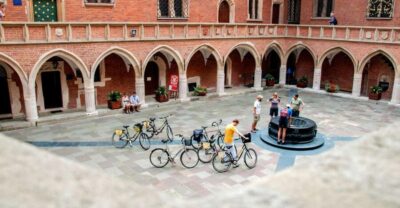
Bike Tour of Old Town, Jewish Quarter and the Ghetto
Read our review →
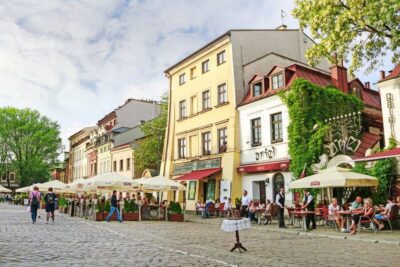
Kazimierz, Schindler’s Factory & Ghetto Guided Tour
Read our review →
Full Bike Tour – the Old Town, Jewish Qtr & the Ghetto NEW BIKES
Read our review →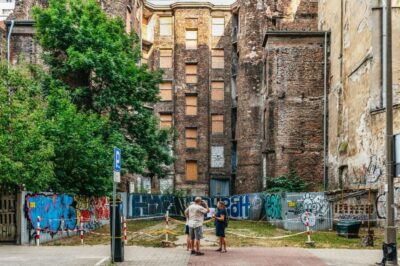
Warsaw Ghetto Private Walking Tour with Hotel Pickup
Read our review →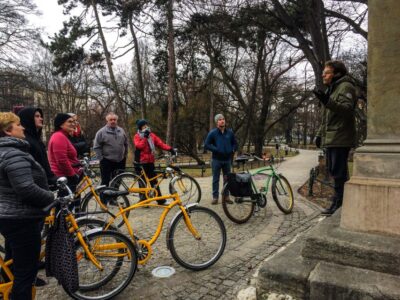
Bike Tour of the Old Town, Kazimierz, and the Ghetto
Read our review →Browse the lists this tour appears in