
Reviewed · WWII TOURS
Gdansk: Museum of World War II – True Story of a Living Hell
The most striking part of Gdansk’s Museum of World War II is its scale. You move from the rise of totalitarian rule to battlefields, occupation, resistance, and civilian survival, with the story told through both major events and ordinary lives. The 20-room main exhibition makes the war feel like a human disaster, not just a list of dates.
I like the clear link between Gdansk’s uneasy post-World War I status and the road to war. I also like the mix of objects, film, reconstructed rooms, and personal accounts, from an Enigma machine to everyday household scenes. The main drawback is time: three hours is only enough for a serious first visit, and some sections may feel long or repetitive if you try to read everything.
Key points to know before you book

- The meeting point is directly outside the museum at plac Władysława Bartoszewskiego 1.
- The tour is private, so only your own group joins the licensed English-speaking guide.
- The exhibition covers 20 rooms and presents the war through political, military, and personal stories.
- Allow the full three hours, especially if you use the audio equipment or stop for every film and display.
- Museum admission is included, but hotel pickup is not. Transport can be arranged for an additional 20 euros.
- The audio guide is worth considering, since it tracks your position and helps with displays in several languages.
Why Gdansk is the right place to study the war
Gdansk, known historically as Danzig, gives this museum a particularly useful starting point. After World War I and the Treaty of Versailles, the city was placed in a political limbo. It was not governed by the newly recreated Polish state, yet Germany had ruled the area for the previous 146 years after the partitions of Poland.
That awkward position matters. The story of World War II did not begin only when armies crossed a border. It grew from defeated empires, disputed borders, political resentment, totalitarian movements, and competing ideas about national identity. The museum uses Gdansk to show how local tensions became part of a much larger crisis.
I find this opening context valuable because it keeps the museum from becoming a simple military display. You are not rushed straight to tanks and battle maps. Instead, you first see the political conditions that made war possible, then follow how those conditions affected Poland, Europe, and people far beyond the continent.
More Museum Tours in Gdansk
- Gdansk: Private Communism Tour with Solidarity Center Museum
★ 5.0 · 28 reviews - Museum of the Second World War Gdansk Private Tour & Tickets
★ 5.0 · 24 reviews - Gdansk Private WWII Tour with Museum of the Second World War
★ 4.9 · 22 reviews
Meeting outside the museum
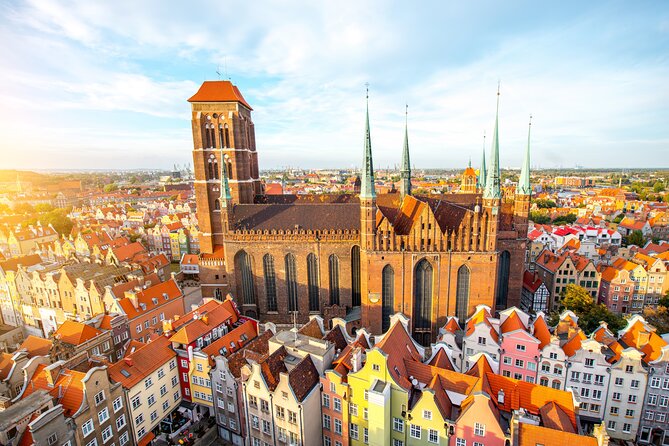
The tour begins in front of the Museum of the Second World War at plac Władysława Bartoszewskiego 1. The meeting period is short, about 10 minutes, so arrive ready to identify your guide and group.
Your booking includes a private visit with a five-star licensed guide fluent in the language selected at booking. The guide provides commentary on World War II in Poland and can shape the visit around your interests. No guide name is supplied in advance, so if you need to recognize someone at a busy meeting point, confirm the exact meeting instructions before arrival.
The activity ends back at the museum. There is no hotel pickup in the standard arrangement, but transport can be arranged for an extra 20 euros. The museum is near public transportation, which makes the meeting point practical if you are staying in central Gdansk.
The main exhibition takes you below street level
The museum’s striking building is only the beginning. The entrance is at street level, but the main exhibition continues on lower levels. Lifts are available, which helps if stairs are difficult, but you should still plan for a substantial amount of standing and walking inside.
The exhibition occupies 20 rooms arranged along both sides of a long central corridor. That corridor contains displays about ordinary life during wartime. This layout gives the visit a steady rhythm: major political and military subjects sit alongside the practical details of daily survival.
The first room uses a semi-circular screen to show the spread of totalitarian regimes across Europe. It is an effective opening because it places the war within the wider political climate rather than treating it as an isolated German attack on Poland.
From there, the route moves through the causes of the war, the invasion of Poland, occupation, resistance, mass violence, the military campaigns, and the war’s effect on civilians. The exhibition also reaches beyond Poland to tell the wider European and global story.
From Stalin’s pipe to an Enigma machine
The objects are one of the strongest reasons to visit. The collection ranges from Stalin’s pipe to a Sherman tank and an Enigma machine. Those objects work at different scales, yet together they show how the war was shaped by leaders, technology, soldiers, and civilians.
A large military object can explain power and tactics. A coded machine can suggest the hidden struggle of intelligence and communications. A personal object can bring the story down to one individual. The museum repeatedly shifts between those levels, which keeps the exhibition from becoming a parade of equipment.
You will also find large numbers of photographs, films, documentaries, and original artifacts. Some films run in loops, so you do not need to arrive at one exact moment to see them. That is convenient, but it also makes the visit longer. If you stop for every screen, panel, and object, you may not finish the complete route in three hours.
More WWII Tours in Gdansk
- Gdansk: Guided Round-Trip Cruise to Westerplatte
★ 4.3 · 865 reviews - Gdansk: Stutthof Concentration Camp Regular Tour
★ 4.7 · 361 reviews - Stutthof Concentration Camp English Tour with Gdansk Hotel pickup
★ 4.5 · 73 reviews - Stutthof Concentration Camp:Guided Tour with Transportation
★ 4.7 · 57 reviews
Everyday life gives the museum its human scale
The long corridor is devoted in part to daily life during the war. Recreated streets and shops help show how occupation and conflict reached beyond the battlefield. These scenes are not just decoration. They let you think about food, work, family, fear, communication, and the loss of normal routines.
The museum also places individual fates beside major events. A political decision or military operation is followed by the effect on people who had no control over it. This movement between the large and the personal is especially helpful if you already know the basic chronology but want a stronger sense of what the war meant for civilians.
The presentation is direct about violence and suffering. It does not soften the horrors of Nazi occupation or the later Soviet domination described in the exhibition. That makes the museum powerful, but it may be intense for children or anyone who finds war imagery difficult.
Poland, Europe, and the wider war

The museum’s main subject is Poland, but the story does not stop at Poland’s borders. You will see how local events fit into the war across Europe and beyond. The result is a broad route that connects political decisions, military campaigns, occupation, resistance, and civilian experience.
Poland’s position between Nazi Germany and the Soviet Union is central to the story. The museum presents the country as being caught between two brutal systems, a point that helps explain why the war did not simply end for Polish people when Germany was defeated.
This wider view is one of the tour’s main benefits. A guide can explain connections that are easy to miss when you visit alone, especially if you are not familiar with the political history of Gdansk or Poland. At the same time, the exhibition contains so much material that a private guide cannot possibly give equal attention to every room in a single visit.
Is three hours enough?

The scheduled visit lasts about three hours, with approximately 10 minutes for the meeting and about 2 hours 50 minutes inside the museum. That is a sensible minimum for a first look, but it is not enough to study every display closely.
I would treat the three-hour format as a guided introduction rather than a final visit. You can follow the main story, listen to the guide, view key objects, and pause at the sections that matter most to you. If you try to read every panel and watch every film, you will need more time.
Some sections repeat key ideas or details. That can feel slow, especially near the end, but repetition also helps with a difficult subject that covers many years and several political systems. If your concentration fades, focus on the guide’s main explanations and save detailed reading for the parts that interest you most.
The museum has a café and a staffed cloakroom. Headphones are available at the desk, and the audio system can provide translations in several languages. The audio guide has also been described as easy to use and able to detect where you are in the exhibition, so it can add detail without preventing you from looking at the displays.
Private guide or audio guide?
This experience includes a live licensed guide, while the museum also offers audio equipment. They serve different purposes.
A live guide is useful if you want the Polish and Gdansk context explained in plain language, or if you want to ask questions as you go. The private format means your group does not have to follow the pace of strangers. You may be able to spend more time on Poland, civilian life, military history, or another subject that matters to you.
An audio guide gives you more control over pace and language. It can be particularly useful when the museum’s printed material is too much to read in one visit. Italian audio service is specifically available according to the supplied information, and the museum provides headphones for translation.
If your booking includes a live guide, you may not need the audio guide for every room. Still, it can be helpful for extra detail or for members of your group who prefer to listen rather than follow a spoken explanation. Ask how the two options work together before starting, so you do not pay for a service you will barely use.
What the $217.08 price means
At $217.08 per person, this is not a low-cost museum entry. The price makes the most sense for a small group that wants a private visit, an English-speaking licensed guide, admission included, and commentary focused on World War II in Poland.
For one person or a couple, the cost may feel high compared with buying ordinary museum admission and using an audio guide. For a family or group sharing the value of a private booking, the calculation may look better, particularly if you want the guide to adjust the visit to your interests.
Group discounts are available, although the exact terms are not supplied. The museum has also been noted as offering free admission on certain days, including Tuesdays, and reduced admission for people aged 60 and above. Those conditions may apply to regular museum entry rather than this private package, so confirm before assuming they reduce the tour price.
The best reason to pay extra is not simply access to the building. It is the time saved in understanding what you are seeing. If you prefer to read at your own pace and already know the history, standard admission and an audio guide may be better value. If you want help making sense of Gdansk’s position and the Polish experience, the private format has a stronger case.
Who will get the most from this experience?
I would choose this tour if you have a serious interest in 20th-century history, Polish history, military history, or the experience of civilians under occupation. It also works well for first-time museum visitors who want a clear route through a very large exhibition.
You should be comfortable with graphic subject matter and a fairly demanding visit. The museum is not a quick stop between other attractions. Even the strongest first visit requires attention, and the film footage and photographs can be upsetting.
Families can participate, since most visitors can take part, but the content is not light. Older children and teenagers with an interest in history may gain a great deal from the visual presentation. Younger children may find the length and subject matter difficult.
This is also a good choice if your group has different interests. One person can focus on military hardware, another on daily life, and another on the political story. A private guide can help connect those interests rather than forcing everyone through the same narrow explanation.
Practical details that affect your visit
The activity is offered in English and confirmation is received at booking. The meeting point is at the museum, not at your hotel, unless you arrange paid transportation.
The museum is near public transportation and has lifts from the street-level entrance to the lower exhibition areas. A cloakroom and café are available, which is useful because the visit is long.
Wear comfortable shoes and keep your schedule open. The exhibition is much larger than a typical single-room war museum, and you will want time to pause. I would avoid booking another major attraction immediately afterward, especially if you plan to use the audio guide or read the displays carefully.
Free cancellation is available up to 24 hours before the start time for a full refund. Changes or cancellations made less than 24 hours before the activity are not accepted for a refund, and the cut-off follows local time.
Should you book it?
Book this tour if you want a guided, serious introduction to Gdansk’s Museum of World War II and value the chance to ask questions in a private group. The strongest parts are the Gdansk-specific opening, the mixture of personal stories and military objects, and the careful attention to how ordinary people lived through the war.
Skip the private package if your main aim is the lowest possible admission cost or if you prefer to move slowly and independently. In that case, use regular admission and consider the museum’s audio equipment.
For most history-minded visitors, I would allow the full three hours and regard the tour as a strong first visit, not the final word on the museum. The subject is heavy, the route is long, and the material can repeat itself. But the combination of original objects, films, reconstructed daily life, and Poland’s difficult position between Nazi Germany and the Soviet Union makes this one of Gdansk’s most important museums.
FAQ
Where does the tour begin?
The tour begins in front of the Museum of the Second World War at plac Władysława Bartoszewskiego 1, 80-862 Gdańsk, Poland.
Where does the tour end?
The activity ends back at the museum meeting point.
How long does the experience last?
The experience lasts approximately three hours. About 10 minutes are set aside for meeting the guide, followed by roughly 2 hours and 50 minutes in the museum.
Is museum admission included?
Yes. Tickets to the Museum of World War II are included in the tour.
Is the tour private?
Yes. Only your own group participates in this private activity.
Is the guide fluent in English?
Yes. A five-star licensed guide fluent in the language selected at booking is included. English is one of the offered languages.
Is hotel pickup included?
No. Hotel pickup and drop-off are not included. Transportation can be arranged upon request for an additional 20 euros.
Is the museum accessible by lift?
Yes. The entrance is at street level, and lifts provide access to the lower exhibition areas.
Can I cancel for a full refund?
Yes, if you cancel at least 24 hours before the experience begins. Cancellations or changes made less than 24 hours before the start time are not accepted for a refund.
Just added around Gdansk
- Gdansk and Malbork Castle Small Group Tour from Warsaw with Lunch★ 4.5 · 20 reviews
- Westerplatte private tour led by Expert-Guide (door to door)★ 5.0 · 5 reviews
- Whisky Tasting in Gdańsk★ 5.0 · 3 reviews
- Gdansk EVERYDAY Vodka Tasting Tour★ 5.0 · 6 reviews
- Westerplatte – 2h private trip by luxury car|★ 5.0 · 4 reviews
- Private WW2 Tour of Westerplatte,Gdansk and Stutthof Including Lunch★ 5.0 · 12 reviews
- Aiport Gdansk Transfer to Malbork Castle or Stutthof★ 5.0 · 3 reviews
- 5 hours Individual trip to the Stutthof Concentration Camp★ 5.0 · 5 reviews
WWII Tours, compared.
Warsaw for WWII Buffs – private tour with hotel pickup
Read our review →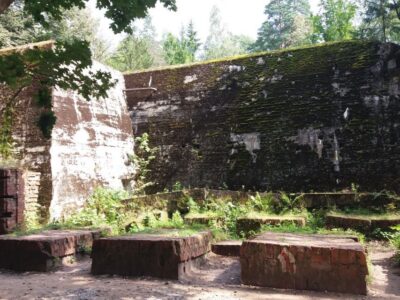
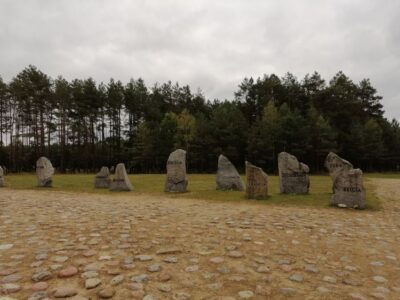
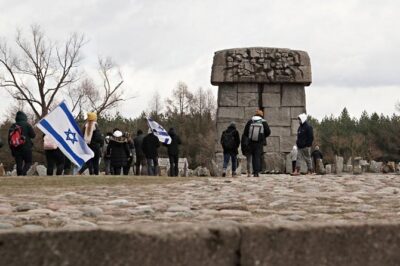
Treblinka Death Camp 6 Hour Private Tour from Warsaw
Read our review →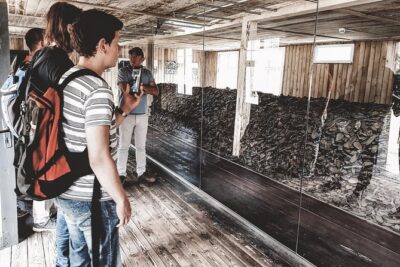
Stutthof Concentration Camp English Tour with Gdansk Hotel pickup
Read our review →Browse the lists this tour appears in