
Reviewed · WWII TOURS
Krakow: Plaszow Concentration Camp Guided Walking Tour
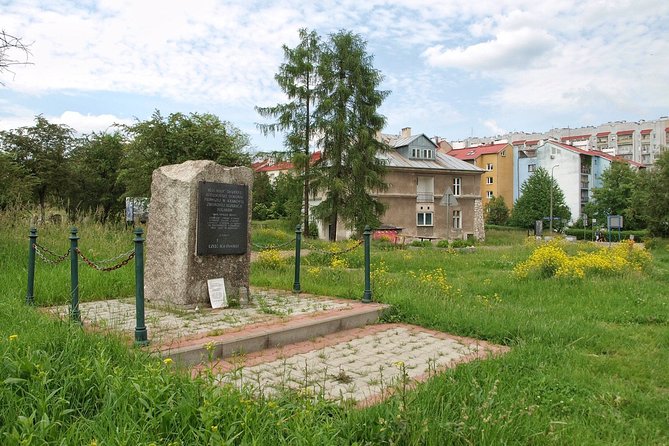
Plaszow is not a preserved camp behind a gate. It is an open, quiet place where cemetery fragments, memorials, and scattered remains require a guide to explain what you are seeing. This tour begins at Ghetto Heroes Square, then follows the route toward the former camp and pieces together a site that Nazi Germany tried to erase.
I like the clear connection between the Kraków ghetto and Plaszow, and I like the way guides use old photographs to show what has disappeared. Guides such as Bartholomew, Barbara, and Phil have been praised for careful explanations and patient answers. The drawback is simple: much of the camp is no longer visibly intact, so you need imagination and attention rather than a sequence of preserved buildings.
- Starts at Ghetto Heroes Square: Begin where ghetto residents were registered, controlled, and sent away.
- Reconstructs a vanished camp: See the Grey House, cemetery traces, the roll-call area, and memorials rather than a fully preserved complex.
- Covers more than Jewish imprisonment: Learn about forced labor, Polish prisoners, executions, and the camp’s later role as a transit point.
- Explains Schindler’s role in context: Connect his enamelware factory to work permits and the transfer of prisoners to Brunnlitz.
- Requires steady walking: The tour lasts about two hours and calls for moderate fitness and comfortable shoes.
- Offers a small-group format: Groups can contain up to 25 people, with the tour conducted in one selected language.
From Ghetto Heroes Square to Plaszow
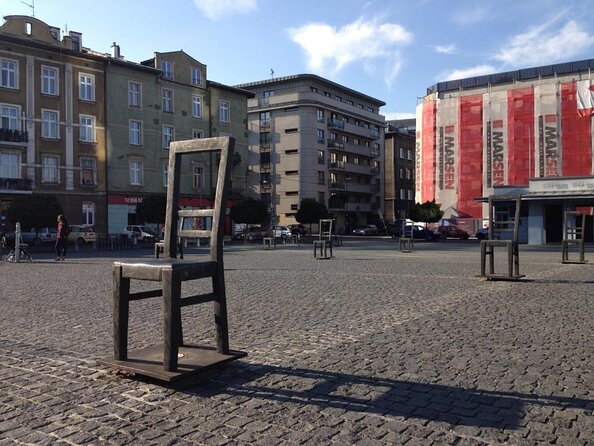
The tour starts outside Apteka pod Orłem at Plac Bohaterów Getta 18, the square known during the German occupation as Plac Zgody. This is not just a convenient meeting point. It was the logistical center of the Kraków ghetto, where people were registered, controlled, and assembled before deportation transports.
The square’s empty-chair memorial gives the place a quiet force, but this walking tour adds the practical history behind it. You learn how the site functioned as a point of departure and administration, then follow the story outward toward Plaszow. That opening helps you understand that the camp was not an isolated site. It was part of a chain of ghettos, labor camps, transports, and factories.
Allow extra time to find the meeting point and arrive at least 10 minutes early. The group leaves on schedule, and late arrivals cannot join or receive a refund. That rule matters here because the first part of the experience may include the route from the square toward Plaszow, not simply a meeting at the camp entrance.
One useful detail from the tour experience is that some groups have taken a tram from Heroes Square to Plaszow. The supplied information does not promise the same transport for every departure, so do not treat it as a private ride or a sightseeing tram tour. The important point is that the guide links the two places instead of presenting Plaszow as a disconnected stop.
What happened at Plaszow
Plaszow was created in October 1942 on the grounds of two Jewish cemeteries. It first served as a forced-labor camp for Jews from the liquidated Kraków ghetto. In July 1943, the site also held Poles in a penal-labor section.
In January 1944, the camp received official concentration-camp status. Later that year, it also served as a transit camp for Hungarian Jews sent onward to Auschwitz. More than 35,000 people were imprisoned at Plaszow during its existence, and around 6,000 were murdered.
Those numbers can feel abstract. The guide’s job is to connect them to the ground under your feet: the camp’s living areas, hospital, administrative buildings, industrial sections, execution sites, and roll-call spaces. The tour does not reduce Plaszow to one story or one famous name. It explains how the camp changed and how different groups were treated within it.
Executions took place at several locations. Today, mass graves and memorials mark parts of the former camp. You should expect a serious visit, not a conventional sightseeing stop. There is no entertainment element, and the site can be emotionally heavy. That is part of its value, but it also means you should plan the tour for a time when you can give it your full attention.
More Walking Tours in Krakow
- Old Town Krakow & Wawel Castle Walking Tour
★ 5.0 · 1,508 reviews - Creepy Krakow: 2-Hour City Walking Tour
★ 4.7 · 1,131 reviews - Krakow: The Old Town Walking Tour
★ 4.8 · 794 reviews
Reading the remains of the former camp
The best reason to take a guide here is that Plaszow can be difficult to read on your own. Much of the original camp has vanished, and the remaining evidence is scattered. A path, a building fragment, or a patch of cemetery stone may not tell you much without historical context.
The walk points out the Grey House, one of the key surviving structures associated with the camp. You also see the ruins of the pre-burial hall and traces of the former Jewish cemeteries. Fragments of gravestones were once used to pave roads, a detail that makes the destruction of the cemeteries painfully concrete.
The roll-call square helps you picture the camp as an organized system rather than a random collection of barracks. The guide explains how the living, hospital, administrative, and industrial sections related to one another. Old images are especially useful here. A past participant described being shown photographs of buildings and features that no longer survive, and that is exactly the kind of visual help you need at Plaszow.
This is also where you should expect the main limitation of the experience. If you want intact barracks, museum displays, or rooms filled with original objects, this tour will not provide them. Plaszow asks more from you. You listen, look carefully, compare old images with the present site, and accept that absence is part of the story.
Memorials and the Monument of Torn-Out Hearts
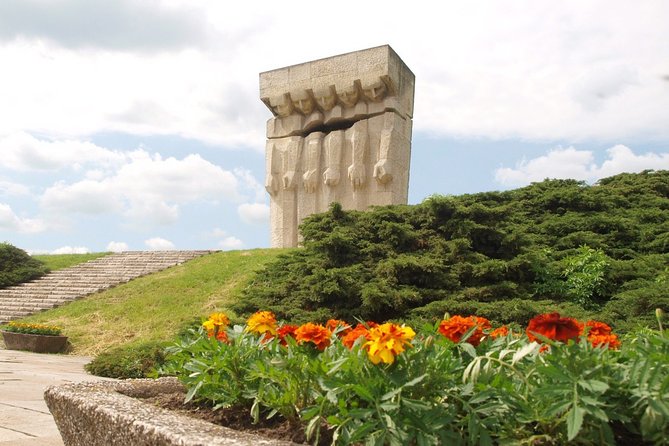
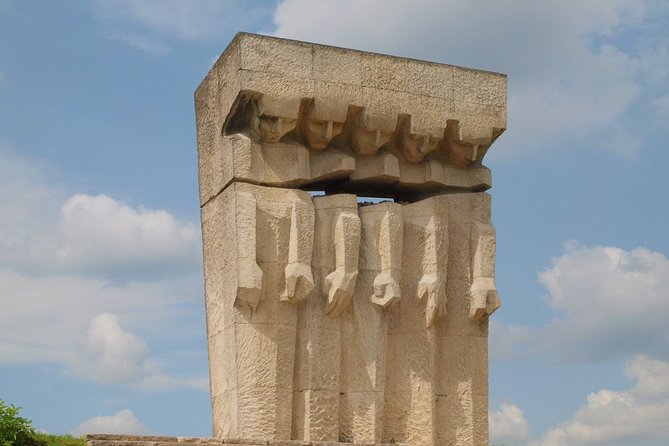
The walk pauses at major memorials, including the Monument of Torn-Out Hearts. These stops give you time to consider the human cost of the camp rather than moving through a list of dates and buildings.
A guide can explain why memorials were placed where they are and how they relate to mass graves and execution sites. The experience is stronger when you understand the setting around each monument. You are not simply taking a photograph and moving on. You are learning what happened at the site and why the memory of it is marked in that particular way.
The open setting can also make the visit feel less controlled than a museum. There is no fixed indoor route, and conditions underfoot may vary. Wear comfortable shoes, expect a fair amount of walking, and be prepared for an outdoor experience. The tour description calls for moderate physical fitness, which is a useful warning for anyone with mobility concerns.
Oskar Schindler beyond the film
Oskar Schindler is an important part of the story, but the tour places him within the wider history of Plaszow rather than treating the visit as a movie-location walk. Through his enamelware enterprise, Schindler sought work permits for Jewish prisoners registered through Plaszow. Those permits helped shield workers from further transports.
Later, he arranged for his workers to be transferred to his wartime plant in Brunnlitz. More than 1,000 people were saved through these efforts. The connection is remembered around the world because of Schindler’s List, and the tour can help you separate film scenes from the actual places and events.
You may recognize sites connected with the film, but do not expect the camp to look exactly as it did on screen. The movie used recreated sets and selected locations, while the real Plaszow has changed greatly. The guide’s photographs and explanations help bridge that gap. This is one of the most useful parts of the tour for anyone who has seen the film and wants to understand what it got right, what it condensed, and what it could not show.
I would not book this only as a film-location outing. Schindler is one thread in a much larger history involving forced labor, imprisonment, executions, and deportation. The visit works best when the film serves as a starting point, not the main subject.
More WWII Tours in Krakow
- Krakow: Plaszow Concentration Camp Walking Tour
★ 4.8 · 39 reviews - Guided Tour in Kraków-Płaszów Former Concentration Camp
★ 5.0 · 19 reviews - Krakow World War II Private Tour
★ 5.0 · 16 reviews - Krakow: Former Concentration Camp Plaszow Guided Tour
★ 4.8 · 10 reviews
How the two-hour walk feels
The full experience lasts about two hours. Around 15 minutes are devoted to Ghetto Heroes Square, about an hour to the main Plaszow visit, and roughly 45 minutes to the detailed walk among the surviving features and memorials.
That timing gives the guide room to explain rather than rush. It also means you should not expect a quick overview. The subject needs pauses, and the outdoor setting requires time to move between locations.
The group can include up to 25 people. That is not a private tour, but it is still a manageable size for a walking explanation. The guide can speak to the full group, and you can ask questions during the route. The tour is offered in English, and group tours operate in one selected language, so choose your language carefully when booking.
Past departures have featured Bartholomew, Barbara, and Phil. Their reported strengths are worth noting because a site like this depends heavily on the guide. Bartholomew is described as informative and clear, Barbara as friendly and willing to answer questions, and Phil as someone who took time to show the main sites and explain them in detail. Your assigned guide may differ, but the experience is designed around guided interpretation rather than independent wandering.
Is $30.04 a fair price?
At $30.04 per person, this is a reasonable price if you want the history explained on site. You are paying for the guide’s interpretation, the connection between Ghetto Heroes Square and Plaszow, and the ability to make sense of remains that can otherwise seem sparse.
The value is strongest for first-time visitors to Plaszow, people who have seen Schindler’s List, and anyone who wants the camp’s story placed within Kraków’s wartime history. A self-guided visit may cost less, but it would leave you to identify the Grey House, cemetery traces, roll-call area, and memorial sites on your own. At a location where so much has disappeared, that difference matters.
The price is less attractive if you want a museum-style display, extensive indoor exhibits, or a short, easy outing. This is a walking history tour at a difficult site. Its worth comes from the guide’s ability to make the remaining evidence understandable.
Who should book this walk?
I would recommend it to adults and older teenagers who are ready for a solemn history visit and can manage outdoor walking. It suits you especially well if you want to understand the Kraków ghetto’s connection to Plaszow, or if the film has left you with questions about Schindler and the people he helped.
It may not suit you if you are looking for a light afternoon activity or a preserved concentration-camp museum. The subject is disturbing, the setting is largely open, and the missing structures mean you must listen closely.
Plan on arriving early, wearing comfortable shoes, and leaving room afterward to process the visit. The end point is at a bus stop at 57 Kamienskiego Street, so note that the tour does not return you to the original square. It ends near public transportation, which can be useful, but you should know where you are heading next.
Should you book the Plaszow tour?
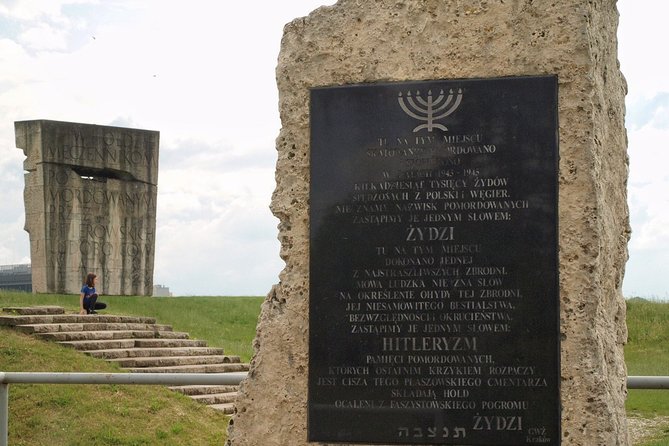
Book this tour if you want the former camp explained by a guide who can connect physical traces to the ghetto, forced labor, executions, and Schindler’s rescue efforts. The strongest parts are the route from Ghetto Heroes Square, the use of old photographs, and the explanation of features that are easy to miss alone.
Skip it if you need preserved buildings or a museum collection to make the past feel real. Plaszow is a demanding site, but that is also why guided interpretation helps. For about $30, two hours with an English-speaking guide offers a focused and respectful way to understand one of Kraków’s most difficult places.
FAQ
Where does the Plaszow tour begin?
It begins at Apteka pod Orłem, Plac Bohaterów Getta 18, 33-332 Kraków, Poland.
Where does the tour end?
The tour ends at the bus stop at 57 Kamienskiego Street, Kraków.
How long does the experience last?
The tour lasts approximately two hours.
What language is the tour offered in?
The tour is offered in English. Group tours operate in one language, so select your preferred language when booking.
How much does the tour cost?
The listed price is $30.04 per person.
How large is the group?
The group can include a maximum of 25 travelers.
How much walking is involved?
This is a guided walking tour with a moderate physical fitness requirement. Comfortable shoes are recommended because there is a lot of walking.
Can I cancel for a full refund?
Yes. You can cancel up to 24 hours before the local start time for a full refund. Cancellations or changes made less than 24 hours before the start are not accepted for a refund.
Just added around Krakow
- stag dog chase Krakow prank★ 5.0 · 4 reviews
- Divine Mercy Sanctuary – Private Tour from Krakow★ 5.0 · 4 reviews
- ZALIPIE – painted village, unique small group tour from Krakow★ 5.0 · 7 reviews
- ZALIPIE – painted village, unique PRIVATE tour from Krakow★ 5.0 · 20 reviews
- Zalipie Private Tour from Krakow The Painted Village★ 5.0 · 4 reviews
- Wooden Churches Unesco List Private Tour from Krakow★ 5.0 · 14 reviews
- Guided tour to Salt Mine & Schindler Factory with Pick-Up Options★ 4.0 · 58 reviews
- Wawel Castle, Cathedral, & Rynek Underground Tour with Lunch★ 5.0 · 4 reviews
WWII Tours, compared.

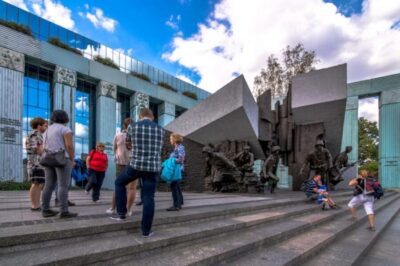
Warsaw for WWII Buffs – private tour with hotel pickup
Read our review →
Treblinka Death Camp 6 Hour Private Tour from Warsaw
Read our review →
Stutthof Concentration Camp English Tour with Gdansk Hotel pickup
Read our review →Browse the lists this tour appears in