
Reviewed · WWII TOURS
Guided Tour in Kraków-Płaszów Former Concentration Camp
Kraków’s former Płaszów concentration camp sits surprisingly close to busy city streets, a shopping center, and Krakus Mound. This two-hour walk connects that quiet, uneven ground with Ghetto Heroes Square and a surviving fragment of the Kraków Ghetto wall.
I like the clear route, which links several places instead of treating the camp as an isolated stop. I also like the human touch reported from guide Olga, who helped with tram tickets when needed. The main drawback is that Płaszów is not a preserved museum site, so you need to listen closely and use your imagination.
Key points to know before booking
- Płaszów is in Kraków itself, not in a distant town reached by a long day trip.
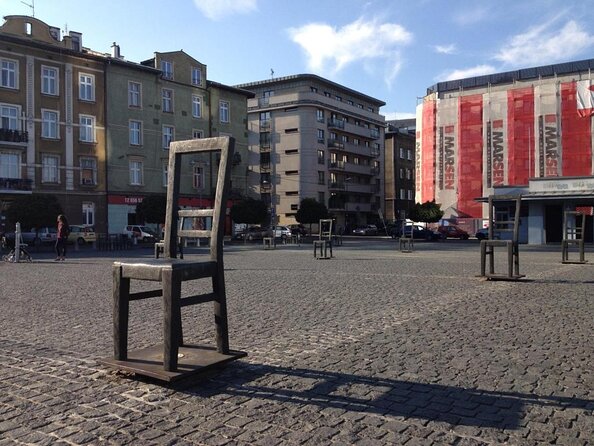
- Ghetto Heroes Square begins the story, with its unusual arrangement of 70 metal chairs symbolizing absence and forced departure.
- The former camp is largely open and undeveloped, so the guide’s explanations matter more than preserved buildings.
- You’ll see a 12-meter fragment of the original ghetto wall, with a memorial plaque in Polish and Hebrew.
- The tour lasts about two hours and is conducted in English, with groups of up to 25 people.
- The price is about $30.01 per person, with free cancellation up to 24 hours before departure.
Why Płaszów matters in Kraków’s story
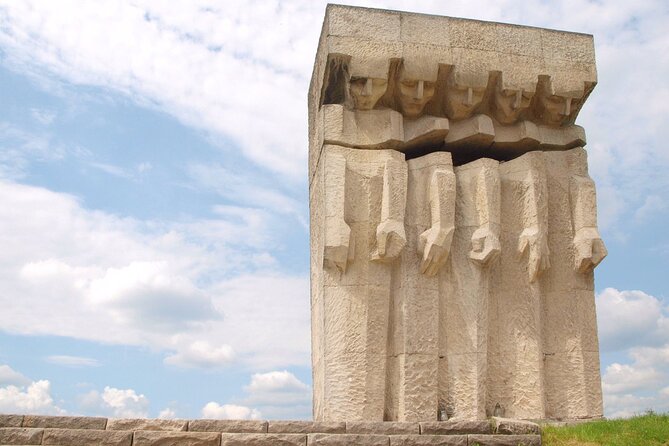
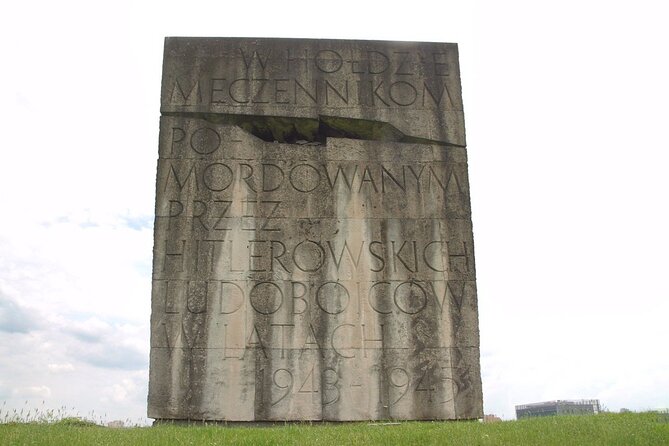
Many people use Kraków as a base for Auschwitz, yet the city’s own wartime story is easier to miss. Płaszów lies across the river in Podgórze, close to ordinary city life. That contrast gives this tour much of its force.
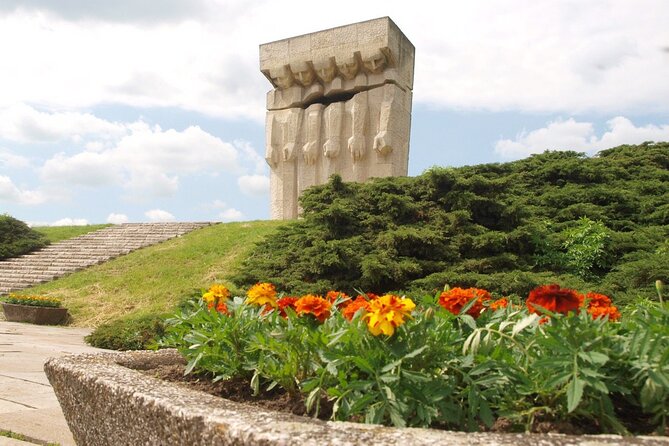
You are not heading into a remote memorial complex. The former camp area is near Wielicka Street, opposite Bonarka shopping center, and not far from Krakus Mound. Today, much of the site is open, uneven ground with little visible construction. Without a guide, you could easily walk through it without realizing what happened there.
That absence is both the strength and weakness of the visit. You do not get a neat sequence of buildings, rooms, and signs. Instead, you get a place whose history must be explained. A good guide helps you connect the ground beneath your feet with the people who were imprisoned, killed, and forced from Kraków during the German occupation.
The tour is therefore less about sightseeing in the usual sense. It is a short history walk, with the city around you acting as an uncomfortable reminder that these events happened close to homes, roads, shops, and daily life.
More WWII Tours in Krakow
- Krakow: Plaszow Concentration Camp Walking Tour
★ 4.8 · 39 reviews - Krakow World War II Private Tour
★ 5.0 · 16 reviews - Krakow: Former Concentration Camp Plaszow Guided Tour
★ 4.8 · 10 reviews
Starting at Ghetto Heroes Square
The meeting point is at Apteka pod Orłem, Plac Bohaterów Getta 18. The walk begins near Ghetto Heroes Square, known before and during the war as Plac Zgody. This was part of the Kraków Ghetto, and its present-day design makes it one of the city’s most memorable memorial spaces.
The square contains 70 large metal chairs, spaced across the open area. They represent departure and absence. The idea is simple, but the effect is strong. The chairs do not recreate the past. They point to the people who were removed from the square and from the city, leaving behind empty places.
The design also has a complicated recent history. After the war, the square was neglected and was even used as a public toilet and parking area. It was renovated in 2005, and the new design caused debate. That detail matters because memorials are not frozen pieces of history. Kraków has had to decide, many years later, how to mark a place shaped by violence and loss.
I like beginning here because it gives you a visual key for the rest of the tour. The chairs prepare you for a visit built around absence. At Płaszów, you will not find a fully preserved camp complex. At the square, the missing people are represented by objects that are present but empty.
The Płaszów camp site after the city
From Ghetto Heroes Square, the experience continues toward the former Płaszów camp. The route ends at Henryka Kamieńskiego 57, at the bus stop near 57 Kamienskiego Street. The exact walk between the points is part of the practical experience, so wear comfortable shoes and be ready for uneven ground.
Płaszów was a German Nazi concentration camp located in what is now the Podgórze district. Today, the area is largely undeveloped. You might see it as a green and open place used for walking, but the tour asks you to read it differently.
That shift in perspective is the main value of having a guide. The site does not present its story in an obvious way. There are no rows of intact barracks guiding you from one section to another. Instead, the guide gives shape to a place that has lost many of its physical markers.
You should expect the camp visit to feel quieter and less structured than a formal museum tour. That can be difficult for some people. If you prefer exhibits, archival photographs, and a clear indoor route, this may not meet your expectations. If you want to understand how the camp fits into Kraków’s geography and Holocaust history, the open setting adds something important.
The walk lasts about one hour at this main stop. The pace allows time for explanations, questions, and pauses. With a group limit of 25, the experience is not guaranteed to be intimate, though it may be smaller. One booking had only three people, which made the visit feel especially personal.
Why the guide matters at Płaszów
The guide is the part of this tour that turns an empty-looking area into a meaningful historical visit. You are not simply being led from one point to another. You are being given context for events that are hard to understand from the physical remains alone.
Guide Olga received especially warm praise for her preparation, kindness, and practical help. She even assisted with tram tickets, a small gesture that can make the start or end of a serious tour less stressful. The important point is not only her friendliness. She was able to explain the camp in detail from beginning to end.
The tour is offered in English. That makes the guide’s ability to explain difficult events clearly especially important. You should expect a serious tone, but the information is presented as a guided walk rather than a lecture in a classroom.
I would come prepared to listen rather than rush for photographs. The site itself may not provide many obvious photo subjects, and the purpose is not to collect scenic views. The value comes from understanding what happened here and how the former camp relates to the city around it.
Same city, a completely different kind of day:
- Kraków: Evening or Night River Cruise
★ 4.0 · 7,386 reviews - Krakow: Oskar Schindler’s Factory Entry Ticket & Guided Tour
★ 4.2 · 3,793 reviews - Krakow: City Sightseeing Tour by Electric Golf Cart
★ 4.5 · 3,264 reviews - Krakow: Schindler’s Factory Tour with Entrance Ticket
★ 4.5 · 3,182 reviews
The surviving ghetto wall fragment
After the main visit, the route passes by one of Kraków’s clearest physical reminders of the ghetto: a 12-meter fragment of the original wall. A commemorative plaque, added in 1983, appears in Polish and Hebrew.
The wall is not large, but that is part of its impact. You do not need a vast ruin to understand that the ghetto was enclosed and controlled. A remaining section gives you something concrete to look at after hearing about the wider story.
The plaque explains that people lived, suffered, and died under German torture there, and that this was where their final journey to the death camps began. Its wording is direct and solemn. There is no need for theatrical presentation.
This stop also helps balance the Płaszów visit. At the camp, the physical remains are limited and the setting is open. At the wall, a surviving structure gives you a clear point of reference. Together, the sites show two different stages of Kraków’s wartime persecution: confinement in the ghetto and imprisonment at the camp.
What the $30.01 price gives you
At about $30.01 per person, the tour is not a full-day excursion or a museum admission package. You are paying mainly for the guide’s time, route planning, and historical explanation during a two-hour visit.
That is fair value if you want to understand Płaszów rather than simply locate it. The site is easy to underestimate, and the guide supplies the context that the ground itself cannot provide. The price also makes sense for someone who does not want to arrange several separate stops around Podgórze.
The value is less obvious if you only want a quick look at the area. You can pass near many Kraków sights independently, but this experience is built around interpretation. Its worth depends on how much you want the historical connections explained.
The maximum group size is 25. A group that size can still work well, though it may feel less personal than the very small group that Olga once led. If your booking happens to be small, you may get more chances to ask questions and a closer connection with the guide.
Timing, transport, and practical comfort
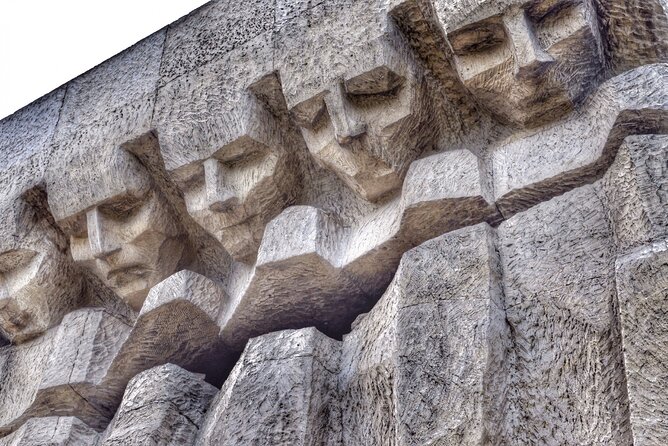
The experience takes about two hours. That makes it easier to fit into a Kraków schedule than a full-day trip to Auschwitz, while still giving you time at three connected locations.
The tour starts at Apteka pod Orłem, Plac Bohaterów Getta 18, and ends at the bus stop near Henryka Kamieńskiego 57. Public transportation is nearby. Since Olga has helped guests buy tram tickets, you can ask for practical guidance if local transport is unfamiliar, though you should still allow enough time to reach the meeting point.
The camp area is uneven. Comfortable shoes are a sensible choice. The experience is outdoors, so your comfort may depend on the day’s weather, although no specific weather arrangements are provided.
Most people can take part, and confirmation is sent when you book. The tour is limited to a maximum of 25 people. It is offered in English and uses a mobile ticket.
The serious subject also deserves practical preparation. You may find the tour emotionally heavy, especially when the guide connects the ordinary city streets with the suffering that took place nearby. Give yourself a little quiet time afterward rather than scheduling something rushed immediately after the walk.
Who should book this Kraków history walk
I would recommend this tour to you if you want to understand Kraków’s Holocaust history beyond the city center. It is particularly useful if you are already visiting Ghetto Heroes Square or planning to see Krakus Mound and want to place those areas in their historical setting.
It also suits you if you prefer a guided explanation to independent reading. Płaszów is not laid out like a conventional museum, and the absence of obvious structures can make self-guided exploration confusing. The guide helps you see why the site matters.
This may not be the right choice if you want a polished memorial complex with extensive indoor exhibits. The former camp is an open, uneven area, and much of the meaning comes through spoken history rather than preserved buildings.
Families and school-age participants may need to judge the subject for themselves. The tour concerns persecution, imprisonment, death, and the Holocaust. The supplied information does not give a recommended minimum age, so consider the maturity and comfort of anyone in your group before booking.
Free cancellation is available up to 24 hours before the start time. If you cancel later, the payment is not refunded, and changes made within that period are not accepted.
My verdict on the Płaszów tour
Book this walk if you want a focused, serious look at Kraków’s wartime past and you value a guide who can explain a difficult site with care. The connection between Ghetto Heroes Square, the former Płaszów camp, and the ghetto wall gives the two hours a clear shape.
The main caution is simple: do not expect a preserved camp museum. Expect open ground, limited visible remains, and a great deal of meaning supplied through explanation. For me, that is precisely why the tour earns its place in a Kraków itinerary. Płaszów is easy to overlook, and a guided visit helps ensure that it is not forgotten.
FAQ
Where does the tour begin?
The tour begins at Apteka pod Orłem, Plac Bohaterów Getta 18, 33-332 Kraków, Poland.
Where does the tour end?
It ends at the bus stop near 57 Kamienskiego Street, listed as Henryka Kamieńskiego 57, 30-644 Kraków, Poland.
How long does the experience last?
The tour lasts approximately two hours.
What language is the tour offered in?
The tour is offered in English.
What places are included?
The route includes Ghetto Heroes Square, the former Płaszów concentration camp, and a fragment of the Kraków Ghetto wall.
How large can the group be?
The activity has a maximum group size of 25 people.
How much does the tour cost?
The listed price is $30.01 per person.
Is the tour suitable for most people?
Most people can participate, and the tour is near public transportation.
Can I cancel for a full refund?
Yes. You can cancel up to 24 hours before the experience start time for a full refund. Cancellations and changes made less than 24 hours before the start are not refunded or accepted.
Just added around Krakow
- stag dog chase Krakow prank★ 5.0 · 4 reviews
- Divine Mercy Sanctuary – Private Tour from Krakow★ 5.0 · 4 reviews
- ZALIPIE – painted village, unique small group tour from Krakow★ 5.0 · 7 reviews
- ZALIPIE – painted village, unique PRIVATE tour from Krakow★ 5.0 · 20 reviews
- Zalipie Private Tour from Krakow The Painted Village★ 5.0 · 4 reviews
- Wooden Churches Unesco List Private Tour from Krakow★ 5.0 · 14 reviews
- Guided tour to Salt Mine & Schindler Factory with Pick-Up Options★ 4.0 · 58 reviews
- Wawel Castle, Cathedral, & Rynek Underground Tour with Lunch★ 5.0 · 4 reviews
WWII Tours, compared.
Warsaw for WWII Buffs – private tour with hotel pickup
Read our review →
Treblinka Death Camp 6 Hour Private Tour from Warsaw
Read our review →
Stutthof Concentration Camp English Tour with Gdansk Hotel pickup
Read our review →Browse the lists this tour appears in