
Reviewed · JEWISH HERITAGE TOURS
Private tour: Jewish heritage in Warsaw
Warsaw’s Muranów district is a place where the present city sits directly on the ruins of the Warsaw Ghetto. This private tour helps you read that difficult history through monuments, a former deportation site, two surviving wall fragments, and street art dedicated to the Polish Jewish community. I especially like the visit to Umschlagplatz and the chance to see the spot where the Ghetto Uprising began.
I also like the private format. With only your group, you can ask questions freely, and guide Anna can adjust her explanations to your interests. The main consideration is the pace: 2 hours and 30 minutes is enough for an important introduction, but not enough to cover every part of Warsaw’s Jewish past. Nozyk Synagogue admission is also not included.
Key points to know before you book
- Muranów was built over the Warsaw Ghetto: The setting itself gives the history unusual force.
- The Ghetto Heroes Monument marks the uprising site: Your guide explains the deportations of 1942 and the 1943 resistance.
- Umschlagplatz puts the deportations in physical focus: The memorial marks the place from which thousands were sent to Treblinka.
- Street art adds a modern layer: You’ll see works commemorating people who once lived in this neighborhood.
- Two wall fragments survive in a backyard: Finding them gives you a more intimate connection to the vanished ghetto.
- Anna leads a flexible private visit: Her clear explanations and willingness to answer questions suit travelers who want more than a quick list of dates.
Why Muranów is the right place to begin
The tour starts at Kino Muranów on General Władysława Andersa Street. From there, you enter the Muranów district, a part of Warsaw built on the remains of the wartime ghetto.
That detail matters. In many cities, historic sites are separated from ordinary life by fences, museum walls, or carefully preserved streets. Here, the history is mixed into the modern neighborhood. Apartments, roads, murals, memorials, and everyday businesses occupy ground shaped by the destruction of the wartime city.
The opening section lasts about 40 minutes. It is not simply a walk past old buildings. Anna connects the present-day streets with the people who once lived there, most of them Polish Jews. The street art is an important part of this opening because it brings personal memory into a setting that can otherwise feel defined only by loss.
I like this approach. A memorial can tell you what happened, but a neighborhood also helps you think about who lived there before the destruction. The art gives the area a current voice without turning the subject into a polished tourist display.
You should expect serious material from the start. This is not a light sightseeing walk with a few historical facts added along the way. The subject includes wartime persecution, deportation, and death, so the tone is appropriately thoughtful. Anna’s explanations are also described as extending beyond the ghetto itself, including Poland during other periods such as the communist era. That broader setting can help you understand how Warsaw’s past continued to shape the city.
More Historical Tours in Warsaw
- Warsaw: POLIN Museum of the History of Polish Jews Ticket
★ 4.7 · 1,142 reviews - Warsaw: Chopin Concert at Historical Venue in Old Town
★ 4.7 · 445 reviews - Small-Group Historical Guided Tour of Warsaw with pick up/drop off. Public Tour.
★ 4.5 · 343 reviews
The Ghetto Heroes Monument and the start of the uprising
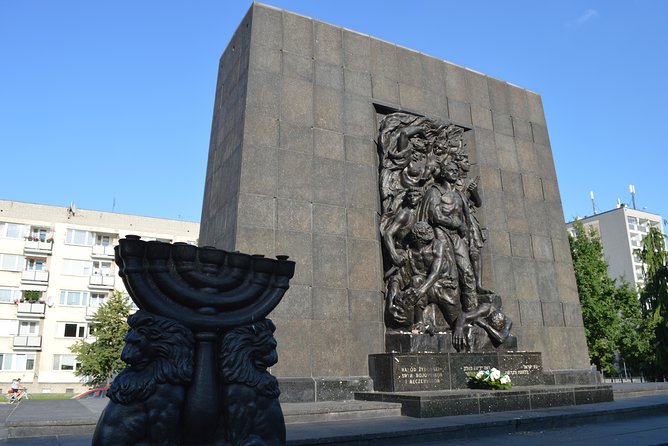
The next stop is the Monument to the Ghetto Heroes, officially known in Polish as Pomnik Bohaterów Getta. You spend about 20 minutes here.
This is the place where the Warsaw Ghetto Uprising began. The monument gives the tour a clear historical center, and Anna explains the events of 1942 and 1943. You’ll learn about the deportations to Treblinka in 1942 and the armed resistance of Jewish insurgents against the Nazis in 1943.
The short time at the monument works best when you listen closely and ask questions. A private group has a real advantage here. If you need a date clarified, want to understand the sequence of events, or would like more context about the uprising, you can stop and ask without holding up a large group.
The monument itself is one of Warsaw’s major sites connected with Jewish history, but a guide can help you see more than its design. The setting is not just a photo stop. It represents a decision by people trapped under Nazi occupation to resist despite the overwhelming odds.
I would give this part your full attention. It is easy to treat a famous monument as one more stop on a sightseeing route, but the value here comes from understanding what took place at this location. The monument and the explanation work together.
Umschlagplatz and the reality of deportation
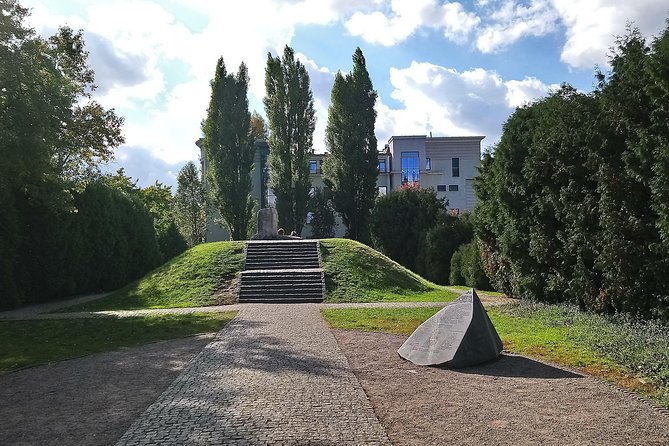
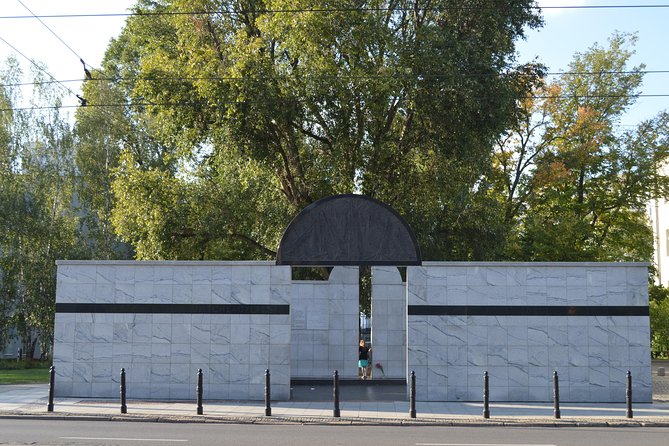
From the uprising memorial, the tour continues to Umschlagplatz, another 20-minute stop. This memorial marks the place from which thousands of people were deported to the Treblinka death camp in 1942.
The site is important because it shifts the focus from resistance to the machinery of deportation. The Ghetto Heroes Monument helps you understand the uprising. Umschlagplatz helps you understand the forced removal of the ghetto’s residents and the scale of the crime.
A stop here can feel more stark than a conventional museum visit because you are standing at the actual location associated with the deportations. The memorial is described as beautiful, but beauty does not soften the subject. It creates a quiet place for remembrance and gives Anna a setting in which to explain what happened.
I value this stop because it keeps the tour from becoming only a story of heroic resistance. The history also includes the suffering of people who were ordered to leave, transported under brutal conditions, and sent to their deaths. Seeing both sites gives you a fuller sense of the ghetto’s wartime experience.
The time is limited, so you may want to ask Anna in advance if there is a particular part of the deportations you hope to understand. The private format makes that possible, although the tour cannot cover every detail in one afternoon.
Two surviving pieces of the ghetto wall
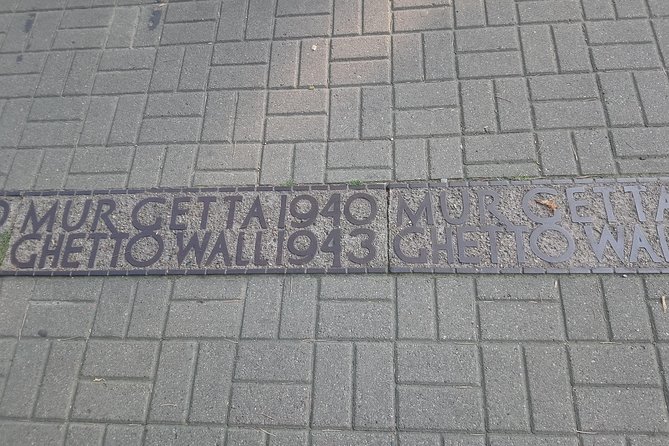
The visit to two fragments of the ghetto wall takes about 15 minutes. The remains are tucked away in a backyard rather than presented as a grand public monument.
That setting is one of the tour’s most distinctive details. The wall fragments are easy to miss if you are exploring Warsaw on your own, and their position in an ordinary backyard makes them feel less staged than a major memorial plaza. You can see how little physical evidence remains and how easily such evidence could be overlooked.
These fragments also help explain the shape of the ghetto. A surviving wall is not just an old piece of masonry. It marks the forced separation of a population from the rest of the city. Anna can provide the context that the fragment itself cannot.
Do not expect a long visit here. Fifteen minutes is enough to see the remains and hear their significance, but not enough for an extended historical discussion. I see that as a reason to treat the stop as one piece of a larger story, not as a destination that can carry the entire subject by itself.
More Jewish Heritage Tours in Warsaw
- Warsaw: Warsaw Ghetto Private Walking Tour with Hotel Pickup
★ 4.9 · 369 reviews - Warsaw: Jewish History Guided Walking Tour in English
★ 4.7 · 324 reviews - Private Tour: Warsaw’s Jewish Heritage by Retro Fiat
★ 5.0 · 208 reviews - Warsaw: Ghetto, Jewish Cemetery & POLIN Museum Private Tour
★ 4.8 · 132 reviews
Nozyk Synagogue, the tour’s living connection
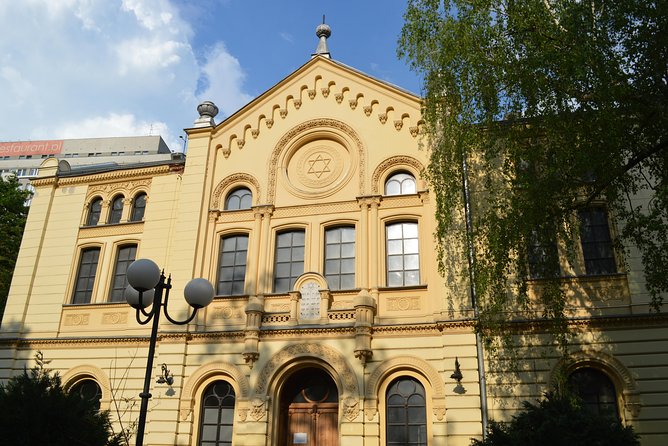
The final listed stop is Nozyk Synagogue, where you spend about 15 minutes. It is identified as the only synagogue in Warsaw to survive the Second World War.
That makes it an important counterpoint to the memorial sites. The earlier stops focus on destruction, deportation, and resistance. Nozyk Synagogue gives you a surviving religious building connected to Warsaw’s Jewish life.
Admission is not included in the tour price, so check the arrangements when booking. The provided details do not state the admission fee or whether entry is guaranteed at a particular time. That is worth clarifying if entering the synagogue is essential to your plans.
The tour ends at Plac Grzybowski, a useful central location. You are not returned to the starting point at Kino Muranów, so plan your onward route from Grzybowski Square rather than assuming you will finish where you began.
Street art makes the past feel present
One of the most appealing parts of this experience is the attention given to street art connected with Warsaw’s Jewish community. These works commemorate people who lived in the area, most of them Polish Jews.
Street art can be easy to overlook. You might pass a painted wall while looking for a monument or trying to keep up with a map. With Anna pointing out the works and explaining their connection to the neighborhood, they become part of the historical record.
I like that the tour does not limit Jewish heritage to formal memorials. The murals and other art show how memory continues to be expressed in the city today. They also give the tour some visual variety during a subject that is emotionally heavy.
At the same time, you should not book this expecting a street-art tour in the usual sense. The art serves the history. It is there to help you remember the people and community connected to Muranów, not to provide a long catalog of styles or artists.
Anna’s guiding style and the value of a private group
The guide named in the available details is Anna, with one reference spelling her name Ana. She is described as clear, thoughtful, and willing to answer questions. Her explanations also reach beyond the ghetto to other periods of Polish history, including the communist era.
That broader view may suit you if you want to understand Warsaw as a city shaped by several difficult chapters, not just one wartime story. It also means you can ask questions that connect the memorial sites to the wider history of Poland.
The private setup is the strongest practical feature. The price is $161.95 for a group of up to 10 people, not per person. For a full group, that works out to about $16 per person, though the total price remains the same for a smaller party. Compared with arranging a private guide independently, this can be fair value, especially if you have several people who want to ask questions.
The value is less clear for a solo visitor or a couple who prefer a low-cost group tour. You are paying for personal attention, a flexible conversation, and a route that includes places you might miss. If you do not plan to ask questions or care about the smaller street-art and wall-fragment stops, a self-guided visit may cost less.
Anna has also shown practical flexibility during warm weather, including stopping for a cool drink when needed. That does not change the historical content, but it is useful on a walking route where the subject matter and summer heat can both wear you down.
Timing, meeting point, and who will enjoy it most
The total duration is about 2 hours and 30 minutes. The listed stops add up to roughly 110 minutes, leaving time for walking between locations, explanations, and questions. You should plan for a serious walking experience rather than a quick series of monument visits.
The meeting point is Kino Muranów, General Władysława Andersa 5. The tour ends at Plac Grzybowski. Both locations are near public transportation, and the activity is suitable for most participants. Service animals are allowed.
I would choose this tour if you:
- Want a clear introduction to Warsaw’s Jewish history
- Prefer asking questions instead of listening to a fixed script
- Are interested in both major memorials and less obvious traces
- Have a family or small group that wants a private guide
- Want historical context beyond the Second World War alone
You may want a different option if you need a museum-heavy visit, a much longer specialist tour, or a fully accessible format with stated transport between stops. The available information confirms that most people can participate, but it does not give detailed mobility information for every section of the route.
Book as far ahead as your schedule allows. This experience is booked, on average, 63 days in advance, which suggests that Anna’s availability may matter more than finding a last-minute place. Free cancellation is available if you cancel at least 24 hours before the start time. Inside that window, the payment is not refunded, and changes are not accepted.
Should you book the Jewish heritage tour in Warsaw?
I would book this tour if you want an intimate, guided introduction to Muranów rather than a quick checklist of famous sites. The route brings together the Ghetto Heroes Monument, Umschlagplatz, surviving wall fragments, Nozyk Synagogue, and street art, giving you several ways to understand a community that was largely destroyed.
The strongest reason to choose it is Anna’s role. Her clear explanations, thoughtful approach, and willingness to adapt make the private format more than a simple walk between monuments. The main limits are the short duration, the serious subject, and the extra synagogue admission.
For a group of friends or family members, the $161.95 group price can offer solid value. For a couple on a tight budget, compare it with a self-guided visit. If you want the places to make sense as one connected story, and you want room for questions, this is a worthwhile choice.
FAQ
Where does the tour begin?
The tour begins at Kino Muranów, General W. Andersa 5, 00-147 Warsaw, Poland.
Where does the tour end?
The tour ends at Plac Grzybowski in Warsaw.
How long does the experience last?
The tour lasts approximately 2 hours and 30 minutes.
How much does the private tour cost?
The price is $161.95 per group, with up to 10 people in the group.
Is this a shared group tour?
No. This is a private activity, so only your group participates.
Who guides the tour?
The guide is named Anna. One supplied reference spells her name Ana, but the tour details identify the guide as Anna.
Is admission to Nozyk Synagogue included?
No. Admission to Nozyk Synagogue is not included in the tour price.
Can I cancel for a full refund?
Yes, if you cancel at least 24 hours before the experience starts. Cancellations made less than 24 hours before the start time are not refunded.
Is the tour close to public transportation?
Yes. The experience is near public transportation, and most participants can take part. Service animals are also allowed.
Just added around Warsaw
- Wolfs Lair and Swieta Lipka Small Group Tour from Warsaw with Lunch★ 4.5 · 21 reviews
- Wolf’s Lair & Treblinka Tour in 1 day from Warsaw★ 5.0 · 37 reviews
- Wolfs Lair “Hitler’s Headquarters” – Full Day Tour from Warsaw by private car★ 4.5 · 4 reviews
- Tour from Warsaw: Wolf’s Lair, Hitler’s HQ Zones I and II★ 5.0 · 32 reviews
- Wolf’s Lair Private Day Trip from Warsaw★ 5.0 · 50 reviews
- Warsaw’s Old Town A Self-Guided Audio Tour★ 4.5 · 10 reviews
- Warsaw Must-See Local City Tour with Antek and Tomek★ 5.0 · 51 reviews
- Off the Beaten Track in Warsaw: Private City Tour★ 4.5 · 9 reviews
Jewish Heritage Tours, compared.

Bike Tour of Old Town, Jewish Quarter and the Ghetto
Read our review →
Kazimierz, Schindler’s Factory & Ghetto Guided Tour
Read our review →
Full Bike Tour – the Old Town, Jewish Qtr & the Ghetto NEW BIKES
Read our review →
Warsaw Ghetto Private Walking Tour with Hotel Pickup
Read our review →
Bike Tour of the Old Town, Kazimierz, and the Ghetto
Read our review →Browse the lists this tour appears in