
Reviewed · JEWISH HERITAGE TOURS
Jewish Warsaw Walking Tour
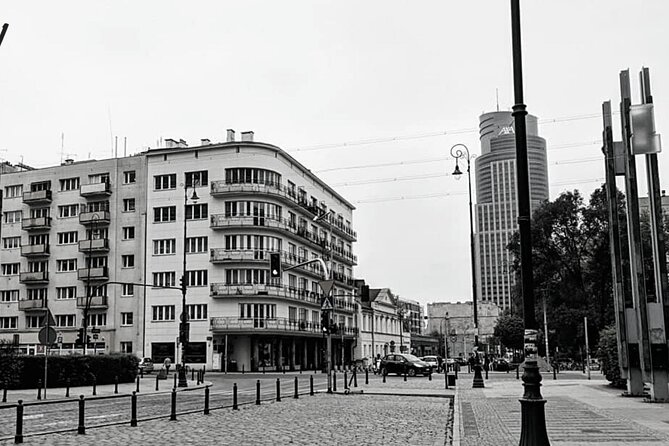
Warsaw’s Jewish story is told here through scattered traces rather than a preserved old quarter. You move from Grzybowski Square and Nożyk Synagogue to former ghetto borders, a vanished footbridge, and the Ghetto Heroes Monument, while your guide rebuilds the lost city with maps, facts, and personal storytelling.
I like the route’s clear progression and the guides’ ability to make difficult history understandable without turning it into a dry lecture. I also like the strong value at $26.59, especially since guides such as Olivia, Jacek, Andrew, and Tomas have earned praise for careful explanations and an easy sense of humor. The main drawback is simple: you stand and walk outdoors for about two and a half hours, and you may not enter the synagogue or museum.
Key points at a glance
- A route through surviving fragments: See the few prewar Jewish landmarks and the places where the Warsaw Ghetto once divided the city.
- Strong guide-led storytelling: The experience depends heavily on your guide, with Olivia, Jacek, Andrew, and Tomas all noted for clear English and thoughtful explanations.
- Nożyk Synagogue is viewed from the route: It is the only surviving prewar synagogue in Warsaw, but admission inside is not included.
- A serious subject with occasional humor: Guides use a dry wit and questions to keep a long, sad history understandable.
- Expect outdoor standing and walking: Dress for the weather, wear comfortable shoes, and be ready for a mostly outdoor experience.
- The tour ends at POLIN: You finish at the Museum of the History of Polish Jews, a useful place to continue on your own.
Why this Warsaw walking tour matters
The most useful thing to understand before booking is that this is not a tour of a fully preserved Jewish district. Nazi Germany and World War II destroyed much of Jewish Warsaw, and postwar rebuilding changed the city again. What remains is often a wall fragment, a street alignment, a synagogue, a monument, or an ordinary modern block carrying an extraordinary past.
That absence shapes the whole experience. Your guide has to explain what once stood where you are standing. The best guides do this with stories and precise historical context rather than relying on grand buildings. Several guides have been praised for bringing the vanished neighborhood back into focus through vivid English storytelling.
The route lasts about two hours and 30 minutes and covers six main stops. It begins at 10:00 am outside All Saints Church on Grzybowski Square and ends at the POLIN Museum of the History of Polish Jews. Since you do not return to the starting point, the finish is practical if you plan to visit POLIN afterward.
The tour is offered in English and has a maximum group size of 40 people. That is not a tiny private walk, so your experience may feel more like a public city tour than a quiet personal conversation. Still, the guide-led format gives you something difficult to get alone: a connected explanation of how Jewish Warsaw changed over time.
More Jewish Heritage Tours in Warsaw
- Warsaw: Warsaw Ghetto Private Walking Tour with Hotel Pickup
★ 4.9 · 369 reviews - Warsaw: Jewish History Guided Walking Tour in English
★ 4.7 · 324 reviews - Private Tour: Warsaw’s Jewish Heritage by Retro Fiat
★ 5.0 · 208 reviews
Grzybowski Square: beginning with what survived
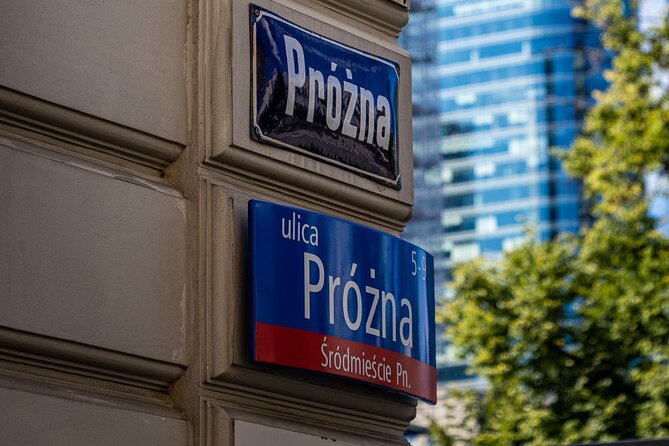
Grzybowski Square is a fitting starting point because it is one of the few areas in central Warsaw that survived the destruction of the ghetto. You meet outside All Saints Church, at Plac Grzybowski 3/5, and begin by placing the surrounding streets in their historical setting.
Allow about 20 minutes here. This opening stop helps you understand the basic shape of the tour: you are not simply collecting monuments. You are learning how to read a city where the evidence is incomplete.
The square also gives your guide room to explain the Jewish community that once lived and worked in Warsaw, along with the wartime destruction that followed. Because the subject is painful, a good guide matters greatly. The strongest feedback about this experience centers on guides who explain the facts directly while still making the walk approachable.
You may find the first section more lecture-like than scenic. That is part of the tradeoff. If you want a quick photo walk, this tour may feel slow. If you want the background needed to understand the later stops, the opening is useful.
Nożyk Synagogue: the rare surviving building
The next stop is Nożyk Synagogue, about 30 minutes into the route. It is the only surviving prewar synagogue in Warsaw, which gives it unusual importance. Among streets that lost most of their historic Jewish buildings, an intact synagogue provides a direct physical link to the city before the war.
The tour does not include admission inside. One participant specifically wished for even a brief interior visit, so you should set your expectations carefully. You will learn about the synagogue as part of the walk, but this is not a guided interior visit.
That limitation does not make the stop unimportant. The building gives your guide a fixed point from which to discuss Jewish religious and community life in Warsaw. It also helps you see how much of the former district has disappeared.
I would pay close attention here and save detailed questions for the guide. The walk’s value comes less from checking off buildings than from understanding why this particular one remains and what its survival means.
Waliców: tracing a former ghetto boundary
At Waliców, the group spends about 30 minutes examining an area that once marked the border of the Warsaw Ghetto. Today, the setting does not present itself as a complete historical district. You need the guide’s explanation to recognize the meaning of the street and its connection to the ghetto boundary.
This is one of the tour’s strongest ideas: the city is being read through its former borders. A normal street can become a key historical site once you understand how movement, confinement, and separation worked there.
The guide’s role is especially important at Waliców because there may be less to look at than at a major monument. Guides such as Jacek and Andrew have been praised for using detailed accounts to make places like this vivid. You are not only looking at a surviving structure. You are learning what the street represented to people forced to live within the ghetto.
Expect a serious stretch of the tour here. The history is disturbing, and the material is presented plainly. A guide may add a small joke or dry observation to keep the group attentive, but this is not light entertainment.
More Walking Tours in Warsaw
- Warsaw: Old Town Highlights Walking Tour in English
★ 4.7 · 1,516 reviews - Warsaw: Old Town Guided Walking Tour
★ 4.9 · 599 reviews - Half-Day Polish Food Walking Tour with Guide and Dinner
★ 4.5 · 381 reviews - Old Town Warsaw Walking Tour
★ 4.5 · 333 reviews
Chłodna Street and the vanished footbridge
The route continues to Chłodna Street for about 20 minutes. Here, you see the monument that commemorates the footbridge once connecting two parts of the Warsaw Ghetto.
The footbridge is gone, but its significance is easy to understand once your guide explains the divided layout. This stop turns an abstract map into a physical problem. People were separated by streets and access routes, yet the ghetto itself was not a single simple enclosure. The footbridge became a symbol of that forced division.
This is also a good place to notice the difference between surviving history and reconstructed memory. You are not looking at the original bridge. You are looking at a monument that marks its location and preserves its meaning.
The stop lasts only about 20 minutes, but it can be one of the most memorable parts of the walk. The guide can explain the site while you stand in the modern city, which makes the contrast hard to miss.
POLIN and the Ghetto Heroes Monument
The route then moves toward the POLIN Museum of the History of Polish Jews and the 1948 Monument to the Ghetto Heroes. The stop is listed for about 20 minutes and forms the transition from street history to museum-based learning.
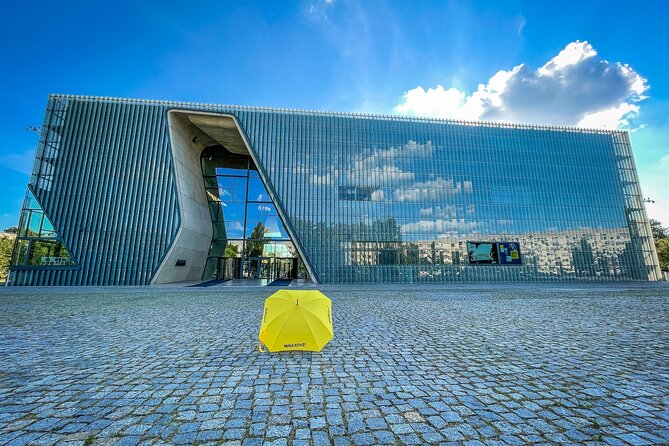
The museum is the endpoint of the tour at Mordechaja Anielewicza 6. The walking experience does not include museum admission, so plan to visit inside separately if you want the full exhibition. Ending here is still practical because you receive the historical framework before deciding how much more time to spend.
The nearby monument commemorates the Jewish resistance fighters of the Warsaw Ghetto. It is one of the central memorial sites in the area, and the guide can help you understand why its design and location matter.
This final museum area gives the walk a useful finish. Earlier, you have encountered fragments and absent buildings. Here, you reach a major institution devoted to the history of Polish Jews. I would avoid scheduling a rushed appointment immediately afterward. Even if the walk ends on time, you may want a pause before entering the museum.
The final monument and the emotional weight of the route
The listed final stop is the Monument to the Heroes of Warsaw, described as the monument to the Ghetto Heroes, with about 30 minutes allotted. The naming in the tour details is slightly confusing, but the route clearly ends around the Ghetto Heroes Monument beside POLIN.
This is the point where the separate pieces of the walk come together. You have seen where the ghetto border ran, where a footbridge once connected its sections, and where the surviving synagogue sits within the modern city. The monument gives those places a shared focus.
The experience is sad. One guide described the history as difficult but emphasized the importance of telling it accurately. That is the right expectation. This is not a sightseeing stroll built around pretty views. It is a history walk about persecution, destruction, survival, and remembrance.
At the same time, the guides do not appear to treat the subject as a solemn script with no room for questions. Olivia has been praised for answering many questions and for presenting the facts carefully. Another guide used small question-and-answer moments, even offering chocolates for correct answers. Those touches may sound minor, but they help a large outdoor group stay involved.
How much walking and standing should you expect?
The tour lasts about two and a half hours, and you should expect to be on your feet for much of it. One person found the tour longer and more physically demanding than expected, especially on a cold, windy day. The experience is described as suitable for people with a moderate level of physical fitness.
You are not being transported between stops. Transportation to and from the attractions is not included, and the advertised route is a walking tour. The start and end points are different, so plan your onward route from POLIN rather than back to Grzybowski Square.
Weather matters more than it might on a museum visit. The tour operates in all weather conditions. Wear supportive shoes and dress in layers, with protection from wind or rain when needed. On a cold day, staying for every word may be difficult, even if the subject is compelling.
There are occasional chances to sit, but you should not count on regular seating. The tour information says children must be accompanied by an adult. Service animals are allowed, and the meeting point is near public transportation.
Guide style and group size
The guide is the heart of this experience. Names connected with especially positive feedback include Olivia, Jacek, Andrew, and Tomas. The assigned guide can vary, so you should not book expecting one specific person unless the operator confirms it.
The praised qualities are consistent: clear English, careful historical detail, openness to questions, and a dry sense of humor. One guide was described as someone who keeps learning, which is a good fit for a subject that demands accuracy rather than canned lines.
The maximum group size is 40 people. That can make the tour lively, but it also means you may need to stay close and listen carefully near busy streets. A group of that size is not ideal if you want long private conversations at every stop.
This is described as a general pay-as-you-wish tour. The $26.59 price covers the reservation fee and the guide’s payment, yet the guide may still explain that an additional tip is welcome. If you prefer a smaller private experience, the operator says it can arrange one on request. Ask about the cost and format before booking a private version.
Is $26.59 good value?
At $26.59 per person, I consider this a reasonable price for a guided two-and-a-half-hour history walk, especially in a city where much of the evidence needs explanation. You are paying for a local guide, a planned route, and a connected narrative rather than for entrance tickets.
The value depends on what you want. If you only want to see surviving buildings, the number of physical remains may feel limited. If you want to understand where the former ghetto stood and why specific streets and monuments matter, the price is easier to justify.
The free admission listed for each stop means you are not receiving included entry to POLIN or Nożyk Synagogue. Treat those sites as exterior or contextual stops unless the guide tells you otherwise. You can then choose to pay for a separate museum visit.
The tour is often booked about 19 days ahead, so reserving early is sensible if your Warsaw dates are fixed. Confirmation is provided at booking, and free cancellation is available until 24 hours before the start time. Changes or cancellations inside that 24-hour window are not refunded, and the experience requires a minimum number of participants.
Who should book this walk?
I would choose this tour if you want a serious introduction to Jewish Warsaw before visiting POLIN. It suits first-time visitors who have seen Warsaw’s rebuilt center but want to understand the city’s wartime history.
It is also useful if you have already walked around Warsaw and kept noticing places you could not explain. The route connects those scattered impressions and adds historical meaning.
I would be more cautious if you dislike outdoor lectures, standing, or emotionally difficult subjects. The experience is mostly historical rather than architectural, and one person hoped to see more monuments. You may also prefer a private tour if you want a slower pace or detailed discussion tailored to your interests.
Final verdict: a worthwhile history walk with clear limits
Book this Jewish Warsaw Walking Tour if you want a fact-focused introduction led by an English-speaking guide who can explain what is missing as well as what remains. The route covers Grzybowski Square, Nożyk Synagogue, Waliców, Chłodna Street, the former ghetto footbridge site, and the Ghetto Heroes Monument, ending beside POLIN.
Go prepared for cold, wind, long periods on your feet, and a story that is often painful. Do not book it expecting a synagogue interior visit or a museum ticket. Book it for the guides’ storytelling, the careful route through surviving traces, and the context that makes a later visit to POLIN far more meaningful.
FAQ
Where does the Jewish Warsaw walking tour start?
The tour starts at 10:00 am outside All Saints Church, at Plac Grzybowski 3/5 in Warsaw.
Where does the tour end?
The walk ends at the POLIN Museum of the History of Polish Jews, at Mordechaja Anielewicza 6.
How long does the tour last?
The tour lasts approximately two hours and 30 minutes.
Is admission to POLIN Museum included?
No. The tour ends at POLIN, but museum admission is not included.
Is the tour offered in English?
Yes. The tour is offered in English.
What happens if I need to cancel?
You can cancel for a full refund up to 24 hours before the experience start time. Cancellations or changes made less than 24 hours in advance are not refunded.
Just added around Warsaw
- Wolfs Lair and Swieta Lipka Small Group Tour from Warsaw with Lunch★ 4.5 · 21 reviews
- Wolf’s Lair & Treblinka Tour in 1 day from Warsaw★ 5.0 · 37 reviews
- Wolfs Lair “Hitler’s Headquarters” – Full Day Tour from Warsaw by private car★ 4.5 · 4 reviews
- Tour from Warsaw: Wolf’s Lair, Hitler’s HQ Zones I and II★ 5.0 · 32 reviews
- Wolf’s Lair Private Day Trip from Warsaw★ 5.0 · 50 reviews
- Warsaw’s Old Town A Self-Guided Audio Tour★ 4.5 · 10 reviews
- Warsaw Must-See Local City Tour with Antek and Tomek★ 5.0 · 51 reviews
- Off the Beaten Track in Warsaw: Private City Tour★ 4.5 · 9 reviews
Jewish Heritage Tours, compared.

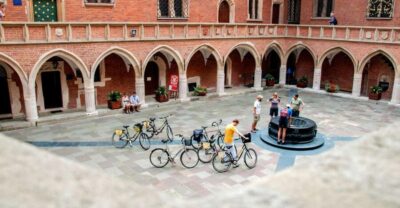
Bike Tour of Old Town, Jewish Quarter and the Ghetto
Read our review →
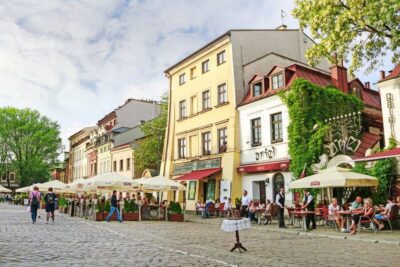
Kazimierz, Schindler’s Factory & Ghetto Guided Tour
Read our review →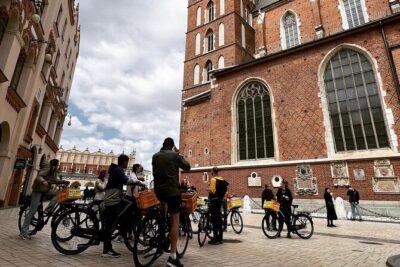
Full Bike Tour – the Old Town, Jewish Qtr & the Ghetto NEW BIKES
Read our review →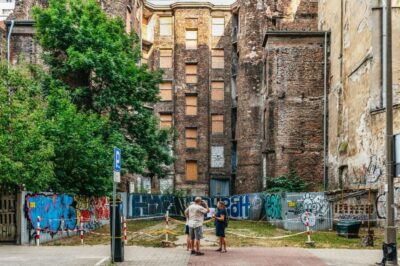
Warsaw Ghetto Private Walking Tour with Hotel Pickup
Read our review →
Bike Tour of the Old Town, Kazimierz, and the Ghetto
Read our review →Browse the lists this tour appears in