
Reviewed · JEWISH HERITAGE TOURS
Jewish heritage in Warsaw
Warsaw’s Jewish past is written into streets, memorials, cemetery stones, and the few buildings that survived the war. This private tour connects those scattered places, from the Warsaw Ghetto Uprising memorial to the synagogue that still serves the city’s Jewish community. I like the hotel pickup and drop-off, and I like that guide Renata Kopczewska can shape the discussion around your questions rather than deliver a fixed group lecture.
The main caution is the vehicle. One booking involved an especially small car with little legroom, causing real discomfort by the end of the five-hour outing. Ask about the vehicle when you book, especially if you are tall or have a group of four.
Key points at a glance
- The Warsaw Ghetto sites are linked in one visit: See the Rappaport monument, Mila 18, Umschlagplatz, and the Shmul Zygelbojm memorial.
- The Jewish Cemetery adds personal detail: Preserved matzevot, wartime mass graves, and memorial stones tell stories that a street tour cannot.
- Nozyk Synagogue still functions: It is the only Warsaw synagogue to survive World War II and remains an active place of worship.
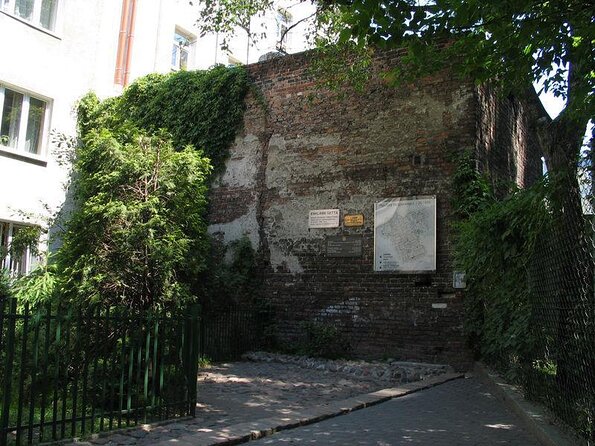
- Praga Polnoc shows what escaped total destruction: Surviving Jewish buildings include a former students’ dormitory, poorhouse, orphanage, and mikveh.
- The Jewish Historical Institute holds rare records: Its exhibits include ghetto archives and a map of prewar Poland’s shtetls.
- The private format suits questions: Only your group participates, and pickup, transport, and fuel are included.
Why this five-hour route matters
Warsaw’s Jewish heritage is not gathered in one tidy museum district. It is spread across the former ghetto area, the cemetery, the city center, and Praga Polnoc on the east bank of the Vistula.
That makes a guided visit useful. You can find these places on a map, but their meaning is easier to grasp when someone explains how they connect. The tour also saves you from working out transport between sites, a practical benefit when you want to cover several parts of Warsaw in half a day.
The experience is private for your group, with a maximum of four people. That gives you more room to ask about family names, memorial inscriptions, wartime events, or the buildings you pass between formal stops. Renata Kopczewska is the named guide, and the strongest praise for the tour focuses on her clear explanations, friendly manner, and willingness to answer questions.
The scheduled stops add up to about three and a half hours of sightseeing. The full experience lasts about five hours, leaving time for driving and moving between districts. Pickup and return are included, so you do not need to plan a complicated route by tram, taxi, or on foot.
More Historical Tours in Warsaw
- Warsaw: POLIN Museum of the History of Polish Jews Ticket
★ 4.7 · 1,142 reviews - Warsaw: Chopin Concert at Historical Venue in Old Town
★ 4.7 · 445 reviews - Small-Group Historical Guided Tour of Warsaw with pick up/drop off. Public Tour.
★ 4.5 · 343 reviews
Warsaw Ghetto memorials: Mila 18 and the Uprising
The first major section focuses on the former Warsaw Ghetto, which was destroyed after the collapse of the Ghetto Uprising. Today, the area is marked by memorials rather than a preserved old neighborhood.
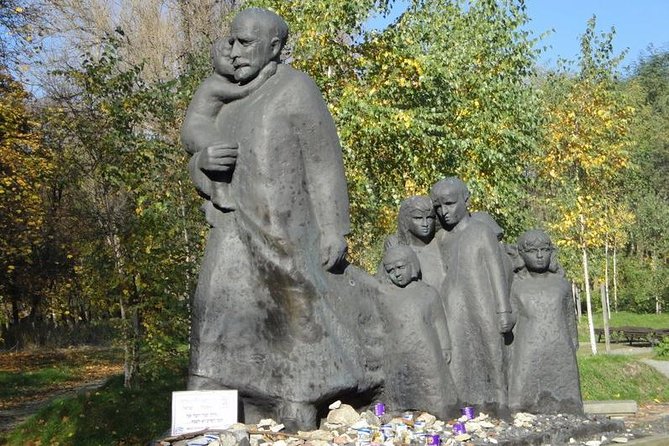
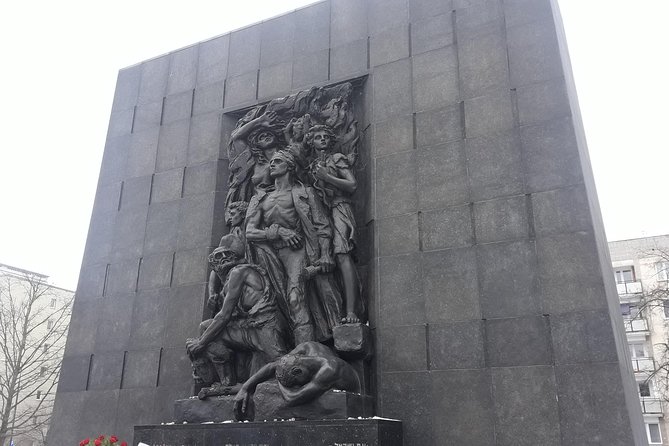
You begin with the Rappaport monument, dedicated to the Heroes of the Ghetto. Its scale and setting give you a serious introduction to the subject, but the guide’s explanation is what connects the monument to the people and events it represents.
The stop also includes Mila 18, associated with the Ghetto Uprising, and the memorial to Shmul Zygelbojm. These places help you see that the uprising was not an isolated event. The surrounding area was once part of a dense Jewish district, yet much of the physical fabric disappeared during the war and its aftermath.
Allow about an hour here. That is enough time to see the main markers and listen without rushing. This is not a stop for quick photographs. You will get more from it if you pause, read the memorials, and ask how the ghetto changed over time.
The tour also covers filming locations connected with The Pianist. For anyone familiar with the movie, these places add a visual connection to Warsaw’s wartime story. The film reference is a useful extra, but the real value is seeing how cinema relates to actual streets and memorial sites.
Jewish Cemetery: names, art, and family stories
The Jewish Cemetery, known in Polish as Cmentarz Zydowski, gives you a different way to approach Warsaw’s Jewish past. Instead of focusing only on wartime destruction, this stop shows the community before the war through its gravestones, writers, scientists, artists, and family names.
You will see preserved matzevot, the traditional Jewish tombstones. Their inscriptions and decoration can reveal a great deal about the people buried there and the customs of the community. With a guide, the cemetery becomes more than a collection of weathered stones. You can learn how Jewish life contributed to Polish literature, science, and art.
The visit lasts about 45 minutes. That is long enough to absorb the atmosphere without making the cemetery feel like a rushed add-on. Admission is not included, so budget for a separate entrance charge.
The cemetery also contains mass graves from World War II and symbolic stones dedicated to those killed at the Treblinka extermination camp. These sections bring the wartime story into the cemetery itself, linking individual memorials with the mass loss of Warsaw’s Jewish population.
The cemetery is closed on Saturdays. Check the day carefully before booking, since this is one of the tour’s most important stops and cannot simply be treated as a minor substitution.
Umschlagplatz: the departure point for Treblinka
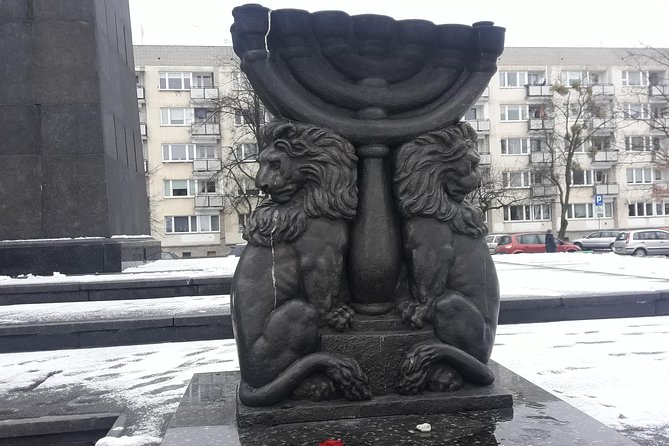
Umschlagplatz is a short, 15-minute stop, but its subject is enormous. It marks the site of the former railway station from which about 300,000 Jews from the Warsaw Ghetto were deported to Treblinka in the summer of 1942.
The memorial includes 300 first names in alphabetical order. They represent the people who began their final journey from this location. The design is restrained, and the alphabetical list gives the place a personal scale. Instead of confronting you with only a statistic, it asks you to consider names and individual lives.
You will not spend long here, so listen closely to the explanation. This is one of the places where a guide adds real value because the site itself may not tell you enough about what happened.
Since the stop is free, there is no extra admission fee. It also fits naturally with the earlier ghetto sites, helping you understand the machinery of deportation after seeing the memorials connected with resistance and Jewish life.
More Jewish Heritage Tours in Warsaw
- Warsaw: Warsaw Ghetto Private Walking Tour with Hotel Pickup
★ 4.9 · 369 reviews - Warsaw: Jewish History Guided Walking Tour in English
★ 4.7 · 324 reviews - Private Tour: Warsaw’s Jewish Heritage by Retro Fiat
★ 5.0 · 208 reviews - Warsaw: Ghetto, Jewish Cemetery & POLIN Museum Private Tour
★ 4.8 · 132 reviews
Nozyk Synagogue: the surviving house of worship
Nozyk Synagogue is one of the most important living sites on the route. Built at the beginning of the 20th century, it is the only synagogue in Warsaw to survive World War II. It still functions as a synagogue today.
The visit is brief, about 15 minutes, but its importance is not measured by the clock. After seeing destroyed streets and memorials, entering a surviving religious building offers a different perspective. This is not only a historic shell. It remains part of Warsaw’s present-day Jewish community.
Admission is not included. On Saturdays, the synagogue is open for prayers only, and no admission fee is charged. Plan around that schedule, and remember that a functioning place of worship requires respectful behavior and may not operate like a regular sightseeing attraction.
The synagogue is particularly valuable for visitors who want to see more than memorials. It adds continuity to the route, showing that Jewish life in Warsaw did not end with the wartime destruction.
Praga Polnoc: Jewish buildings that escaped the worst damage
The stop in Praga Polnoc lasts about 30 minutes and gives you a change of setting. Central Warsaw was heavily destroyed, while Praga was not damaged to the same degree. Because of that, some Jewish buildings survived there.
The tour points out a former students’ dormitory where Menachem Begin lived as a student. It also includes a former shelter for poor people and orphans, now used as a puppet theater, and a former mikveh that survives as a high school.
These buildings are not presented as a preserved Jewish quarter. That distinction matters. Their original uses have changed, and you should not expect a museum-style reconstruction. Their value is in the clues they provide. A building that once housed students, cared for orphans, or served as a ritual bath can help you picture the institutions that supported Jewish life in Warsaw.
This is also a good reason to choose a private tour. You can ask questions about how the buildings are used now and how much of their earlier identity remains visible. The stop is short, so it works best as a focused architectural and social-history visit rather than a long neighborhood walk.
Jewish Historical Institute and the traces of fire
The final listed stop is the Jewish Historical Institute, housed in a former Judaistic Library. The building survived World War II, but its location beside the former Great Synagogue gives it a painful connection to the destruction of Jewish Warsaw.
The Great Synagogue was blown up, and traces of the fire can still be seen on the floor. That physical evidence is easy to miss if you visit without context. The guide can point out why the marks matter and how the nearby buildings relate to the prewar Jewish district.
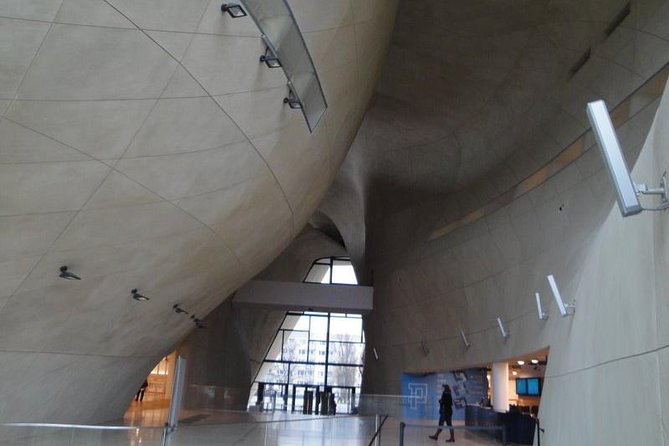
Inside, exhibits include archives from the Warsaw Ghetto that survived in remarkable circumstances. You will also see a map of prewar Poland showing former shtetls, the small towns that once had Jewish communities across the country.
Allow about 45 minutes. Admission is not included, so check the entrance cost when planning your budget. This is one of the stops where paying for entry can add real value, since the exhibits move beyond monuments and streets into documents, maps, and original records.
If you want a tour focused only on wartime memorials, the institute may feel like a shift in pace. I consider that a strength. It gives you evidence and broader context after the emotional weight of the ghetto and cemetery visits.
What the $270 private price buys you
The price is $270 per group of up to four people, not $270 per person. For four people, that works out to $67.50 each before separate entrance fees. For two people, the per-person cost is higher, but you still receive private transport, a guide, fuel, and hotel pickup and drop-off.
That is not a low-cost city outing. You are paying for a specialist subject, a five-hour private service, and the convenience of reaching several districts without arranging each transfer yourself.
The value depends on your priorities. If you are comfortable researching the sites, using public transport, and visiting fewer places, you can spend less. If you want one person to connect the memorials, cemetery, synagogue, Praga buildings, and museum, the price becomes easier to justify.
Lunch is not included, and museum and synagogue entrance fees are extra. Bring that into your calculation. The private format is most cost-effective for a group of three or four, especially if everyone shares the same interest in Jewish Warsaw.
Vehicle comfort and practical planning
Hotel pickup and drop-off remove much of the day’s transport work. You start in Warsaw and return to the meeting point at the end, with fuel included.
The vehicle deserves special attention. A past booking involved a car so small that one person had no legroom and experienced significant pain by the end. This may have been linked to a last-minute replacement during high season, but it is still a useful warning. Confirm the vehicle size before the tour if comfort matters to you.
You should also expect a moderate level of physical fitness. The route includes a cemetery and several sites where you may walk between memorials or stand while listening. The exact amount of walking is not specified, so ask the provider if you have mobility concerns.
The tour operates Monday through Sunday from 9:00 a.m. to 1:00 p.m. The published duration is approximately five hours, so keep the rest of your day flexible.
Free cancellation is available if you cancel at least 24 hours before the start time. Cancellations or changes made inside that window are not accepted for a refund.
Who should book this Warsaw heritage tour?
I would choose this experience if you want a focused introduction to Jewish Warsaw and prefer context over a simple list of stops. It is especially suitable for first-time visitors who have limited time but want to see both memorials and surviving Jewish institutions.
The tour also suits families or friends who want a private conversation. With only your group participating, you can ask direct questions and spend more time on the subjects that matter to you.
I would be more cautious if you dislike solemn historical sites or want a relaxed sightseeing drive with little walking. Much of the route concerns persecution, deportation, resistance, and death. It is meaningful, but it is not light entertainment.
The tour is also less suitable if you need guaranteed spacious transport and cannot confirm the vehicle beforehand. For four adults, car size matters. Ask before paying, rather than hoping the vehicle will be comfortable.
Should you book it?
Book this tour if you want to understand how Warsaw’s Jewish story is marked across the city, not just see one museum. The combination of ghetto memorials, the cemetery, Umschlagplatz, Nozyk Synagogue, Praga Polnoc, and the Jewish Historical Institute gives you a wide view in one morning.
The strongest reason to choose it is the guide-led context, particularly with Renata Kopczewska. The main reasons to hesitate are the $270 group price, extra entrance fees, and the reported problem with a cramped vehicle.
For a group of three or four with a serious interest in Jewish history, the private format offers solid value. For solo visitors or couples on a tight budget, compare the cost against visiting fewer sites independently. Either way, confirm the cemetery’s opening day, ask about the car, and reserve enough emotional and physical energy for a thoughtful morning.
FAQ
How long does the Jewish heritage tour last?
The tour lasts approximately five hours, including transport between the sites.
How many people can join the private tour?
The price covers one private group of up to four people. Only your group participates.
Is hotel pickup and drop-off included?
Yes. Hotel pickup and drop-off are included, along with the driver or guide and fuel surcharge.
Which synagogue does the tour visit?
The tour visits Nozyk Synagogue, the only synagogue in Warsaw that survived World War II. It was built at the beginning of the 20th century and remains active.
Is the Jewish Cemetery open every day?
No. The Jewish Cemetery is closed on Saturdays.
Are entrance fees included in the price?
No. Entrance fees for the Jewish Cemetery, Nozyk Synagogue, and Jewish Historical Institute are not included. Lunch is also not included.
Can I cancel for a full refund?
Yes, if you cancel at least 24 hours before the experience begins. Cancellations or changes made less than 24 hours before the start time are not accepted for a refund.
Just added around Warsaw
- Wolfs Lair and Swieta Lipka Small Group Tour from Warsaw with Lunch★ 4.5 · 21 reviews
- Wolf’s Lair & Treblinka Tour in 1 day from Warsaw★ 5.0 · 37 reviews
- Wolfs Lair “Hitler’s Headquarters” – Full Day Tour from Warsaw by private car★ 4.5 · 4 reviews
- Tour from Warsaw: Wolf’s Lair, Hitler’s HQ Zones I and II★ 5.0 · 32 reviews
- Wolf’s Lair Private Day Trip from Warsaw★ 5.0 · 50 reviews
- Warsaw Must-See Local City Tour with Antek and Tomek★ 5.0 · 51 reviews
- Off the Beaten Track in Warsaw: Private City Tour★ 4.5 · 9 reviews
- Warsaw’s Old Town A Self-Guided Audio Tour★ 4.5 · 10 reviews
Jewish Heritage Tours, compared.

Bike Tour of Old Town, Jewish Quarter and the Ghetto
Read our review →
Kazimierz, Schindler’s Factory & Ghetto Guided Tour
Read our review →
Full Bike Tour – the Old Town, Jewish Qtr & the Ghetto NEW BIKES
Read our review →
Warsaw Ghetto Private Walking Tour with Hotel Pickup
Read our review →
Bike Tour of the Old Town, Kazimierz, and the Ghetto
Read our review →Browse the lists this tour appears in