
Reviewed · JEWISH HERITAGE TOURS
Gdansk: Jewish Heritage Guided Private Walking Tour
Gdansk’s Jewish story is easy to miss beneath its grand facades and busy waterfront. This private four-hour tour brings that story into view, from the site of the city’s Great Synagogue to the former ghetto area on Granary Island and the sole remaining synagogue in Gdansk. The cemetery and synagogue stops give the past a physical presence, not just a string of dates.
I like the private format, since you can ask direct questions and set the pace with your own guide. I also like the focus on people and choices: Jewish merchants helped shape Gdansk’s trade and crafts, Jewish veterans were connected to the defense of the Great Synagogue during Kristallnacht, and children were sent away through the Kindertransport program. The main consideration is that entrance fees are not included, and much of the tour is history explained outdoors rather than a museum visit.
Key points to know before booking
- Four hours with a private guide: Hotel pickup, drop-off, and transportation are included, with no shared group schedule.
- A city walk with a Jewish focus: See Old Town architecture while learning how Jewish residents contributed to Gdansk’s commercial and cultural life.
- The former Great Synagogue site: Hear about the city’s largest synagogue, its role as a symbol of unity, and its destruction by German forces in 1939.
- The original Jewish cemetery: Visit the cemetery walls, entrance gate, and surviving graves.
- Holocaust history in place: Learn about the former ghetto area on Granary Island and the Kindertransport memorial.
- A surviving house of worship: Finish at the New Synagogue in Wrzeszcz, built in 1926 and described as the only remaining synagogue in the city.
Why Jewish Gdansk needs a focused tour
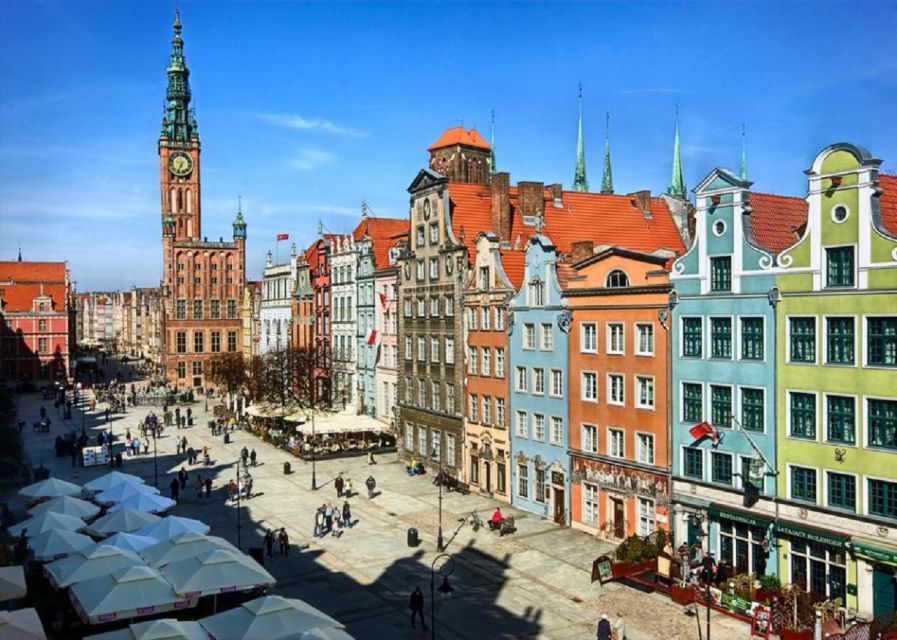
Gdansk can seem like a city of polished brick facades, merchant houses, church towers, and waterfront warehouses. Those sights are worth your time, but they do not tell the whole story. Jewish residents were part of Gdansk’s economic and civic life for centuries, and their presence is now marked by scattered sites rather than one large museum complex.
The Jewish community’s roots in Gdansk may reach back as far as the 10th century. The city’s position as an important seaport helped it grow in trade, industry, and culture. By the 15th and 16th centuries, Gdansk was one of Poland’s most prosperous cities, and Jewish merchants joined the commercial life that made the port successful.
A private guide helps you connect those broad facts to actual streets and buildings. You are not simply looking at old architecture and hearing that it is beautiful. You are learning who lived, worked, worshipped, traded, and suffered there.
That focus suits you best if you already know a little about Gdansk and want a more specific story. It also works well if you want a serious history experience but prefer walking through the city to spending four hours inside a museum.
More Historical Tours in Gdansk
- Gdansk: City Cruise on Historical Polish Boat
★ 4.8 · 2,913 reviews - Gdańsk: Sunset Cruise on a Historic Polish Boat
★ 4.9 · 977 reviews - Gdańsk City Sights & History Guided Walking Tour in English
★ 4.8 · 876 reviews
Old Town architecture with a Jewish story
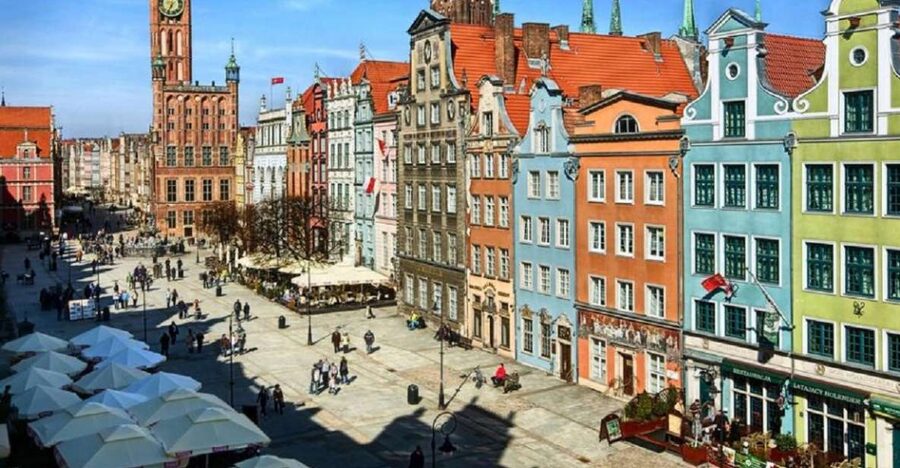
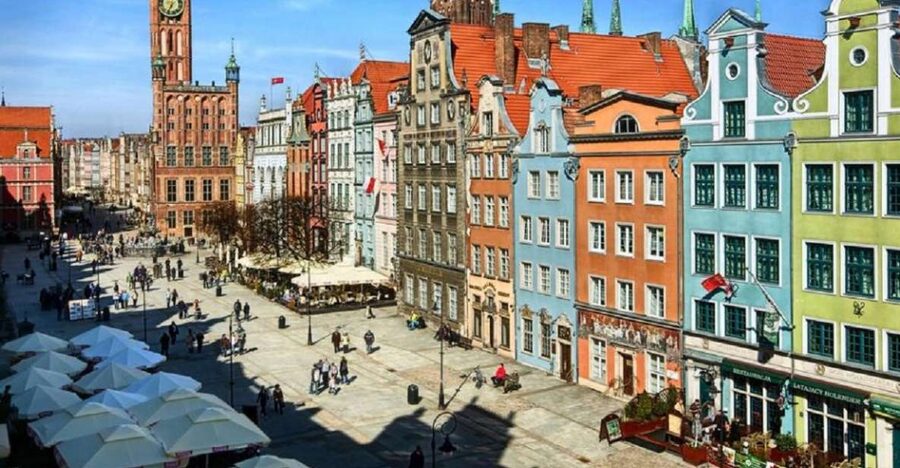
The tour begins with hotel pickup and a guided look at Gdansk’s Old Town. The city’s art and architecture span several centuries, so the setting provides plenty to see between the Jewish-history stops.
Your guide places Jewish life within the larger story of Gdansk. Jewish merchants contributed to trade, industry, and crafts as the city grew more prosperous. That context matters because it keeps the tour from reducing Jewish history to the years of persecution alone. You learn about a community that helped shape daily life before the Holocaust destroyed much of it.
I like this part of the route because the history is tied to a functioning city. Streets, commercial spaces, and grand civic buildings help explain why Gdansk attracted merchants and why its Jewish population mattered to the port.
The Old Town portion is also a practical way to orient yourself. Your guide can point out places you may want to revisit after the tour, and the return trip to your hotel includes suggestions for further sightseeing. Since the tour is private, you can ask for more detail on architecture, local history, or the Jewish community instead of following a fixed lecture.
The Great Synagogue site and the Kristallnacht story
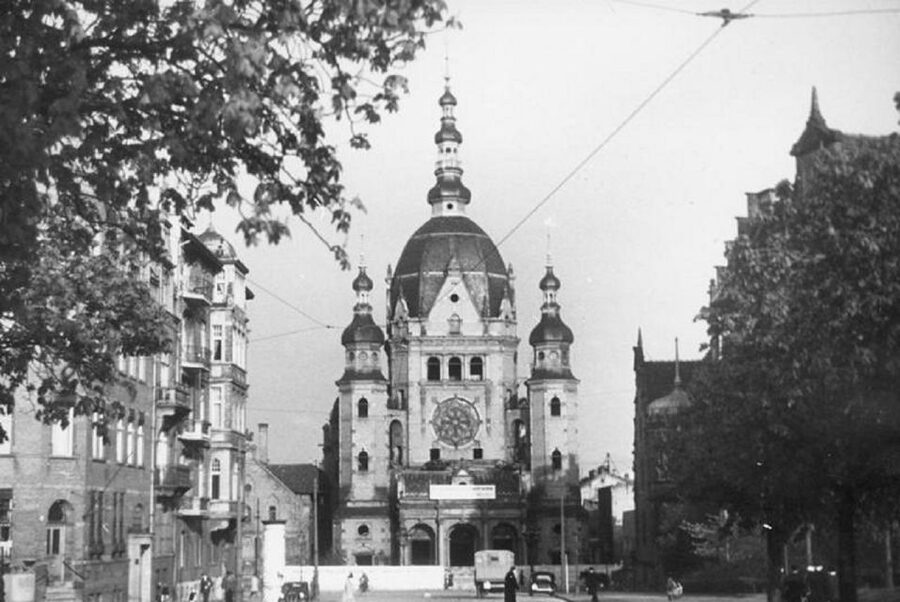
One of the most important stops is the place where Gdansk’s Great Synagogue once stood. At the end of the 19th century, the Jewish community built it as the city’s largest synagogue. It was more than a religious building. It represented the unification of Gdansk’s Jewish community.
Today, the value of this stop comes from the story your guide supplies because the synagogue itself no longer survives. You hear about Jewish veterans who saved the building during Kristallnacht, the 1938 wave of anti-Jewish violence in Nazi Germany and territories under its control. You also learn that German forces destroyed the Great Synagogue in 1939.
That sequence gives the site a painful complexity. The building survived one episode of violence only to be lost soon after. A visit here asks you to picture a major place of worship where little physical evidence remains.
You should not expect a preserved interior or a traditional synagogue visit at this stop. It is a historical location, and its meaning depends heavily on clear storytelling. That makes the guide especially important. Beata, Eva, and Luis are among the guides associated with bookings for this experience, and the available guide languages include English, Polish, German, Spanish, French, Italian, Portuguese, and Russian.
The Jewish cemetery’s walls, gate, and graves
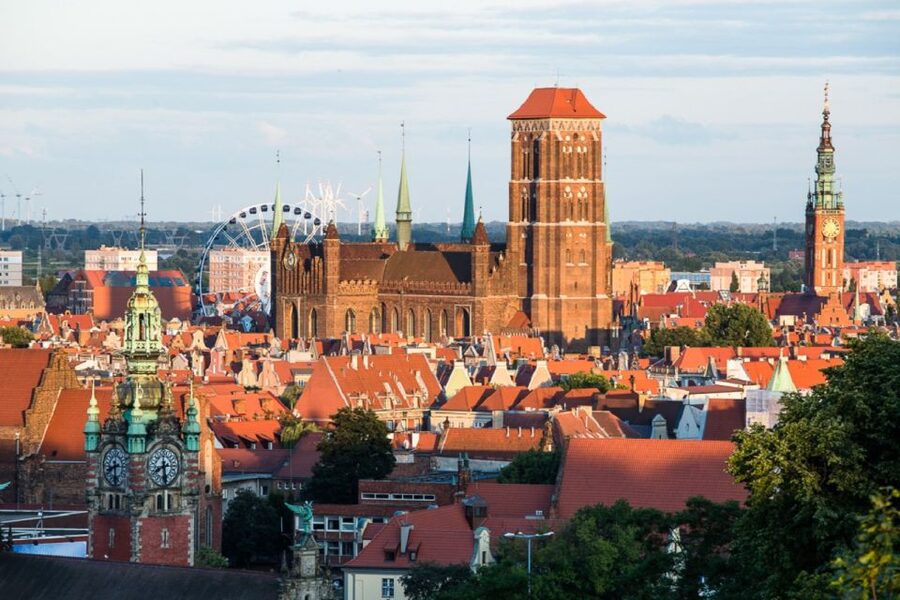
The local Jewish cemetery offers one of the clearest physical connections to Gdansk’s Jewish past. The original walls and entrance gate remain, along with graves. These details make the stop different from the Great Synagogue site, where the building has disappeared.
A cemetery visit can be quieter and more personal than a city-center walk. You can see the boundary of the former Jewish burial ground and understand that this was a lasting community institution, not a temporary presence tied only to trade.
The supplied details do not specify how long you remain at the cemetery or the condition of every grave, so you should think of it as one stop within a four-hour route rather than a long cemetery study. Still, the original walls, gate, and gravestones give your guide something tangible to explain.
I would pay attention to the way your guide handles this visit. A good explanation should help you understand the cemetery’s place in the city without turning the stop into a rushed photo break. Because the group is private, you can ask questions and take the time you need within the overall schedule.
More Walking Tours in Gdansk
- Main Town Gdańsk Walking Tour
★ 5.0 · 644 reviews - Discover Gdansk Walking Tour
★ 5.0 · 495 reviews - Gdańsk: Old Town Private Walking Tour with Legends and Facts
★ 4.9 · 245 reviews - Gdansk Old Town 2-Hour Walking Tour
★ 4.5 · 94 reviews
Granary Island and the former ghetto area
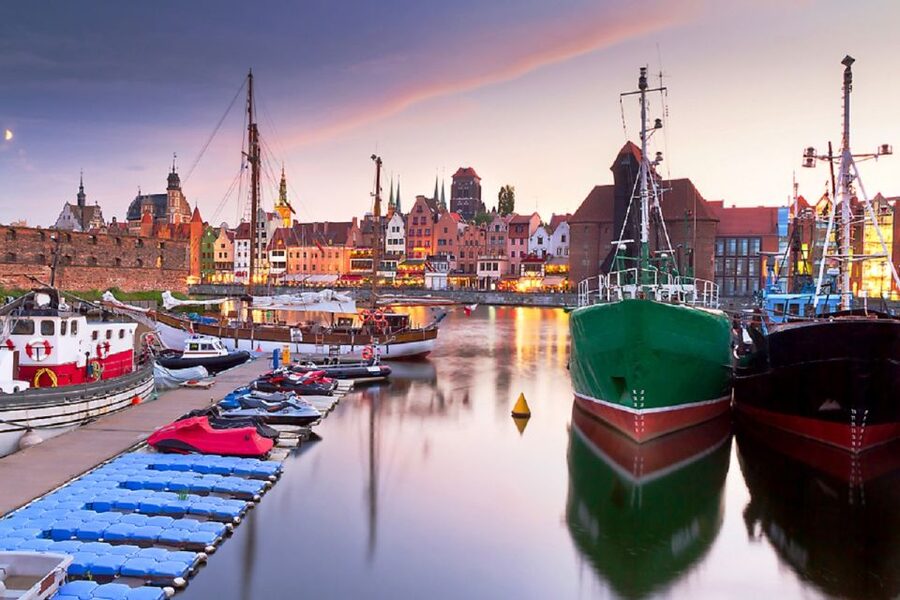
The route also reaches the former Jewish ghetto area on Granary Island. This is where the tour shifts from the community’s earlier civic and commercial life to the Holocaust and the destruction of Jewish life under German occupation.
A site connected to the ghetto can be difficult to read at first. You may see ordinary urban surroundings rather than a preserved camp or reconstructed district. That is precisely why the guide’s explanation matters. You learn how the area connects to the forced confinement and persecution of Gdansk’s Jewish population.
The tour does not present the Holocaust as an abstract chapter detached from the city. It places the story on a map you can walk. That can make the history more direct, though it may also feel emotionally heavy. You should allow yourself some quiet time after this stop rather than planning an immediately cheerful activity.
The route’s balance is one of its strengths. It does not begin and end with tragedy. You first learn about Jewish merchants and community life, then see the synagogue site and cemetery, and later confront the ghetto and Holocaust. That order helps show both what existed and what was destroyed.
The Kindertransport memorial and Jewish Theatre
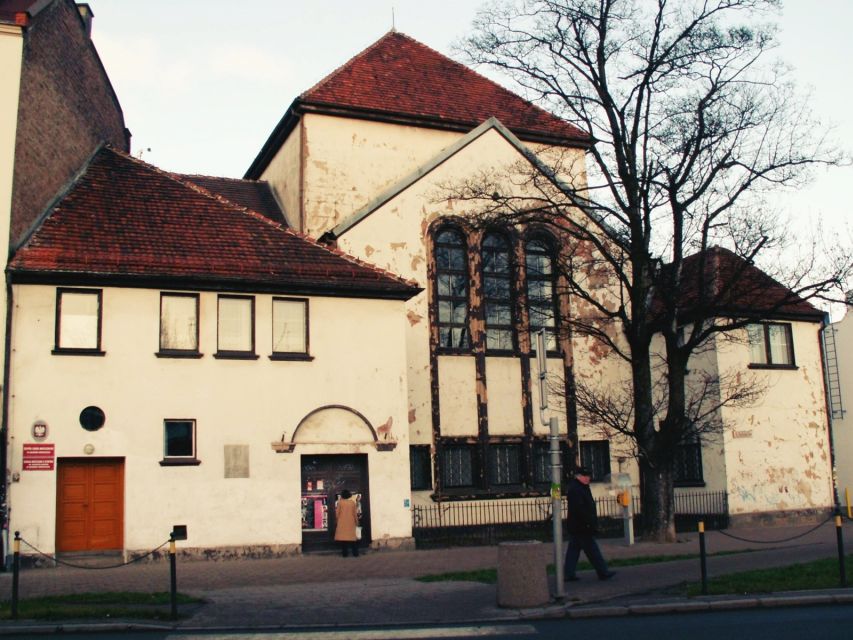
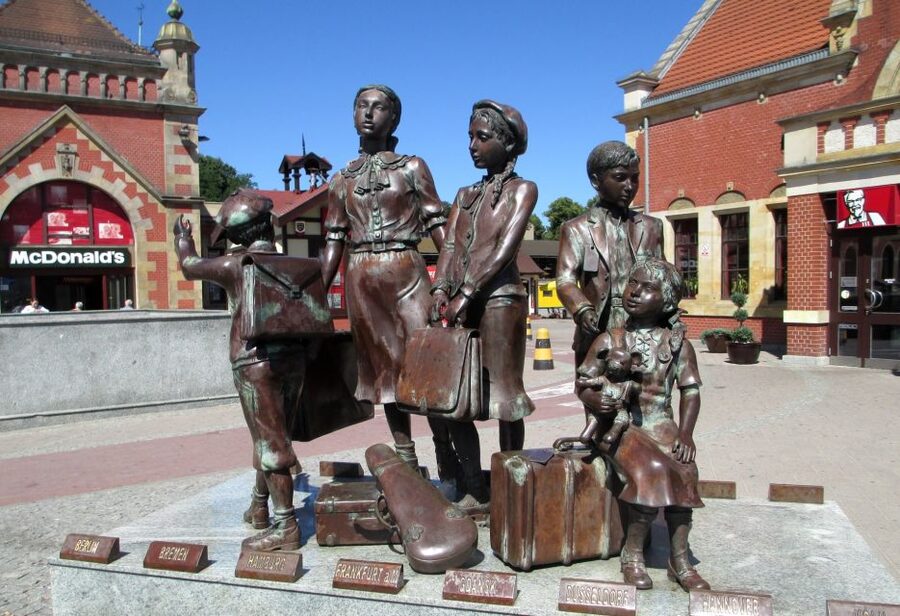
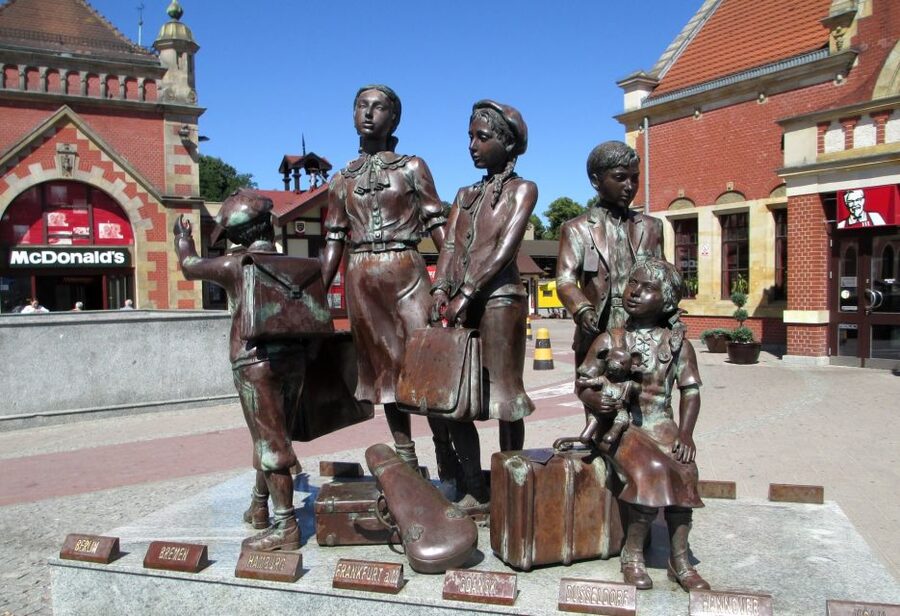
The Kindertransport monument adds another human scale to the tour. You learn what the Kindertransports were and how children were sent away from danger. The memorial offers a way to think about separation, rescue, and the cost paid by families during the Nazi period.
This is a useful stop for visitors who know the word Kindertransport but not the full story. Your guide can explain the program in the setting of Gdansk rather than as a detached history lesson.
The route also touches on the city’s famous Jewish Theatre. The available details do not specify a surviving theatre building or an interior visit, so treat this as a place associated with Jewish cultural life rather than a performance stop. It matters because Jewish history in Gdansk included theatre and public culture, not only business and religious institutions.
Together, the memorial and theatre reference help widen your view. Jewish life included children, families, performers, merchants, worshippers, and civic figures. That fuller picture is one of the tour’s better qualities.
The New Synagogue in Wrzeszcz
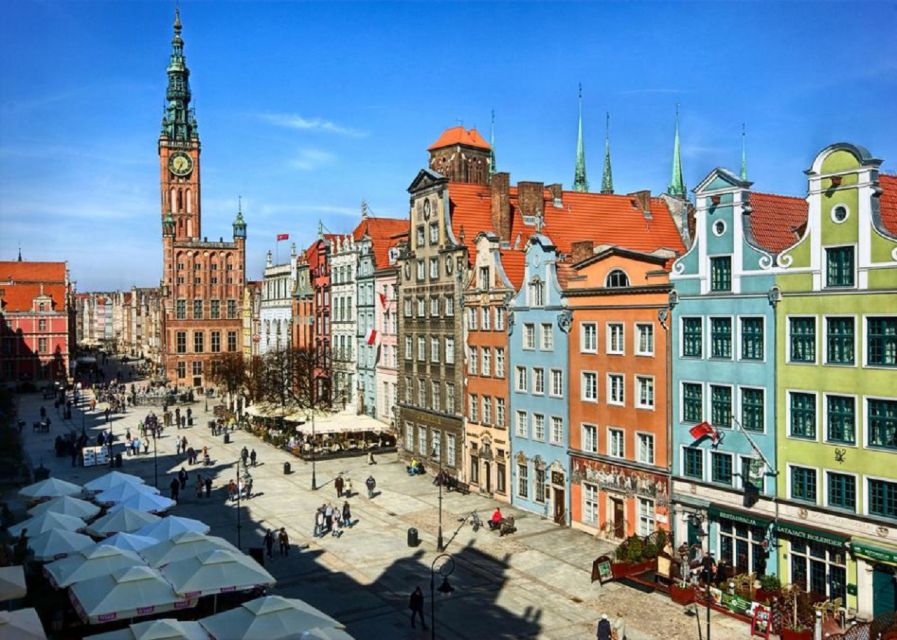
The tour ends at the New Synagogue in Wrzeszcz, built in 1926. It is described as the only synagogue remaining in Gdansk, making it an important final stop after the lost Great Synagogue and the former ghetto sites.
The contrast between these two synagogue locations is central to the experience. The Great Synagogue represented a large, united community and was destroyed. The New Synagogue survives, giving you a real building to see at the end of the route.
The tour information does not include an entrance, worship service, or interior visit, and entrance fees are not included. You should therefore expect to see and discuss the synagogue rather than assume access inside. If entry is possible on your date, confirm the details with the provider before booking.
Ending in Wrzeszcz also shows that Jewish history is not limited to the most photographed center of Gdansk. The city’s story continues beyond the Old Town, and transport is included as the tour returns you to your hotel.
What the private format adds
At $60 per person, the value depends mainly on your group size and how much you want a guide’s interpretation. For one person, or a couple, the price is higher than joining a large walking tour. For a family or small group, a private guide can be a sensible choice because the cost buys four hours of attention, hotel pickup and drop-off, transportation, and a route built around your interests.
The private format also solves a common problem with sensitive history tours. You can ask direct questions about religion, wartime events, architecture, or local memory without worrying about slowing down a large group. If you need more time at the cemetery or want to clarify the Kindertransport story, you can speak up.
Past guide experiences have included Beata, described as informative and engaging, and Eva, who was praised for patience, clarity, and responsiveness to personal preferences. Luis has also led the tour. These comments point to the quality that matters most here: a guide who can explain difficult material clearly and adjust the conversation to your interests.
The tour is offered in English, Polish, German, Spanish, French, Italian, Portuguese, and Russian. That broad language choice is useful for mixed-language families or visitors who understand history best in a language other than English.
Timing, transport, and practical limits
Four hours gives you enough time for a substantial overview without taking the entire day. Hotel pickup makes the start simple, especially if you are unfamiliar with Gdansk or arriving on a cruise schedule. The experience also includes transport, which is useful for reaching Wrzeszcz and returning to your hotel.
You should be ready in the hotel lobby at the agreed time. The guide waits with your name, so a late start can cut into a route that already covers several locations.
The activity is wheelchair accessible, but the information does not describe the exact surfaces, slopes, cemetery access, or vehicle arrangement. If you use a wheelchair, confirm the practical details before booking, particularly for the cemetery and outdoor walking sections.
Entrance fees are not included. The main stops listed are historical sites and outdoor locations, but you should still ask whether any optional interior visit is planned and what it would cost.
Cancellation is flexible up to 24 hours before the tour for a full refund. You can also reserve now and pay later, which helps if your Gdansk schedule is still changing. That flexibility proved useful for one couple whose cruise stay was extended by an extra day and who booked the tour at short notice.
Who should book this Gdansk tour
I would choose this tour if you want Jewish history tied to specific Gdansk locations rather than a general city walk. It is a good fit for visitors interested in the Holocaust, Jewish civic life, religious architecture, and the way a community shaped a port city over many centuries.
It is also well suited to families and small private groups. The subject can be hard to discuss in a large group, and the private setting lets you decide how much detail feels right.
You may want another activity if you are seeking a light sightseeing outing, extensive museum interiors, or a long visit inside a working synagogue. This is a serious history walk with transport, not a casual introduction to Gdansk’s prettiest streets.
Should you book it?
Book this tour if you want a focused, personal account of Jewish Gdansk and value a guide who can connect Old Town architecture, the cemetery, synagogue sites, the ghetto area, and Holocaust memorials. The $60 price is strongest for couples, families, or small groups who will use the private format and included transport.
Skip it if you only have a short stop in Gdansk or prefer to explore at your own pace with no difficult historical content. For everyone else, the combination of surviving places and vanished ones gives you a more honest understanding of the city than a standard Old Town stroll alone.
FAQ
How long does the Gdansk Jewish Heritage tour last?
The tour lasts four hours.
What is the price of the tour?
The listed price is $60 per person.
Is the tour private?
Yes. The tour is designed for a private group.
Is hotel pickup included?
Yes. Your guide waits in the hotel lobby with your name, and hotel drop-off is also included.
Is transportation included?
Yes. Transportation during the experience is included.
Which languages are available?
The tour is offered in English, Polish, German, Spanish, French, Italian, Portuguese, and Russian.
Does the tour visit the Jewish cemetery?
Yes. You visit the local Jewish cemetery, including its original walls, entrance gate, and graves.
Are entrance fees included?
No. Entrance fees are not included in the tour price.
Is the tour wheelchair accessible?
Yes. The activity is listed as wheelchair accessible.
Can I cancel for a full refund?
Yes. You can cancel up to 24 hours in advance for a full refund.
More Jewish Heritage Tours in Gdansk
- Krakow: Schindler’s Factory & Ghetto Guided Tour
★ 4.7 · 1,694 reviews - Krakow: Jewish Quarter and Former Ghetto Tour
★ 4.9 · 1,441 reviews - Krakow: Bike Tour of Old Town, Jewish Quarter and the Ghetto
★ 4.9 · 1,155 reviews - Krakow: Kazimierz Jewish Quarter Walking Tour
★ 4.8 · 571 reviews
Just added around Gdansk
- Gdansk and Malbork Castle Small Group Tour from Warsaw with Lunch★ 4.5 · 20 reviews
- Westerplatte private tour led by Expert-Guide (door to door)★ 5.0 · 5 reviews
- Whisky Tasting in Gdańsk★ 5.0 · 3 reviews
- Private WW2 Tour of Westerplatte,Gdansk and Stutthof Including Lunch★ 5.0 · 12 reviews
- Gdansk EVERYDAY Vodka Tasting Tour★ 5.0 · 6 reviews
- Westerplatte – 2h private trip by luxury car|★ 5.0 · 4 reviews
- Aiport Gdansk Transfer to Malbork Castle or Stutthof★ 5.0 · 3 reviews
- 5 hours Individual trip to the Stutthof Concentration Camp★ 5.0 · 5 reviews
Jewish Heritage Tours, compared.

Bike Tour of Old Town, Jewish Quarter and the Ghetto
Read our review →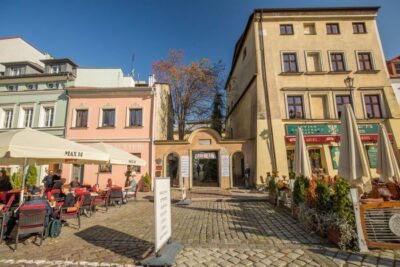
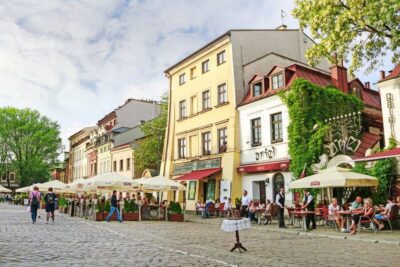
Kazimierz, Schindler’s Factory & Ghetto Guided Tour
Read our review →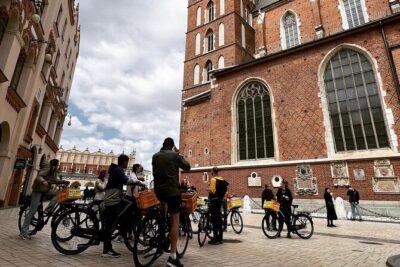
Full Bike Tour – the Old Town, Jewish Qtr & the Ghetto NEW BIKES
Read our review →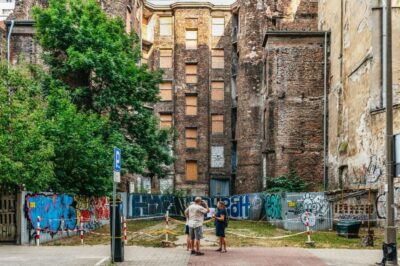
Warsaw Ghetto Private Walking Tour with Hotel Pickup
Read our review →
Bike Tour of the Old Town, Kazimierz, and the Ghetto
Read our review →Browse the lists this tour appears in