
Reviewed · WWII TOURS
III Reich & WW2 in Wroclaw. Monday, Wendsday, Friday regular tour
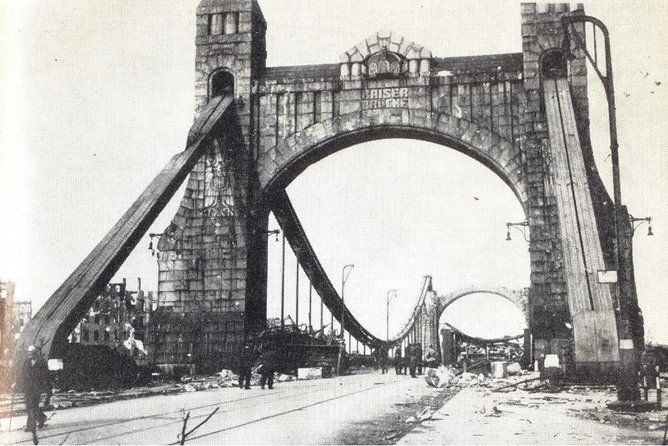
Wrocław’s wartime story is written into ordinary streets, university buildings, market squares, and church islands. This walking tour connects those places to the rise of Nazism, the destruction of Jewish life, the siege of Festung Breslau, and the city’s first months after the war. The route is local and place-based, not just a string of dates.
I like two things right away: the small-group limit of 20 keeps the walk personal, and the route reaches sites you could easily pass without noticing. Guide Michael, also referred to as Michal, is praised for clear explanations and thoughtful answers. The drawback is pace: you cover about 1.7 miles in two to two and a half hours, with much of the history delivered outdoors, so cold or wet weather can make the experience harder.
Key points at a glance
- A 1.7-mile historical walk: The route links eleven stops across central Wrocław and Cathedral Island.
- A strong Jewish history thread: You visit the site of the destroyed New Synagogue and the surviving White Stork Synagogue.
- More than battlefield history: The tour covers daily life, education, resistance, religious life, and the city’s postwar transition.
- A closer look at Festung Breslau: The Market Square, Market Hall, Sand Island, and nearby sites help explain the 1945 siege.
- An English-speaking local guide: Michael, also identified as Michal, leads the regular Monday, Wednesday, and Friday tours.
- Good value for history-minded visitors: At $32.20 per person, the cost covers a long guided walk, though two indoor admissions are not included.
Starting at Hotel Monopol and meeting the vanished synagogue
The tour begins outside Hotel Monopol on Ulica Heleny Modrzejewskiej, a central and easy-to-find meeting point. From there, you walk toward the former New Synagogue, destroyed during the Nazi period in 1938. This opening stop immediately shows why a city walk can be more revealing than a museum visit alone: the key evidence may be an absence.
The stop also includes the former Gestapo building. You get an early sense of how Jewish persecution and Nazi state power operated in the same urban center. The allotted time is short, around five minutes, so expect a focused explanation rather than a long lecture.
This is one of the tour’s strongest features. You are not beginning with a broad, abstract account of Germany in the 1930s. You are standing in Wrocław, looking at places tied to the city’s own past. For anyone interested in how political change affected a specific community, that local focus gives the walk a clear purpose.
More WWII Tours in Wroclaw
- Wroclaw: Third Reich and World War Two Historical Tour
★ 4.9 · 43 reviews - Wroclaw: Project Riese and Ksiaz Castle Private Tour
★ 4.7 · 39 reviews - Wroclaw: WW2 Tour to Project Riese & Gross-Rosen Museum
★ 4.8 · 26 reviews
Wolności Square and the rise of Nazi rule
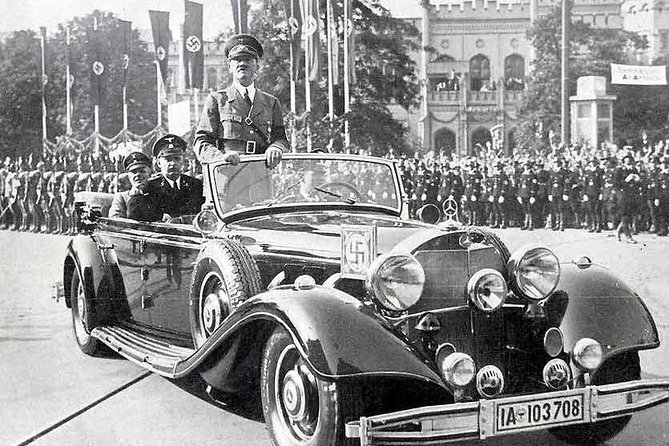
At Wolności Square, the guide turns from individual buildings to the wider beginnings of the Nazi era in Germany. The stop lasts about five minutes, so the aim is to establish the political setting before the walk moves into more personal and local stories.
You should expect a brisk presentation. The tour covers a lot of ground, and this section works as a bridge between the destroyed synagogue and the more detailed discussion of Jewish life, education, and daily routines. It is useful if you know the basic outline of the period but want to see how that history connects with Wrocław.
If you prefer long discussions at each location, the short stop may feel limited. If you like a walking tour that keeps moving, it helps maintain momentum.
White Stork Synagogue and Wrocław’s Jewish heritage
The White Stork Synagogue is one of the most important stops on the route. It survived the war and sits in the heart of the former Jewish district. Here, the story shifts from a destroyed building to a surviving place of worship, allowing the guide to discuss local Jewish heritage and the Holocaust in a setting with a direct connection to that community.
The stop lasts about ten minutes. That is enough time to place the synagogue within the city’s Jewish district and explain what happened to Jewish residents, but it is not a substitute for a longer museum visit. You will hear the historical outline while remaining on a route that continues through the city.
I especially like the contrast between the New Synagogue site and the White Stork Synagogue. One location asks you to understand loss through what is no longer there. The other gives you a physical building around which the guide can tell the story of survival, persecution, and memory.
Rynek, daily life, and the destruction of Breslau
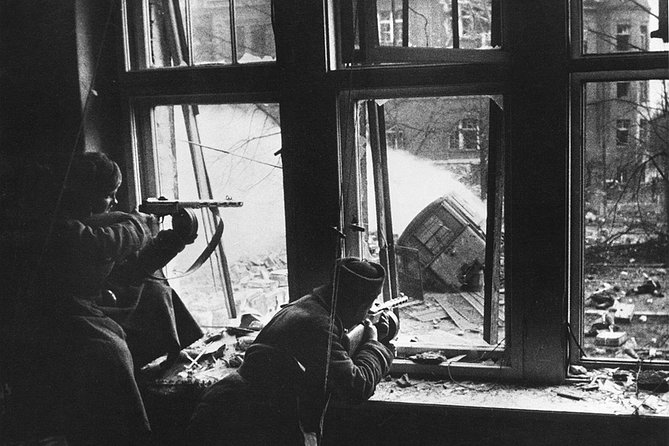
Wrocław’s main square, Rynek, brings the wartime story into the center of everyday urban life. The guide discusses what daily life was like under the Nazi regime, then turns to Festung Breslau and the destruction of the city.
This is an important shift. A World War II tour can easily focus only on military decisions and famous leaders. Here, the main square provides a place to consider how political control and war affected ordinary routines. The same public space also helps explain how the final siege changed Wrocław physically.
The stop lasts around ten minutes. You will likely hear several connected themes rather than one detailed case study: Nazi rule, civilian experience, the fortress designation, and the city’s destruction. That broad approach works well for a first introduction, but history specialists may want to ask questions to draw out more detail.
Same city, a completely different kind of day:
- Wroclaw: E-Car Tour and Audio Guide
★ 4.6 · 1,738 reviews - Wroclaw: 2-Hour Private Guided Tour by Electric Car
★ 4.8 · 805 reviews - Wrocław: Old Town and Ostrów Tumski Walking Tour in English
★ 4.8 · 311 reviews - Wroclaw: Private Old Town Guided Walking Tour (2 hours)
★ 4.8 · 275 reviews
Dietrich Bonhoeffer and German opposition
The Dietrich Bonhoeffer Memorial introduces the German opposition to Nazism. This is a valuable addition because it prevents the story from becoming too simple. The period was not only a conflict between countries. It also included Germans who resisted, criticized, or opposed the Nazi system.
The stop is brief, about five minutes, but its subject carries weight. If you are familiar with Bonhoeffer, you may already know why he matters. If not, the guide provides a compact entry point into the wider question of resistance inside Germany.
This part of the route also adds moral and political balance. The tour deals with the crimes of the regime directly, while recognizing that opposition existed within German society. You will not get a full history of resistance movements in one short stop, but you will gain another angle on the era.
Wrocław University and the politics of education
At Wrocław University, the tour examines education under the Third Reich and the lives of Jewish scientists. This stop lasts about ten minutes and is one of the route’s more thoughtful sections because it moves beyond streets, soldiers, and buildings.
Universities can look detached from the violence of political history. This stop shows how education and scholarship were also affected by Nazi racial policy and political control. The discussion of Jewish scientists gives the subject a human and intellectual dimension.
Admission to Wrocław University is not included. The tour information also lists admission as not included at the Parish of the Most Holy Name of Jesus, so you should be prepared for the possibility of an additional entry cost if the group goes inside. The stated tour price does not cover those admissions.
The Parish of the Most Holy Name of Jesus and siege life
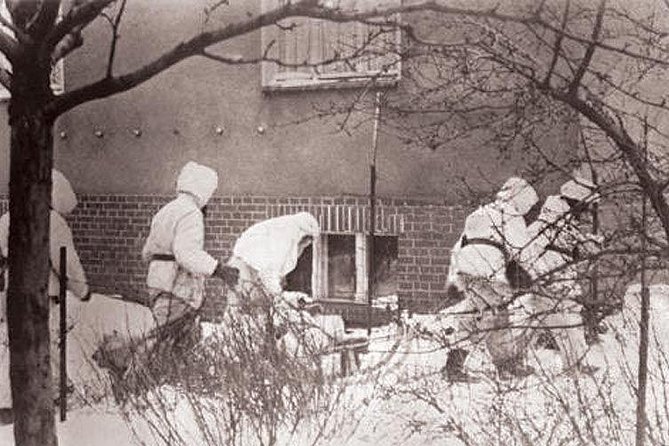
The Parish of the Most Holy Name of Jesus is used to discuss everyday life during the siege and the first months after the war. This section widens the timeline. You are no longer hearing only about the years before 1939 or the final collapse of Nazi Germany. You are also considering what people faced during the fighting and immediately afterward.
That postwar focus matters in Wrocław. The city’s wartime story did not end when the guns fell silent. The experience of civilians, the condition of buildings, and the first months of rebuilding shaped the city that came next.
The visit is listed at around ten minutes, and admission is not included. Ask the guide if you want to know how much time will be spent inside or outside on the day, since the schedule allows only a short visit at each location.
Ossolineum and education under the Third Reich
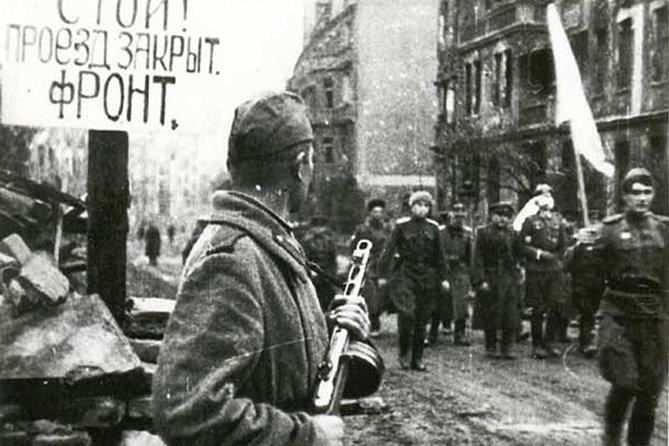
The Ossolineum stop returns to education and cultural life under the Nazi system. At roughly ten minutes, it gives the guide another setting for discussing how institutions functioned during dictatorship and war.
I find this kind of stop useful because it connects the political story to the way knowledge is taught, preserved, and controlled. The tour is not only about ruined streets or military positions. It also asks what happens to schools, scholars, and cultural institutions when a government sets racial and ideological rules.
As with the university and parish, the admission is not included. The value here comes mainly from the guide’s explanation and the location’s connection to education. If you want to spend extended time inside Wrocław’s institutions, this tour may feel too fast, but it gives you a useful framework for exploring them later.
Market Hall and the practical reality of the siege
At Hala Targowa, the Market Hall, the guide discusses the siege and allows a short break. The stop lasts about ten minutes. That pause is welcome because the tour includes steady walking and several outdoor explanations.
The Market Hall is a practical setting for the siege story. A place associated with ordinary shopping and city life becomes part of a discussion about shortages, pressure, and the experience of a city under attack. The guide’s account helps connect military events with the needs of civilians.
This is also the point where the pace may matter most. You have already covered several central locations, and the walk continues to Sand Island and Cathedral Island. Wear shoes you can walk in comfortably, and bring clothing suited to the forecast. One participant described enjoying the tour even in frigid weather, but cold conditions will still make an outdoor history walk more demanding.
Sand Island, Edith Stein, and the final days of the siege
The route continues to Sand Island, where the guide discusses Edith Stein and returns to the story of the siege. The stop is short, around five minutes, but it brings together religious identity, Jewish heritage, and the wider wartime experience.
Edith Stein gives the guide another way to discuss the fate of Jewish people and the complications of identity in the period. Her story also fits the route’s wider pattern, which moves between public buildings and individual lives.
You should not expect a long biographical presentation here. The stop is one part of a larger walk, and the guide has to keep the group moving toward Cathedral Island. Still, it adds a personal thread to the broader account of Nazi persecution.
Cathedral Island and the end of the walk
The tour ends on Ostrów Tumski, or Cathedral Island. The guide closes with a few extra stories, making the finish less abrupt than simply stopping after the last formal site.
Ending here works well from a practical point of view. The route has moved from central hotels and public squares toward one of Wrocław’s major historic areas. You finish in a part of the city that you can continue exploring on your own after the tour.
The endpoint is not the starting point, so plan for that when arranging the rest of your day. The walk does not return you to Hotel Monopol. Its final location is Cathedral Island, Wrocław.
What the $32.20 price really buys you
At $32.20 per person, this is a fair price for an English-language walk lasting two to two and a half hours. You are paying for a guided route through eleven stops, local context, and the chance to ask questions as the story develops.
The value is strongest if you would otherwise pass these places without understanding their connection to the war. The tour helps you link the destroyed New Synagogue, White Stork Synagogue, university buildings, public squares, and siege sites into one timeline.
The cost is less compelling if you want extensive interior visits or a slow academic lecture. Several stops last only five or ten minutes, and admission to Wrocław University and the Parish of the Most Holy Name of Jesus is not included. Still, the group limit of 20 gives the experience a more personal feel than a large city walk, and mobile ticketing makes the booking side simple.
Guide style, pace, and group feel
The guide is listed in English and is introduced in the feedback as Michael, with one reference using the spelling Michal. He is praised for detailed explanations, useful local perspective, and answering questions. The strongest reactions focus on his ability to point out things you might otherwise walk past.
The tone can also extend beyond wartime facts into politics and current issues. Some people will appreciate hearing a Polish perspective and connecting the past with present concerns. Others may prefer a more tightly historical presentation.
One response found the tour too surface-level and the guide insufficiently engaged. That criticism is worth taking seriously. The route covers a large subject in a short time, so depth may depend on your questions and on the guide leading your particular departure. Go prepared with two or three topics you especially want to understand.
Who should book this Wrocław walk?
I would choose this tour if you want to understand Wrocław as a former German city shaped by Nazi rule, war, siege, and postwar change. It suits people who enjoy walking from place to place and using buildings, squares, and memorials as evidence.
It is also a good fit if you have already spent time in Wrocław but feel you have missed part of its story. The route reaches locations that are easy to overlook, including the former New Synagogue site, the Gestapo area, and the Bonhoeffer Memorial.
You should think twice if you dislike outdoor tours, fast pacing, or serious subject matter. The tour requires good weather, and cancellation is possible if weather or minimum numbers prevent it from running. You can cancel for a full refund up to 24 hours before the start time, but a later cancellation is not refunded.
Service animals are allowed, public transportation is nearby, and most people can take part. The group can include up to 20 people, so it is small enough for questions without promising a private tour.
Should you book the Third Reich and World War II tour?
Book it if you want a focused introduction to Wrocław’s wartime past with a strong local angle. The combination of Jewish heritage, Nazi administration, German opposition, education, civilian life, Festung Breslau, and the first postwar months gives the walk more range than its title might suggest.
The best reason to go is the route itself. You will see how the city’s political and military history intersects with synagogues, churches, universities, markets, and public squares. At $32.20, that is solid value for a small English-language group.
Just set the right expectations. This is a brisk outdoor overview, not a museum seminar or a full-day study of the war. Wear comfortable shoes, dress for the weather, and ask questions if you want more depth. For a first encounter with Wrocław’s difficult twentieth-century history, I would book it.
FAQ
How long does the tour last?
The tour lasts approximately two to two and a half hours.
Where does the tour start?
It starts at Hotel Monopol, Ulica Heleny Modrzejewskiej 2, 50-071 Wrocław, Poland.
Where does the tour end?
The walk ends on Cathedral Island, also called Ostrów Tumski, in Wrocław.
On which days is the regular tour offered?
The regular tour is offered on Mondays, Wednesdays, and Fridays.
Is the tour offered in English?
Yes. The tour is offered in English.
What is the maximum group size?
The maximum group size is 20 people.
Just added around Wroclaw
- Lower Silesia Tour From Wroclaw★ 4.5 · 33 reviews
- Wroclaw Old Town Private Tour★ 5.0 · 6 reviews
- Museum of Illusions Wroclaw Entrance Ticket★ 5.0 · 42 reviews
- Jewels of Lower Silesia★ 5.0 · 22 reviews
- Legends of Old Town 1 Hour Walking Tour in Wroclaw★ 5.0 · 6 reviews
- Highlights of Wroclaw Private Tour with one Entrance★ 5.0 · 5 reviews
- Undercover City Games: Wroclaw★ 5.0 · 44 reviews
- Private Candlelight concerts with classical music in Wroclaw★ 4.5 · 6 reviews
WWII Tours, compared.
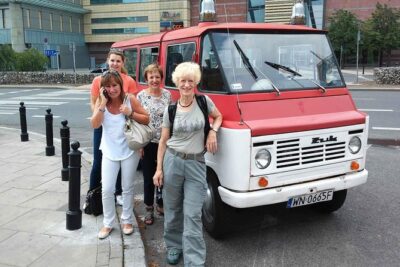
Warsaw for WWII Buffs – private tour with hotel pickup
Read our review →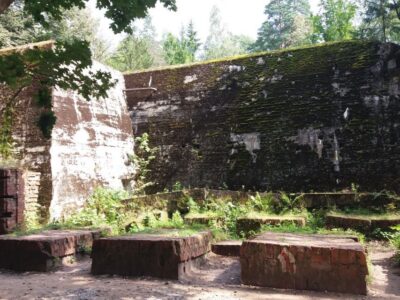
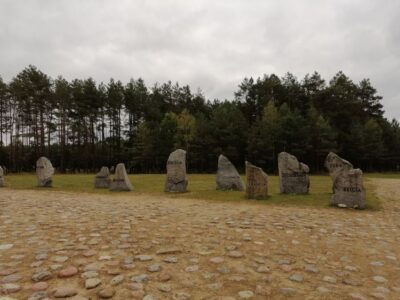
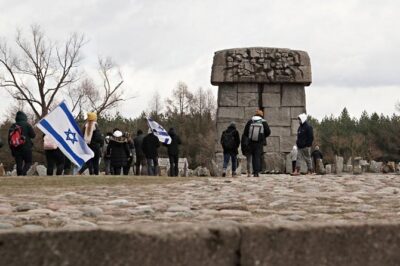
Treblinka Death Camp 6 Hour Private Tour from Warsaw
Read our review →
Stutthof Concentration Camp English Tour with Gdansk Hotel pickup
Read our review →Browse the lists this tour appears in