
Reviewed · WWII TOURS
Wroclaw: Third Reich and World War Two Historical Tour
Wroclaw’s wartime story is hard to read from its handsome streets today. That is the point of this walk: your guide connects the Old Town you see with the German city of Breslau, the persecution of its Jewish community, and the siege that left much of Wroclaw damaged or gone. The former Gestapo building gives the history a firm, unsettling address.
I like the tour’s clear route from Hotel Monopol to Cathedral Island, and I like the mix of military history with Jewish heritage and postwar change. Guides such as Michal have been praised for careful explanations and good answers to questions. The main drawback is the amount of walking, plus the fact that many wartime buildings no longer exist, so the tour relies heavily on spoken history and imagination.
Key points to know before you book
- A two-hour walk across central Wroclaw: Begin outside Hotel Monopol and finish on Cathedral Island, without hotel transport.
- The city was German until 1945: You’ll learn how Breslau became Polish Wroclaw after the war and how that changed local life.
- The former Gestapo building adds a sobering focus: This is not only a tour of battle dates and ruined buildings.
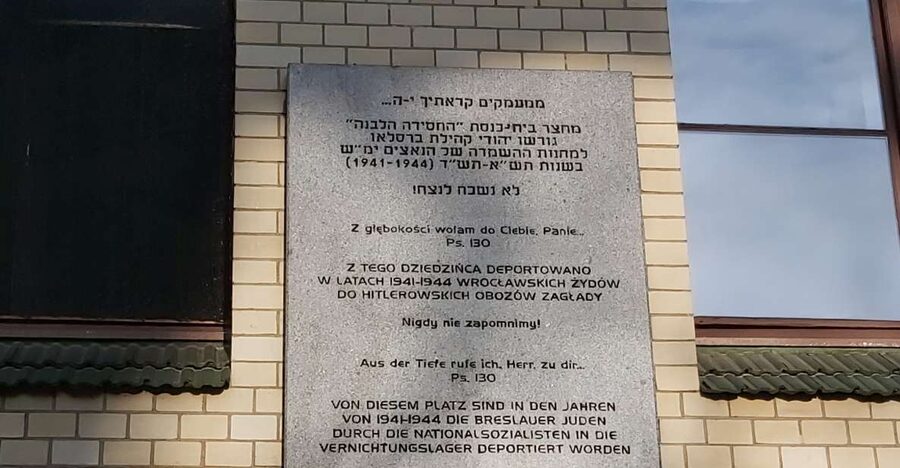
- Jewish history receives real attention: The route includes the White Stork Synagogue and Holocaust-related stories.
- The 1945 siege explains much of what you do not see: Large parts of the city were damaged or destroyed between February and May.
- Plan for weather and walking: The tour runs rain or shine, and the operator requires at least four participants.
Why Wroclaw’s wartime past needs a walking tour
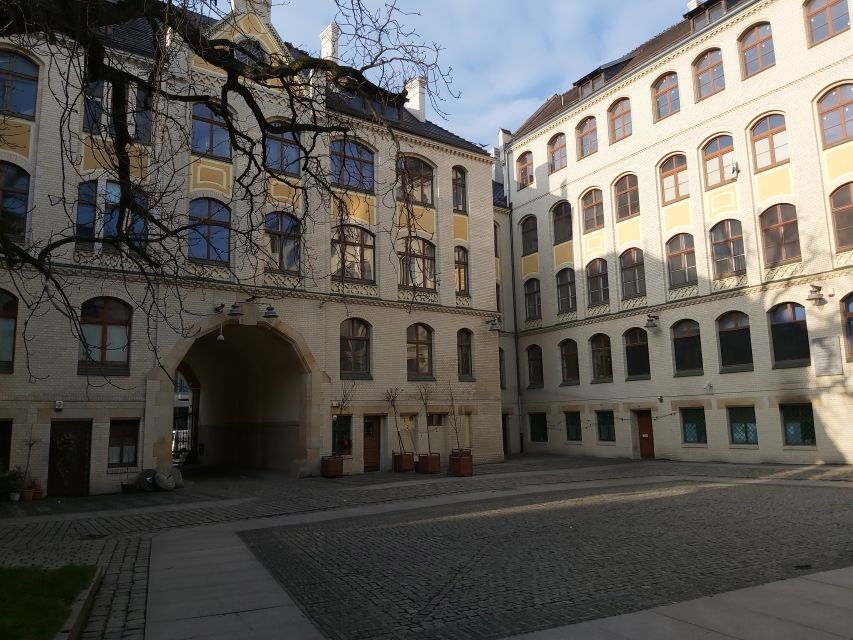
Wroclaw can feel thoroughly Polish today, with rebuilt streets, churches, bridges, and a lively central district. Yet until the end of World War Two, it belonged to Germany and was known as Breslau. A useful first lesson on this tour is that the city’s identity did not simply change because a border moved on a map.
The war brought persecution, destruction, and a forced population change. German rule shaped the city before and during the conflict. The Holocaust destroyed Wroclaw’s Jewish community, while the final siege turned much of the built city into rubble. After the war, Polish residents rebuilt and repopulated Wroclaw under a new national government and a new public identity.
That story is difficult to grasp from a standard sightseeing walk. You might admire a church façade or stroll along a square without knowing what happened there in the 1930s and 1940s. A guide supplies the missing links, showing how one place can carry German, Jewish, Polish, and wartime meanings at once.
The tour does not promise a museum-heavy experience. It is a street walk, and that matters. You see the city as it functions now while learning to read its surviving buildings, memorials, open spaces, and absences.
More WWII Tours in Wroclaw
- Wroclaw: Project Riese and Ksiaz Castle Private Tour
★ 4.7 · 39 reviews - III Reich & WW2 in Wroclaw. Monday, Wendsday, Friday regular tour
★ 4.5 · 32 reviews - Wroclaw: WW2 Tour to Project Riese & Gross-Rosen Museum
★ 4.8 · 26 reviews
Starting at Hotel Monopol and entering the Old Town
Meet your guide outside the main entrance of Hotel Monopol. Look for a sign marked World War Two Tour. The meeting point is central and easy to identify, but you should arrive ready to walk rather than expecting a vehicle to carry you between sites.
The Old Town is the right place to begin because it lets your guide set out the broad story before focusing on individual landmarks. You’ll hear how Wroclaw once belonged to Germany, what German rule meant for the city, and how the final months of the war changed its physical form.
The two-hour length keeps the subject focused. It is long enough to connect several parts of the city, yet short enough to fit beside a general Wroclaw sightseeing day. I would not treat it as a complete study of the war in Lower Silesia. Think of it as a strong central-city introduction, with enough detail to point you toward further reading.
The route ends at Cathedral Island, so you are not brought back to Hotel Monopol. That is useful if you plan to continue sightseeing in the eastern part of the center, but less convenient if you have another appointment at the starting point. You’ll need to make your own way back.
The former Gestapo building and the human cost of occupation
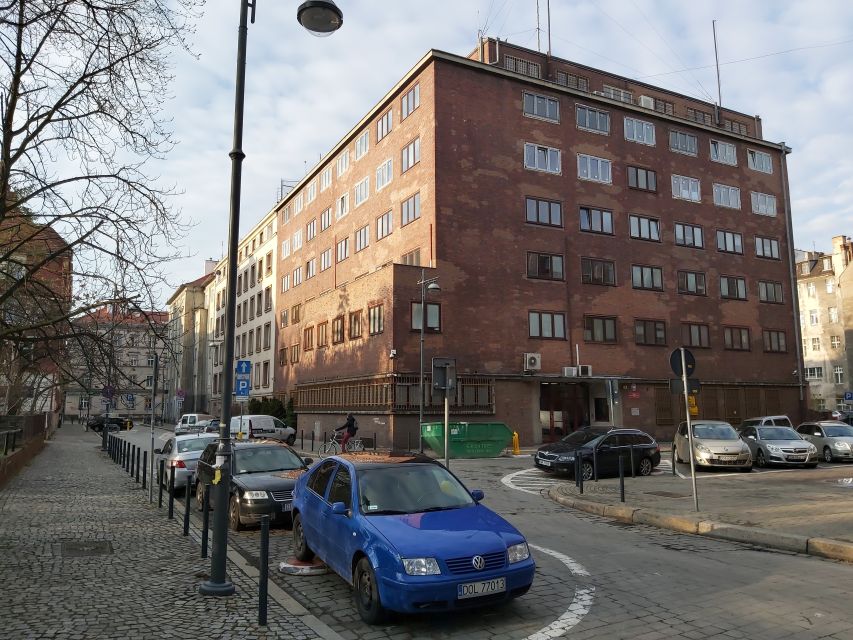
One of the tour’s most important stops is the former Gestapo building. Its value is not visual spectacle. It gives the story a specific location where German state violence and wartime control can be discussed in concrete terms.
A site such as this helps balance the grander language of war. Dates, borders, armies, and sieges can feel distant. A former police building brings the machinery of repression into the street around you. Your guide can explain how the city functioned under German authority and how political persecution affected ordinary people.
Do not expect every stop to look dramatic. The building’s importance comes from what happened there and from the explanation provided on site. If you prefer tours built around preserved interiors and large museum displays, this walk may feel less visual than you expect.
That is also why the guide matters so much. Michal, also written as Mihael in some booking details, has been praised for detailed explanations, clear communication, and willingness to answer questions. The guide’s ability to connect a modest-looking address with a larger story is a major part of the tour’s value.
Wolności Square and the city’s wartime scars
Wolności Square helps show how public spaces change meaning over time. On a normal day, you may see an urban square rather than a battlefield or a political stage. The tour asks you to picture how war, occupation, and postwar rebuilding altered the way people used and understood central Wroclaw.
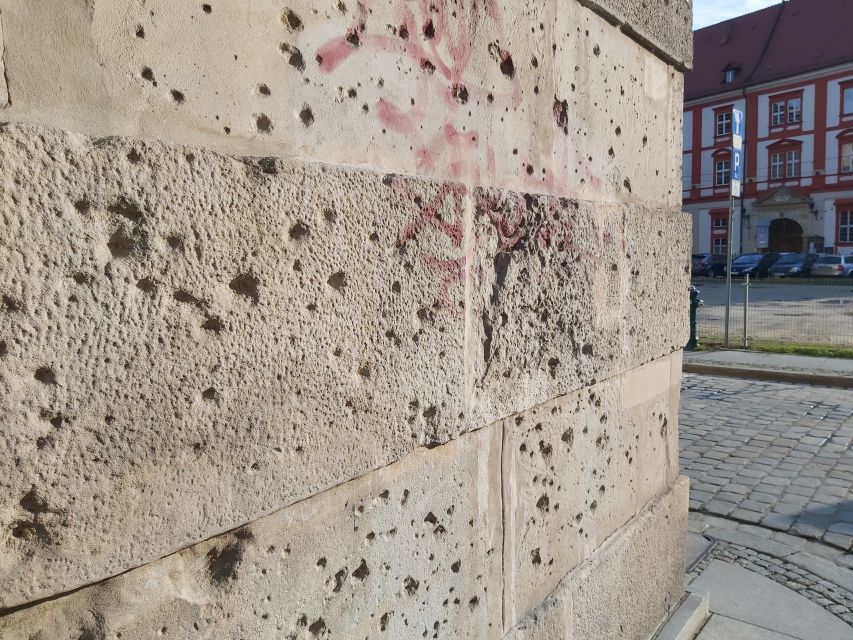
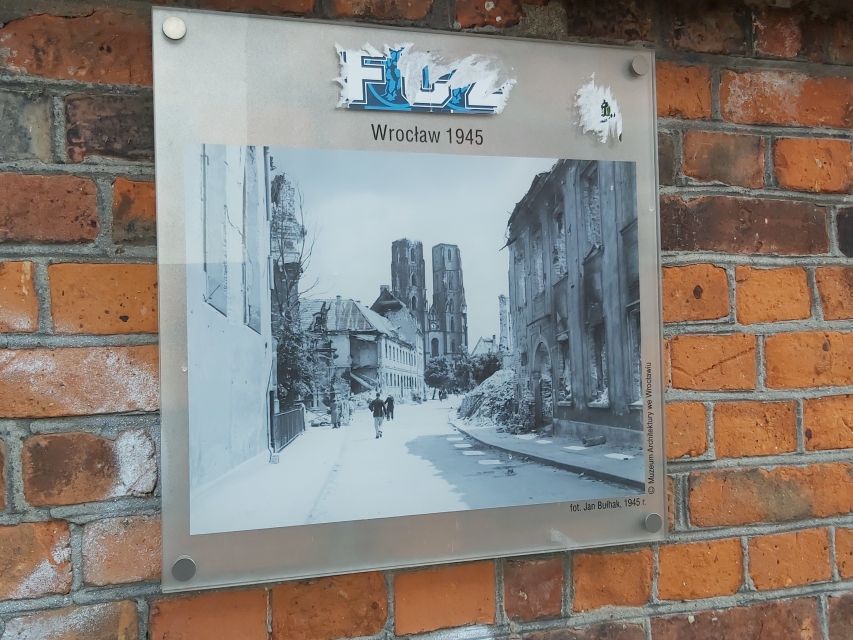
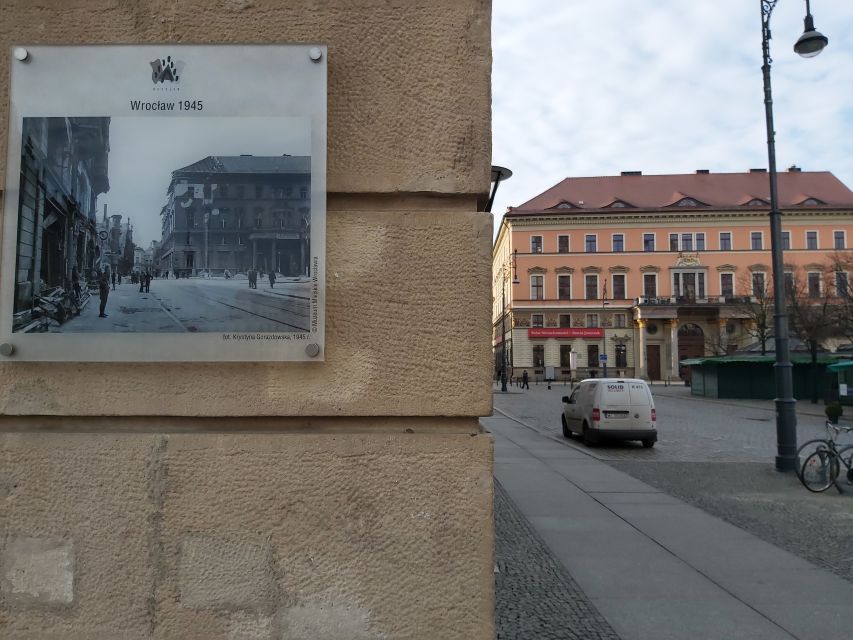
The siege of Wroclaw lasted from February to May 1945. By the time it ended, much of the city had been damaged or destroyed. That fact explains a possible weakness in the walk: a large part of the wartime city can no longer be seen in its original form.
You will often be looking at rebuilt structures, later additions, or open areas where the older city disappeared. A guide can explain the missing pieces, but no tour can recreate them fully. Bring patience and let the spoken account do some of the work.
This is also where the tour’s focus on postwar change becomes useful. Wroclaw did not simply repair itself and return to normal. The city had to adjust to a new political order and a population reshaped by the end of the war. The modern streets reflect that process, even when the evidence is not obvious.
Same city, a completely different kind of day:
- Wroclaw: E-Car Tour and Audio Guide
★ 4.6 · 1,738 reviews - Wroclaw: 2-Hour Private Guided Tour by Electric Car
★ 4.8 · 805 reviews - Wrocław: Old Town and Ostrów Tumski Walking Tour in English
★ 4.8 · 311 reviews - Wroclaw: Private Old Town Guided Walking Tour (2 hours)
★ 4.8 · 275 reviews
White Stork Synagogue and Wroclaw’s Jewish story
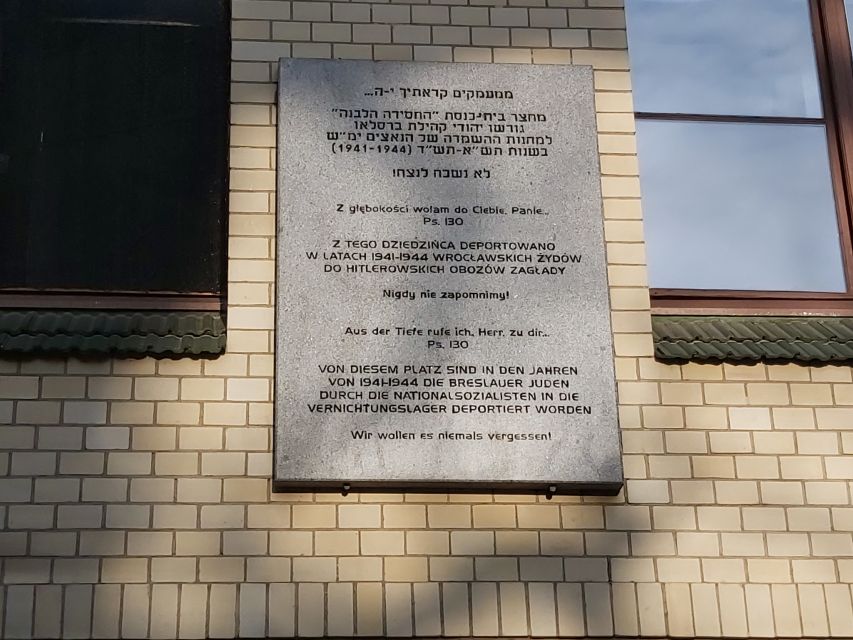
The White Stork Synagogue gives the tour a needed human and cultural focus. It moves beyond armies and buildings to address the Jewish community that lived in Wroclaw and the destruction caused by the Holocaust.
This part of the walk is especially valuable if your knowledge of Wroclaw’s past has focused only on its German identity or the 1945 siege. Jewish heritage is not a side note here. It is part of the city’s story before the war, during Nazi persecution, and after the Holocaust.
You’ll hear about the changes brought by German rule and the fate of Jewish residents during the Holocaust. The stop can be painful, but the subject belongs in any honest account of the city’s wartime years. A guide who explains the local setting helps you understand that the Holocaust was not an abstract event far away. It affected real neighborhoods and communities.
The synagogue also gives the route a physical landmark that remains easier to identify than many vanished wartime sites. Still, the tour is not described as an extended interior visit, so you should not book it expecting a long museum session inside the building. Monument opening times can change, and the route may need to focus on the exterior or surrounding area.
Memorials, churches, and the voices of a divided era
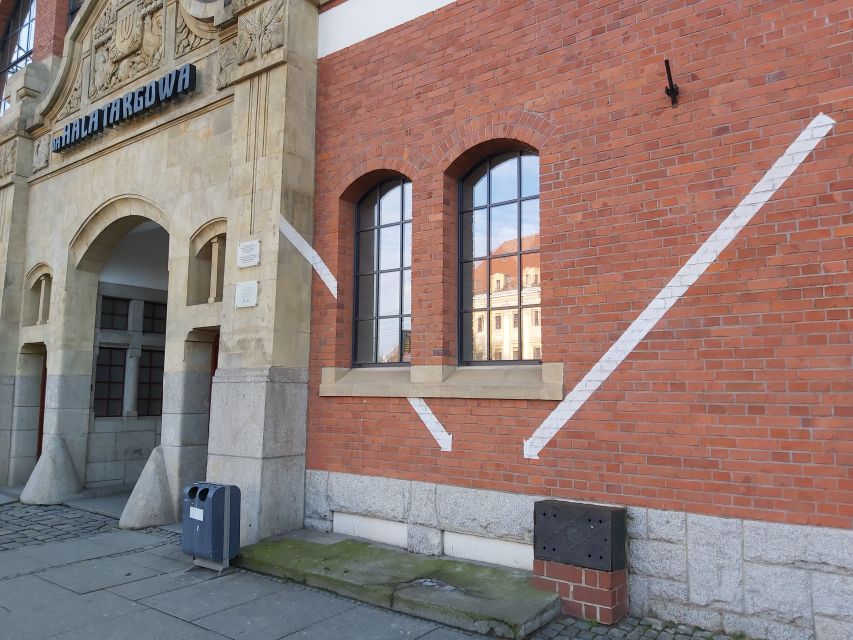
The Dietrich Bonhoeffer Memorial adds another layer to the tour. Bonhoeffer was a German pastor and anti-Nazi figure, so the memorial supports a more complex view of German society during the war. It reminds you that German history cannot be reduced to one simple story of uniform support for the regime.
The University Church offers another useful stop. Churches in a wartime city can carry religious, political, educational, and architectural meaning at the same time. Your guide can place this building within Wroclaw’s wider history and help you understand what survived, what was damaged, and what changed after 1945.
These stops may appeal most to people who enjoy context rather than a checklist of famous sights. You are not only asking what happened at one building. You are asking how public institutions, religious communities, students, and local residents experienced a city under pressure.
The route also shows why an expert guide is worth paying for on a subject like this. Plaques can identify a name and a date. A guide can explain why that name matters and how it fits with the city’s German, Jewish, and Polish past.
Ossolineum Garden, Sand Island, and the walk toward Cathedral Island
The Ossolineum Garden brings the route into a quieter setting. Gardens and institutional grounds can be useful places to discuss what survived the war and how the city rebuilt its public life. The change of pace is welcome after the heavier subjects linked to Nazi rule and the Holocaust.
From there, the tour continues toward Sand Island and Cathedral Island. These areas show Wroclaw through its waterways, bridges, churches, and surviving urban structure. They also give your guide room to explain how the city’s appearance today relates to wartime destruction and later reconstruction.
The end point at Cathedral Island is practical for further sightseeing. You finish in one of Wroclaw’s most important historic areas rather than being returned to the original meeting point. If you have energy, you can continue exploring from there. If you have limited mobility or a tight schedule, remember that the tour covers a fair distance on foot.
One participant described the walk as requiring a fair bit of walking, while also noting that the guide allowed time for explanation. That balance matters. This is not a fast march from plaque to plaque, but the two hours still involve steady movement across central Wroclaw.
How much walking and weather should you expect?
The activity is wheelchair accessible, but the route is still a walking tour over two hours. Before booking, consider your comfort with being outdoors and moving between several central locations. The guide may pause to explain sites, yet you should wear practical shoes.
The tour runs rain or shine. Snow recently made one winter outing less comfortable, and that is a useful warning rather than a minor detail. Wroclaw’s weather can affect how much you enjoy standing outside while listening to a serious subject.
An umbrella, warm layers, or rain protection can make a real difference depending on the season. The monuments’ operating hours can also change, so the exact access to a site may vary. The historical route remains the main product, not guaranteed entry to every monument.
The group needs at least four participants to operate. That condition is worth checking when your plans are fixed, especially outside the busiest season. Smaller groups can make it easier to ask questions and hear detailed explanations, though the final group size is not guaranteed.
Is $31 a fair price for two hours?
At $31 per person, the tour is reasonably priced for a licensed English-speaking guide and a focused two-hour walk. You are paying for interpretation, route planning, and historical context rather than transport, meals, or admissions.
The value is strongest if you want to understand Wroclaw before exploring it on your own. The guide helps you notice the city’s missing buildings, changing names, memorials, and layered identities. That can save you from seeing the Old Town as only a pretty collection of rebuilt façades.
The value is weaker if you want extensive access to interiors or a long museum visit. Food and drinks are not included, and there is no hotel pickup or drop-off. The tour is also concentrated on central Wroclaw, so it will not cover every wartime site in Lower Silesia.
For a short introduction, the price feels fair. I would pair it with a general city walk or museum visit, not use it as your only historical experience in the region.
Who will get the most from this tour?
This tour suits you if you want to understand why Wroclaw looks the way it does today. It is a good choice for people interested in World War Two, German-Polish relations, Jewish heritage, the Holocaust, and the difficult process of rebuilding after 1945.
It should also work well for anyone with a personal connection to German or Polish displacement. One booking participant joined partly because of family ties to people forced from their homes, and the subject can carry particular weight for anyone exploring that past.
You will get the most from it if you ask questions. Guides such as Michal are prepared to discuss details and suggest books or further material. That makes the walk useful beyond its two-hour route.
I would think twice if you dislike outdoor tours, need frequent transport, or want every stop to have a preserved wartime building. Much of Wroclaw’s wartime city was destroyed, and the absence of visible evidence is itself part of the story.
My recommendation for booking
Book this tour if you want a serious, human account of Wroclaw’s wartime past rather than a quick list of dates. The strongest parts are the connection between German Breslau and modern Wroclaw, the attention to Jewish heritage, and the guide’s detailed explanations at places such as the former Gestapo building and White Stork Synagogue.
Choose a dry, comfortable day if possible, and leave room for the full walking route to Cathedral Island. If you want a shorter introduction before independent sightseeing, $31 is a sensible spend. If you need extensive interiors or a broad regional tour, look for a longer experience instead.
FAQ
Where does the tour begin?
Meet your guide outside the main entrance of Hotel Monopol. The guide will hold a sign that says World War Two Tour.
Where does the tour finish?
The walk finishes at Cathedral Island in Wroclaw.
How long does the tour last?
The guided tour lasts two hours.
What language is the tour conducted in?
The tour is conducted in English with a live guide.
Is hotel pickup included?
No. Hotel pickup and drop-off are not included.
Does the tour run in bad weather?
Yes. The tour takes place rain or shine.
Can I cancel for a full refund?
Yes. You can cancel up to 24 hours in advance for a full refund.
More Historical Tours in Wroclaw
- Best of Wroclaw 3-Hour History and Culture Walking Tour
★ 4.9 · 49 reviews - Culinary Microcosm – Food, Drinks, & History of Wroclaw
★ 5.0 · 4 reviews - Gdansk: City Cruise on Historical Polish Boat
★ 4.8 · 2,913 reviews - Warsaw: POLIN Museum of the History of Polish Jews Ticket
★ 4.7 · 1,142 reviews
Just added around Wroclaw
- Lower Silesia Tour From Wroclaw★ 4.5 · 33 reviews
- Wroclaw Old Town Private Tour★ 5.0 · 6 reviews
- Museum of Illusions Wroclaw Entrance Ticket★ 5.0 · 42 reviews
- Jewels of Lower Silesia★ 5.0 · 22 reviews
- Legends of Old Town 1 Hour Walking Tour in Wroclaw★ 5.0 · 6 reviews
- Highlights of Wroclaw Private Tour with one Entrance★ 5.0 · 5 reviews
- Famous Islands of Wroclaw – Cathedral Island and Sand Island Private Tour★ 5.0 · 13 reviews
- Undercover City Games: Wroclaw★ 5.0 · 44 reviews
WWII Tours, compared.
Warsaw for WWII Buffs – private tour with hotel pickup
Read our review →
Treblinka Death Camp 6 Hour Private Tour from Warsaw
Read our review →
Stutthof Concentration Camp English Tour with Gdansk Hotel pickup
Read our review →Browse the lists this tour appears in