
Reviewed · WWII TOURS
Museum of the Second World War Gdansk Private Tour & Tickets
Gdansk’s Museum of the Second World War is the heart of this tour, but the real strength is what happens outside its walls. You connect the museum’s exhibits with the Polish Post Office memorial, the shipyards, and the city’s long fight against both Nazi occupation and communism. I especially like the private guide format and the chance to ask questions as you go. Skip-the-line ticketing also saves time, though it does not let you bypass security or the museum entrance queue.
The tour is especially useful if you want more than a museum visit and prefer a clear story rather than a pile of dates. Guide Małgorzata has been praised for being punctual, highly prepared, and generous with questions. The main consideration is pace: the four-hour version includes a moderate walk over uneven surfaces and steps, while the two-hour option gives you less time for the post-war sites.
Key points to know before booking
- The museum is the main event: Spend about two hours with the permanent exhibition at the Museum of the Second World War.
- A private guide keeps the focus on you: Your group receives the guide’s full attention, with room to ask about Polish, Jewish, wartime, and communist history.
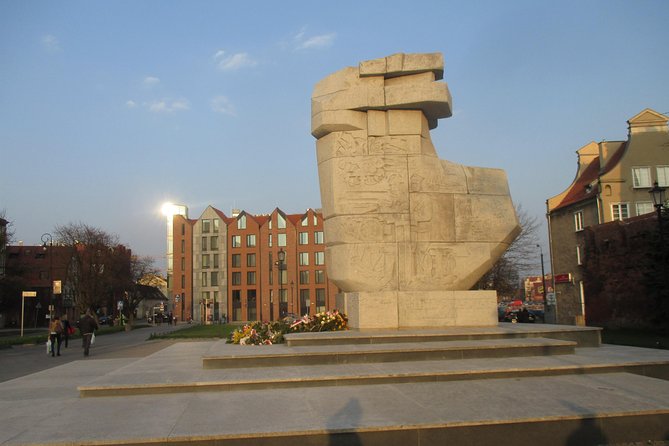
- The four-hour route reaches the shipyards: You add the Polish Post Office memorial, St. James Church, the Fallen Shipyard Workers monument, European Solidarity Centre, BHP Hall, and Imperial Shipyard.
- Skip-the-line has limits: Your timed ticket avoids the ticket office queue, but you still pass through the museum entrance.
- Old Town pickup is limited: Hotel pickup is available only within about 1.5 kilometers of the meeting point and only with the extended option.
- This is a serious history tour: Expect a sober look at occupation, resistance, loss, post-war control, and Poland’s struggle for freedom.
Why this Gdansk tour works better than a museum visit alone
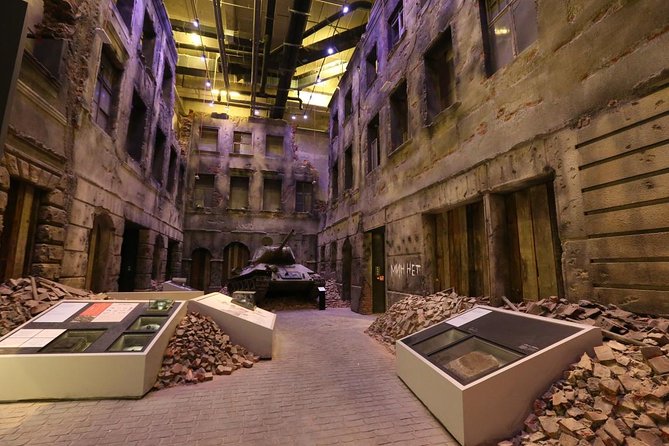
You can visit the Museum of the Second World War on your own, but the private format changes the day. Instead of trying to make sense of a large exhibition by yourself, you have a licensed guide who can explain the Polish experience and adjust the discussion to your interests.
That matters in Gdansk. The city’s wartime story does not end with the invasion of Poland, and it does not stop when the fighting ends in 1945. The tour links the war years to the later resistance against communism, especially through the shipyard sites and the European Solidarity Centre.
I like that this is not just a standard museum transfer. You begin with the war, then move through places tied to occupation, resistance, industrial labor, political repression, and the eventual fight for independence. The result is a more connected picture of Gdansk.
The private setup is also practical for families, couples, and small groups with different interests. You can ask about Poland’s Jewish community, military events, civilian life, the Polish underground, or the communist period without waiting for a large group to catch up.
More Museum Tours in Gdansk
- Gdansk: Private Communism Tour with Solidarity Center Museum
★ 5.0 · 28 reviews - Gdansk Private WWII Tour with Museum of the Second World War
★ 4.9 · 22 reviews - Gdansk Private Communism Tour with Solidarity Center Museum
★ 5.0 · 14 reviews
Meeting at the Pilecki monument
The tour begins at the monument to Witold Pilecki in front of the Museum of the Second World War at plac Władysława Bartoszewskiego 1. Allow time to find the exact meeting point, especially if you are walking from central Gdansk.
The opening meeting takes about 10 minutes and does not require an admission ticket. Your guide will confirm the plan and lead you into the museum. If you arrange pickup, remember that it is offered only for accommodation in Gdansk Old Town, within about 1.5 kilometers of the meeting point, and only on the extended version.
This meeting location is sensible because you start at the main attraction instead of spending the first part of the tour on transportation. It also makes the tour easy to reach by public transport.
Inside the Museum of the Second World War
You spend about two hours in the museum’s permanent exhibition. This is the core of both tour options, and your admission is included.
The exhibition covers the global scale of World War II while keeping Poland’s experience in view. You can expect artifacts, documents, photographs, and interactive displays that show how the conflict affected soldiers, civilians, families, and entire communities.
The museum’s subject matter is difficult. You will encounter occupation, destruction, persecution, resistance, and the human cost of political decisions. This is not a light sightseeing stop, so plan your energy accordingly. The strongest benefit of a guide is having someone who can provide context when the material becomes dense or emotionally heavy.
A private guide can also help you spend time where it matters most to you. If your family has Polish roots, you may want to ask more about civilian life or resistance. If you are interested in military history, you can focus your questions on strategy, invasions, and the wider conflict. If the Jewish history of Gdansk matters to you, raise that subject early so your guide can shape the discussion around it.
The museum admission is for the permanent exhibition. A timed ticket lets you skip the line at the ticket office, but you do not skip every queue. You still need to enter through the museum entrance, so arriving at the scheduled time is important.
The Polish Post Office and St. James Church
The four-hour option continues with an outdoor walking route connected to Gdansk’s wartime and post-war story. One of the key stops is the memorial to the Defenders of the Polish Post Office.
This site recalls one of the first battles of World War II. The memorial gives the museum material a physical setting, helping you understand that the conflict was not an abstract event happening somewhere far away. It began here, in streets and buildings used by ordinary people.
The walking route also includes St. James Church. The supplied information connects this part of the tour with resistance to Nazi occupation and the wider struggle for freedom. Your guide can help tie the site to the political and religious pressures that shaped Gdansk during and after the war.
This section is free to enter, but it does require walking between locations. If you choose the extended tour, wear shoes suited to pavement, uneven surfaces, and steps. The tour runs in rain or shine, so check the forecast and dress for the weather.
More WWII Tours in Gdansk
- Gdansk: Guided Round-Trip Cruise to Westerplatte
★ 4.3 · 865 reviews - Gdansk: Stutthof Concentration Camp Regular Tour
★ 4.7 · 361 reviews - Stutthof Concentration Camp English Tour with Gdansk Hotel pickup
★ 4.5 · 73 reviews - Stutthof Concentration Camp:Guided Tour with Transportation
★ 4.7 · 57 reviews
Shipyard monuments and the post-war struggle
The tour then turns toward the Monument to the Fallen Shipyard Workers. This is where the story moves from wartime occupation into the post-war period and Poland’s conflict with communist rule.
The shipyards are important because they connect political history with working life. Here, the guide explains the resistance that grew after the war and the fight for greater freedom. You are no longer looking only at what happened during the Nazi occupation. You are following the long road through post-war control and opposition.
I consider this one of the best reasons to choose the four-hour option. A museum visit can explain events. Walking among the places tied to those events gives you a better sense of how politics affected the city over several generations.
The outdoor portion is not a casual stroll through the Old Town. It is a history walk with several stops and a serious subject. The guide can adjust the pace to your group, but the extended version is described as moderate and may include uneven ground or steps.
European Solidarity Centre and BHP Hall
The European Solidarity Centre adds the next chapter: Poland’s path toward independence. The stop helps show how the wartime and post-war stories connect rather than sitting in separate museum rooms.
You also see the historic BHP Hall, where the August Agreements were signed. The tour uses this location to explain the political struggle that developed around the shipyards and the movement for change.
The route includes the Obrońca mural, a tribute to those who defended Poland, along with a preserved World War II air raid shelter. These stops give the walk variety. You are not simply moving from one monument to another. You see memorial art, a historic meeting place, and a surviving wartime structure.
The European Solidarity Centre itself is included as a stop on the extended route, but the information provided does not specify admission to an interior exhibition. The included museum ticket is for the permanent exhibition at the Museum of the Second World War. If entering the European Solidarity Centre is essential to you, confirm that detail with the operator before booking.
Ending at the Imperial Shipyard
The tour ends at the Imperial Shipyard, where wartime industry remains part of the story. This final stop gives the route a strong sense of place. Gdansk was not only a city of military events and political protests. It was also a working industrial center shaped by shipbuilding.
Ending here makes sense because the shipyard links several periods covered during the tour: wartime production, post-war labor, political opposition, and the fight for national freedom. You finish with a broader understanding of why Gdansk mattered and why its shipyards became such powerful symbols.
The activity ends back at the original meeting point according to the stated end details. Since the walking route covers several sites, ask your guide on the day how the return is handled and allow enough time before a train, cruise departure, or dinner reservation.
Choosing between two hours and four hours
The two-hour option is the easier choice if you have limited time or mainly want the museum. You receive the private museum tour and skip-the-line ticket, but the extended post-war walking route is not included.
Choose four hours if you want the fuller story of Gdansk. This version includes the museum plus the Polish Post Office memorial, St. James Church, the Fallen Shipyard Workers monument, the European Solidarity Centre, BHP Hall, the mural, the air raid shelter, and the Imperial Shipyard.
The longer tour is better value for a first visit if you have the time and the energy. You are not paying only for extra minutes. You are adding the places that explain what happened after the war and why Gdansk remained central to Poland’s fight for freedom.
Still, do not choose four hours automatically. The material is serious, and the walking route is moderate. If you have mobility concerns, fatigue easily, or need a shorter museum-focused outing, the two-hour option may be the wiser choice. Contact Rosotravel Tours Gdansk in advance about disability access or special requests.
What the $153.49 price means
At $153.49 per person, this is not a budget museum ticket. The price makes more sense for couples, families, or small groups who value a private guide and want the museum connected to the city’s outdoor sites.
You are paying for a licensed guide, admission to the Museum of the Second World War, and the private format. The extended option also adds several hours of guided walking without separate admission fees at the outdoor stops.
The value depends heavily on group size. For one person, the cost is harder to justify unless you place a high value on private instruction. For a small group, the per-person price may be more reasonable because you share the guide while keeping the experience private.
Skip-the-line access is useful during busy periods, but remember what it actually means. You skip the ticket office line with a pre-booked time. You do not skip the entrance process. Arrive on time, since the ticket is valid for a specific date and time.
The guide makes the difference
The most important quality factor here is the guide. A private tour is only as good as the person leading it, and the available feedback gives a good example in Małgorzata.
She has been praised for punctuality, strong preparation, clear explanations, and taking extra time to answer questions. That matters in a museum with a large amount of material. A guide who knows the exhibition well can keep the visit from becoming a blur of labels and dates.
You should use the private format actively. Ask questions. Tell the guide what interests you. If you want more about the Jewish community, the first battles of the war, resistance, or communist Poland, say so rather than waiting for every subject to appear on its own.
The tour is offered in English, and the guide is described as fluent in the selected language. Check the available language option when booking.
Who should book this experience?
I would choose this tour for a first-time Gdansk visitor who wants a serious introduction to the city’s twentieth-century history. It also suits anyone who finds museums easier to understand with a clear human explanation.
It is a strong fit for:
- Couples and families who want a private discussion instead of a large group
- History-focused visitors with questions about Poland and World War II
- People who want to connect the museum with real city sites
- Small groups that can share the cost of a private guide
- Visitors interested in both Nazi occupation and post-war communism
I would be more cautious if you dislike solemn subjects, have only a short window in Gdansk, or want a relaxed sightseeing walk. The four-hour version asks for time, attention, and comfortable shoes.
Free cancellation is available up to 24 hours before the start time. Changes or cancellations inside that period are not accepted for a refund. Check your email the day before for the operator’s final instructions.
Should you book it?
Book this tour if you want Gdansk’s World War II museum placed inside the city’s wider story. The museum alone is the main attraction, but the extended route explains how the war, occupation, shipyards, communism, and the later fight for freedom connect.
Choose the four-hour option when you want the best historical value and can manage a moderate walk. Choose two hours when your priority is the museum and a focused private explanation. At $153.49 per person, it is a specialist tour rather than a cheap ticket, but the private guide, included museum admission, and wider route can justify the cost for a small group that wants depth and personal attention.
FAQ
Where does the tour begin?
It begins at the monument to Witold Pilecki in front of the Museum of the Second World War, at plac Władysława Bartoszewskiego 1 in Gdansk.
Is hotel pickup available?
Pickup is available from accommodation in Gdansk Old Town, within about 1.5 kilometers of the meeting point. It is available only with the extended tour option.
Is museum admission included?
Yes. Skip-the-line admission to the permanent exhibition at the Museum of the Second World War is included with all options.
Does skip-the-line mean I skip every queue?
No. The timed ticket lets you skip the line at the ticket office, but you still need to go through the museum entrance.
How long does the tour take?
The available options last approximately two or four hours. The four-hour version includes the extended walking route covering post-war communist history.
Is the tour private?
Yes. Only your group participates, and the guide’s attention is dedicated to your group.
Is the tour offered in English?
Yes. English is one of the offered languages, and the guide is described as fluent in the language selected at booking.
Can I cancel for a refund?
You can cancel up to 24 hours before the experience begins for a full refund. Cancellations or changes made less than 24 hours before the start time are not accepted for a refund.
Just added around Gdansk
- Gdansk and Malbork Castle Small Group Tour from Warsaw with Lunch★ 4.5 · 20 reviews
- Westerplatte private tour led by Expert-Guide (door to door)★ 5.0 · 5 reviews
- Whisky Tasting in Gdańsk★ 5.0 · 3 reviews
- Westerplatte – 2h private trip by luxury car|★ 5.0 · 4 reviews
- Private WW2 Tour of Westerplatte,Gdansk and Stutthof Including Lunch★ 5.0 · 12 reviews
- Gdansk EVERYDAY Vodka Tasting Tour★ 5.0 · 6 reviews
- Aiport Gdansk Transfer to Malbork Castle or Stutthof★ 5.0 · 3 reviews
- 5 hours Individual trip to the Stutthof Concentration Camp★ 5.0 · 5 reviews
WWII Tours, compared.
Warsaw for WWII Buffs – private tour with hotel pickup
Read our review →
Treblinka Death Camp 6 Hour Private Tour from Warsaw
Read our review →
Stutthof Concentration Camp English Tour with Gdansk Hotel pickup
Read our review →Browse the lists this tour appears in