
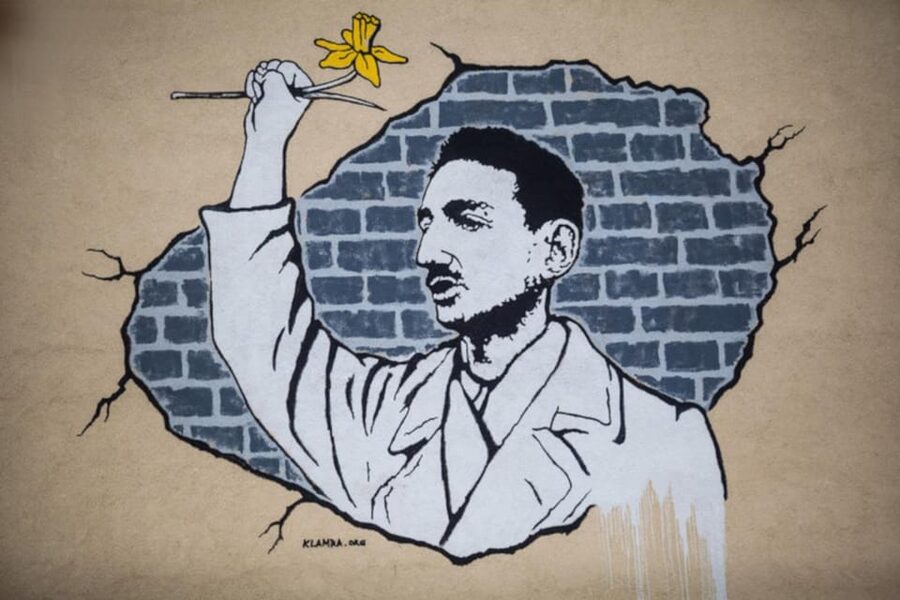
Reviewed · JEWISH HERITAGE TOURS
Warsaw: Jewish Heritage & Holocaust Walking Tour
Warsaw’s Jewish past is not confined to a museum. It is written into streets, empty spaces, memorials, and places that look ordinary until a guide places an old photograph beside them. This 150-minute walking tour moves from medieval Jewish life to the Holocaust, with more than half its time focused on the Warsaw Ghetto and its uprising.
I like the way the tour connects 600 years of Jewish history instead of treating the Holocaust as an isolated chapter. I also like the use of pre-war photographs and maps, which helps you see the city that war erased. Guides including Magda, Gawel, Albert, Goska, and Martin are praised for clear, humane presentations.
The main drawback is practical: this is a serious, outdoor walking tour, and the latter part can feel cold or dark in winter. Groups may reach around 30 people, which can make listening less comfortable. Wear sturdy shoes, bring water, and take a head covering or kippah.
Key points to know before you go
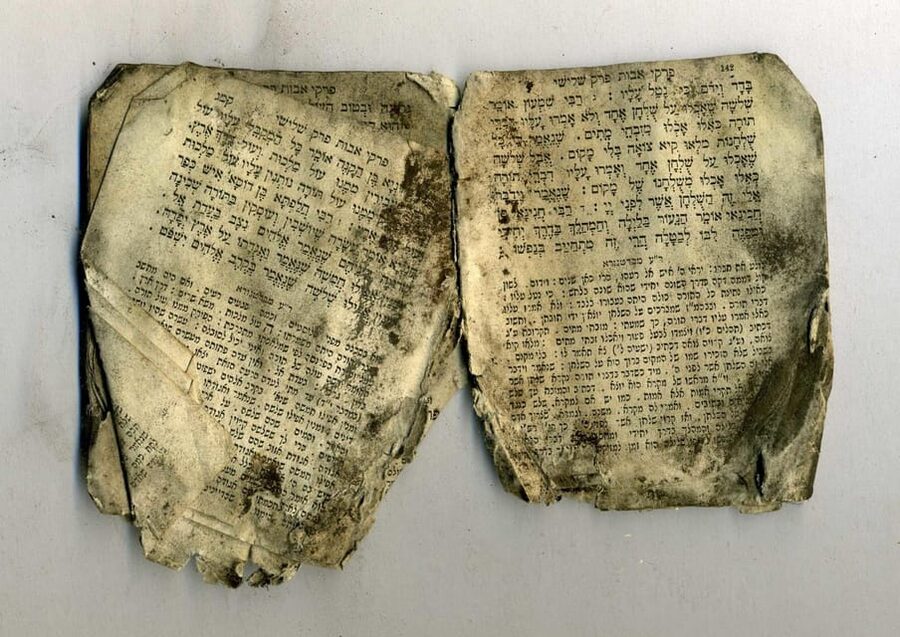
- Six centuries in 150 minutes: The route covers medieval Jewish settlement, the Haskalah, pre-war Warsaw, the Holocaust, and the Ghetto Uprising.
- Old photographs change the view: Images of pre-war streets help you picture neighborhoods that were reshaped or destroyed during the war.
- The Holocaust receives most of the time: You learn about the Ghetto wall, daily conditions, deportations, and Treblinka.
- The guides are a major strength: Magda, Gawel, Albert, Goska, Martin, and others are praised for clear English, strong preparation, warmth, and care.
- Winter needs planning: December and January walks may become very cold, especially toward the end. A warm coat and daylight start can make a difference.
- A low-cost history lesson: At $20, the tour offers strong value if you want context before visiting Warsaw’s Jewish museums and memorials.
Starting at Sigismund’s Column
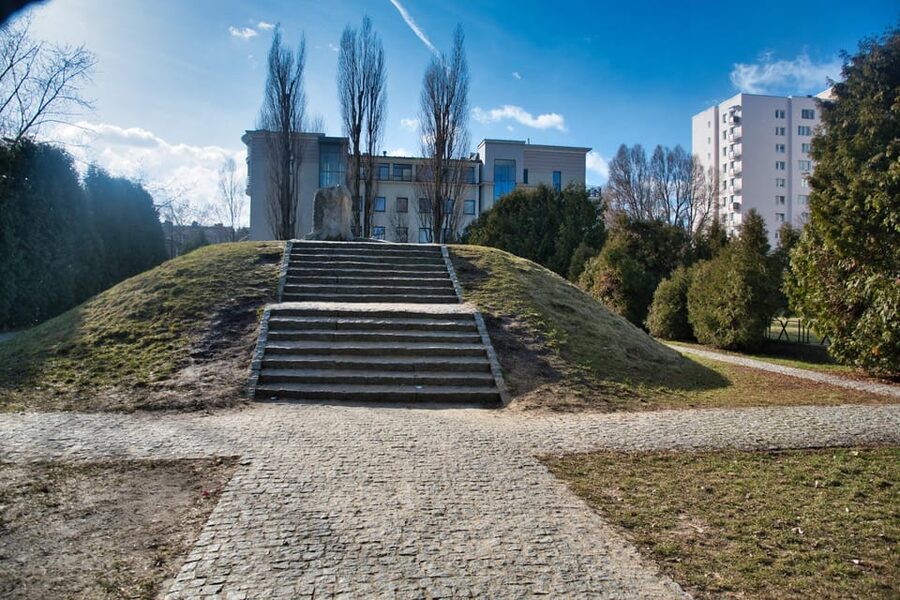
The meeting point is Castle Square, beside Sigismund’s Column. Look for the guide holding an orange umbrella with a British flag. That detail matters in a busy square, especially if you are arriving shortly before the start.
Castle Square is not the Jewish quarter, so the opening walk also gives you a useful sense of Warsaw’s layout. You begin in one of the city’s best-known public spaces, then move toward places connected with Jewish Warsaw. The tour is conducted in English and includes a professional guide and the walking route itself.
There are no entrance fees included because this is an outdoor tour. That keeps the price at $20 per person, a fair sum for two and a half hours of guided history. You are paying mainly for interpretation, not admission tickets. If your interest is limited to seeing a few memorials quickly, this may feel longer than needed. If you want the connections explained, the price is modest.
The walk is wheelchair accessible, though outdoor routes can still involve normal city pavement and changing conditions. Children under 10 are not considered suitable for the tour, which makes sense given the subject matter and the amount of historical detail.
More Historical Tours in Warsaw
- Warsaw: POLIN Museum of the History of Polish Jews Ticket
★ 4.7 · 1,142 reviews - Warsaw: Chopin Concert at Historical Venue in Old Town
★ 4.7 · 445 reviews - Small-Group Historical Guided Tour of Warsaw with pick up/drop off. Public Tour.
★ 4.5 · 343 reviews
Medieval Jewish settlement and the first expulsions
The first part reaches back to the origins of Polish Jewish life. You learn about the medieval Jewish quarter in Warsaw, how the community developed, and the first expulsions.
This opening section is useful because it places Jewish life in Poland within a long time frame. The story does not begin with the Nazi occupation, and it does not reduce Jewish history to persecution alone. You hear about settlement, community life, and the changing position of Jews in Warsaw over the centuries.
The early material may be less immediately visual than the later war history. There may not be a dramatic memorial at every point. Still, it gives you a needed foundation: the people later trapped in the Warsaw Ghetto were part of a community with generations of local roots.
A good guide makes this section easy to follow by keeping dates and political changes tied to the places around you. Albert, Magda, Gawel, and other guides have been singled out for presenting difficult material in clear English and for answering questions without rushing the group.
The jurydki and the Jewish Enlightenment

The tour then moves into the 18th century, when Jewish settlements existed within areas called jurydki. These were districts under the jurisdiction of Warsaw’s magnates rather than the city’s normal municipal authority.
That detail helps explain why Jewish neighborhoods did not simply develop according to one clear city plan. Power in Warsaw was divided, and legal authority could depend on the district. The tour also introduces the Haskalah, or Jewish Enlightenment, a movement that shaped Jewish education, culture, and ideas in Europe.
This is one of the tour’s more valuable features. You are not only shown where people lived. You are given a sense of how law, local power, religion, and changing ideas affected daily life. For anyone who has only studied Warsaw through wartime photographs, this section adds needed depth.
You should expect a spoken history lesson supported by the guide’s explanations and visual material. The value depends heavily on the individual guide’s pace and clarity, but the strongest guides appear to handle the subject with both detail and restraint.
Seeing pre-war Warsaw through photographs
Old photographs are central to the experience. The guide uses images of 19th-century life and the pre-war Jewish District to show streets, buildings, and scenes that no longer look the same.
This is where the tour becomes especially effective. A modern street can seem detached from the past when only a plaque marks what happened there. A photograph restores scale. You can compare the shape of a street or the position of a building with the city in front of you, then understand what war and post-war rebuilding changed.
I like this method because it asks you to look closely rather than simply listen. The photographs do not replace the city. They make you question it. You start noticing gaps, altered blocks, and the difference between a surviving structure and a place remembered only through images.
Several guides are praised for bringing a large collection of photographs and maps. This is also a reason to stay close to the guide. In a group of up to 30 people, the visual materials may be harder to see from the back.
More Jewish Heritage Tours in Warsaw
- Warsaw: Warsaw Ghetto Private Walking Tour with Hotel Pickup
★ 4.9 · 369 reviews - Warsaw: Jewish History Guided Walking Tour in English
★ 4.7 · 324 reviews - Private Tour: Warsaw’s Jewish Heritage by Retro Fiat
★ 5.0 · 208 reviews - Warsaw: Ghetto, Jewish Cemetery & POLIN Museum Private Tour
★ 4.8 · 132 reviews
Entering the Warsaw Ghetto story
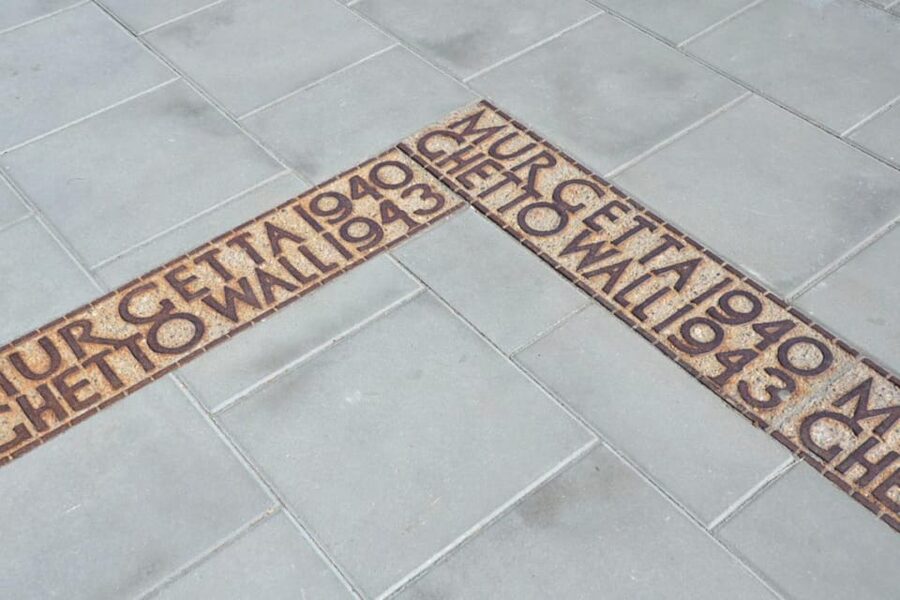
More than half of the tour focuses on the Holocaust of Warsaw’s Jews. You learn about the creation of the Warsaw Ghetto, the wall, and the conditions of life behind it.
The route presents the Ghetto as a forced system, not merely a neighborhood. The wall separated families and communities from the rest of Warsaw, while overcrowding, hunger, disease, and fear shaped daily life. The guide’s job here is to explain how the system worked and what happened to the people caught inside it.
This portion is emotionally heavy, but the information is presented as history rather than spectacle. That distinction matters. Several guides are praised for handling a painful subject with compassion, factual care, and an objective tone.
You should give yourself room to listen. This is not a tour to squeeze between shopping and dinner if you want only a light introduction. The subject asks for attention, and the final half can feel intense even when the guide avoids dramatic language.
Deportations to Treblinka
The tour explains the deportations from the Warsaw Ghetto to Treblinka death camp. This is a key transition in the story because it links what happened inside the Ghetto with the wider Nazi system of murder.
A guide can make this section easier to understand by showing how the Ghetto’s conditions and the deportations were connected. You learn not just that people were sent away, but how the process affected the remaining population and changed the choices available to those still trapped inside.
The information can be difficult, especially when the guide pairs it with photographs or maps. The use of visual evidence gives the story a firm setting, but it also makes the destruction more immediate. I would not plan another demanding historical site immediately afterward unless you have time to pause.
The Big Ghetto and the Ghetto Uprising
The final section takes you to the Big Ghetto area and the major places linked with the Warsaw Ghetto Uprising. Here the tour shifts from the structure of persecution to resistance.
You learn where the fighting took place and how the uprising fits into the physical remains of Warsaw. The value is in seeing specific locations rather than hearing about the revolt as a distant event. The guide helps you connect the streets around you with the pre-war photographs, the Ghetto period, and the destruction that followed.
Anthony’s experience of seeing the monuments and specific locations captures what this part offers: the places make the history more concrete. You are not simply collecting dates. You are standing at locations tied to decisions, danger, resistance, and remembrance.
Do not expect a grand preserved district. Much of the power comes from contrast. The present-day city may look rebuilt or ordinary, while the guide shows what once occupied the same space. That gap between what you see and what you learn is central to the tour.
Guides who shape the experience
The guide matters a great deal on this walk. Magda is praised for enthusiasm, clear English, charm, and close attention to detail. Gawel is described as engaging and well informed, with a strong ability to explain the subject. Albert receives praise for careful preparation, organization, and well-supported commentary.
Goska is appreciated for her personal touch and kindness when discussing painful events. Martin is praised for presenting history in a human and compassionate way. Peter Hardy is remembered not only for his historical presentation but also for helping with transportation problems after the walk.
These details point to a consistent strength: the best guides do more than recite dates. They answer questions, adjust to the group, and keep a difficult subject understandable. Some have even helped participants find their way back afterward.
There is some variation in group size. One reported group reached about 30 people, which felt too large for comfort, while another walk had a small group. If you want to hear every explanation and see every photograph, arrive early and stay near the guide.
Price, timing, and what to bring
At $20, this is one of the more economical ways to get a structured introduction to Warsaw’s Jewish heritage and Holocaust history. A private guide would cost much more, while a self-guided walk would lack the old photographs, maps, and explanations that connect the sites.
The tour lasts 150 minutes, so plan for a genuine walking session rather than a short orientation. Comfortable shoes are essential. Bring water, and carry a head covering or kippah as requested in the practical information.
Weather can change your experience. A February participant appreciated a coffee stop because the group was freezing, while a December participant found the latter part particularly cold and dark. In winter, check the starting time and dress for standing outdoors. In warmer months, the route should be easier physically, though water remains sensible.
Smoking is not allowed. The tour is in English only. You can cancel up to 24 hours before the start for a full refund, and the reserve-now, pay-later option lets you hold a place without paying at booking.
The note about tipping is unusually direct. The guide’s payment is reduced by agency, broker, and tax costs, so if you found the tour worthwhile, a tip is welcomed. Treat it as optional, not as a hidden required fee.
Who should take this walk
I would choose this tour if you want a broad historical framework before visiting other Jewish heritage sites in Warsaw. It works well for adults, students over 10, and anyone who prefers learning through streets and photographs rather than sitting indoors for the entire visit.
It is especially useful if you know little about the 600-year story of Warsaw’s Jewish community. The tour explains the earlier centuries, then gives most of its time to the Holocaust and Uprising. That balance means you get context without losing sight of the events most people come to understand.
I would be more cautious if you dislike long walks, cold weather, large groups, or emotionally difficult subjects. The tour is not designed as light sightseeing. It asks you to pay attention, and the final portion can be demanding.
Should you book the Warsaw Jewish Heritage and Holocaust Walking Tour?
Book it if you want the major story explained in the places where it unfolded, with photographs and maps to bridge the gap between modern Warsaw and the city that existed before the war. The strong guide feedback, accessible price, and careful treatment of the subject make it a sound choice.
Choose a warmer season or an earlier daylight start if possible. Stay near the guide, wear good shoes, and allow time afterward to process what you have heard. If Magda, Gawel, Albert, Goska, Martin, or another guide with the same careful style leads your walk, you can expect a serious, clear, and humane introduction to Warsaw’s Jewish past.
FAQ
How long does the tour last?
The walking tour lasts 150 minutes, or two and a half hours.
How much does the tour cost?
The listed price is $20 per person.
Where is the meeting point?
Meet in Castle Square beside Sigismund’s Column, the 20-meter column topped by a statue.
How do I find the guide?
Look for a guide holding an orange umbrella with a British flag.
What language is the tour conducted in?
The tour is conducted in English.
Is the tour wheelchair accessible?
Yes, the activity is listed as wheelchair accessible.
Are entrance fees included?
No. The activity includes the professional guide and walking tour, but not entrance fees to attractions.
What should I bring?
Bring comfortable shoes, water, and a head covering or kippah.
Are children allowed to join?
The tour is not considered suitable for children under 10.
More Walking Tours in Warsaw
- Warsaw: Old Town Highlights Walking Tour in English
★ 4.7 · 1,516 reviews - Warsaw: Old Town Guided Walking Tour
★ 4.9 · 599 reviews - Half-Day Polish Food Walking Tour with Guide and Dinner
★ 4.5 · 381 reviews - Old Town Warsaw Walking Tour
★ 4.5 · 333 reviews
Just added around Warsaw
- Wolfs Lair and Swieta Lipka Small Group Tour from Warsaw with Lunch★ 4.5 · 21 reviews
- Wolf’s Lair & Treblinka Tour in 1 day from Warsaw★ 5.0 · 37 reviews
- Wolfs Lair “Hitler’s Headquarters” – Full Day Tour from Warsaw by private car★ 4.5 · 4 reviews
- Tour from Warsaw: Wolf’s Lair, Hitler’s HQ Zones I and II★ 5.0 · 32 reviews
- Wolf’s Lair Private Day Trip from Warsaw★ 5.0 · 50 reviews
- Warsaw’s Old Town A Self-Guided Audio Tour★ 4.5 · 10 reviews
- Warsaw Must-See Local City Tour with Antek and Tomek★ 5.0 · 51 reviews
- Off the Beaten Track in Warsaw: Private City Tour★ 4.5 · 9 reviews
Jewish Heritage Tours, compared.

Bike Tour of Old Town, Jewish Quarter and the Ghetto
Read our review →
Kazimierz, Schindler’s Factory & Ghetto Guided Tour
Read our review →
Full Bike Tour – the Old Town, Jewish Qtr & the Ghetto NEW BIKES
Read our review →
Warsaw Ghetto Private Walking Tour with Hotel Pickup
Read our review →
Bike Tour of the Old Town, Kazimierz, and the Ghetto
Read our review →Browse the lists this tour appears in