
Reviewed · JEWISH HERITAGE TOURS
Historical Walking Tour of Jewish Warsaw
Warsaw’s former Jewish ghetto is not a preserved old quarter. Much of it was destroyed, and that is exactly why this tour matters. A good guide helps you read the city’s quiet clues: a surviving wall fragment, a synagogue still in use, a memorial in a residential district, and streets where terrible events unfolded. Aga, Agnieszka, and Oliwia are among the guides praised for clear, compassionate presentations.
I like the small maximum group of 10, which gives the guide room to answer questions and keep the pace humane. I also like the visual aids, including maps and photographs, because they help you picture buildings and streets that no longer exist. The drawback is simple: this is a long, serious walk, and the physical remains are few. Wear sturdy shoes, and do not expect a museum-like collection of intact buildings.
Key points to know before you book
- The walk covers the ghetto from Sienna Street to Umschlagplatz, giving you a broad view rather than a short memorial visit.
- Nożyk Synagogue is Warsaw’s only surviving prewar synagogue, but its 20 PLN entrance fee is not included.
- Maps and historic photographs fill in what the war erased, making the missing streets and buildings easier to understand.
- The group is limited to 10 people, a useful size for a difficult subject and a walking route with regular stops.
- The tour lasts about three hours, with roughly two hours devoted to the former ghetto and its memorials.
- The end point is Umschlagplatz, where about 300,000 Jews were deported to Treblinka.
Why this walk helps you understand Jewish Warsaw
Warsaw once had one of Europe’s largest Jewish communities. During the German occupation, Jews were forced into the Warsaw ghetto, where overcrowding, hunger, disease, and terror became part of daily life. The ghetto uprising followed in 1943. The area was then destroyed, and the city itself suffered massive wartime damage.
Today, you cannot simply stroll through a preserved Jewish quarter and see the prewar streets as they were. The former ghetto is part of modern Warsaw, with apartments, traffic, offices, and ordinary city life. Without guidance, many important places are easy to miss.
That is the main value here. You are not just walking from monument to monument. You are learning how to connect scattered traces to the larger story. Visual aids help show the prewar streets, former walls, and vanished buildings. The guide’s explanation gives meaning to places that might otherwise look like an unremarkable corner or a small plaque.
The subject is painful, and the best approach is calm, factual, and humane. The guides are praised for being well prepared and compassionate. Some visitors prefer a more openly emotional presentation, while others will appreciate the measured tone. This is not light sightseeing, but it is an important way to understand Warsaw.
More Historical Tours in Warsaw
- Warsaw: POLIN Museum of the History of Polish Jews Ticket
★ 4.7 · 1,142 reviews - Warsaw: Chopin Concert at Historical Venue in Old Town
★ 4.7 · 445 reviews - Small-Group Historical Guided Tour of Warsaw with pick up/drop off. Public Tour.
★ 4.5 · 343 reviews
Starting at Sienna 53 near Jana Pawła II Avenue
The meeting point is at Sienna 53, near the corner with Jana Pawła II Avenue. The tour begins with a short introduction, about five minutes, at Baguette Mi, a banh mi bistro. This is a practical place to meet, but you should check the address carefully before setting out. One person arrived late after being misled by a map app and had to catch up with the group.
The first introduction sets the geography. You begin near the southern part of the former ghetto and then walk north toward Umschlagplatz. That direction matters because the tour gradually moves from surviving traces of Jewish life toward the memorial sites connected with deportation and destruction.
You receive an information pack before the tour, with frequently asked questions, useful links, and suggestions for other places to visit, eat, and drink. That is a nice extra for a short stay in Warsaw. The visual material is especially useful during the walk, so keep it handy rather than tucked away in your bag.
Nożyk Synagogue and a surviving Jewish institution
Nożyk Synagogue is one of the most important early stops. It is the only Warsaw synagogue that survived the war and remains today. That fact gives the building unusual weight. In a city where so much Jewish architecture vanished, the synagogue offers a direct connection to Warsaw’s prewar Jewish community.
Entry costs 20 PLN and is not included in the tour price. The stop itself is listed at about 10 minutes, so you should not expect an extended visit. Still, the synagogue adds something that monuments alone cannot provide: it is a surviving place of worship rather than a marker of something lost.
The low tour price of $28.87 makes this extra fee modest, but you should carry Polish currency or otherwise be ready for the separate admission charge. If access conditions change, your guide can clarify what is possible on the day.
The ghetto wall fragment and the problem of missing buildings
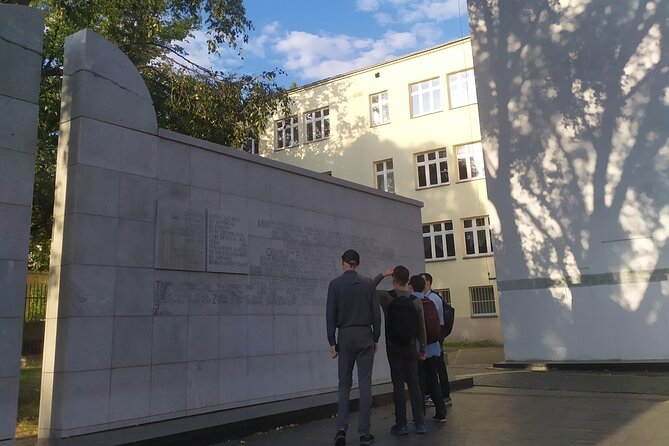
The next stop is a fragment of the ghetto wall, with about 15 minutes set aside. It is one of the few remaining physical pieces of the wall. On its own, it is not a grand sight. The power comes from knowing what the wall represented: forced separation, confinement, and the division of Jewish residents from the rest of the city.
This is also where the tour’s visual aids earn their keep. The surviving fragment is small compared with the huge system of walls and streets that once enclosed the ghetto. Historic photographs and maps help you understand its scale and location.
You should adjust your expectations here. If you want a continuous historic district with preserved facades, this walk may disappoint. The route works by assembling fragments. The guide points out what survived, what disappeared, and how the modern city now covers much of the former ghetto.
More Jewish Heritage Tours in Warsaw
- Warsaw: Warsaw Ghetto Private Walking Tour with Hotel Pickup
★ 4.9 · 369 reviews - Warsaw: Jewish History Guided Walking Tour in English
★ 4.7 · 324 reviews - Private Tour: Warsaw’s Jewish Heritage by Retro Fiat
★ 5.0 · 208 reviews - Warsaw: Ghetto, Jewish Cemetery & POLIN Museum Private Tour
★ 4.8 · 132 reviews
Two hours through Muranów and the former ghetto
The longest part of the walk lasts about two hours and five minutes. It includes the Jewish Ghetto memorial, the courthouse on Solidarności Street, the Muranów residential district, the site connected with the discovery of the Ringelblum Archive, the Church of St. Augustine, the Heroes of the Jewish Ghetto memorial, and Miła 18, also known as Anielewicz’s Bunker.
The Muranów district deserves particular attention. Much of what you see today is postwar housing, not the prewar Jewish neighborhood. The modern buildings can make the past feel distant, but the guide explains how the district relates to the former ghetto and why so little of the old city remains.
The Ringelblum Archive adds another layer. Created secretly during the occupation, it preserved documents and testimonies about Jewish life and the ghetto. The archive is important because it records daily experience from the people living through the catastrophe, not just later accounts written by outsiders.
The Church of St. Augustine is another reminder that the area was not sealed off from the wider city in a simple way. The route uses buildings, streets, monuments, and surviving traces to show how Jewish and non-Jewish Warsaw occupied the same urban space before the war, and how the occupation tore that world apart.
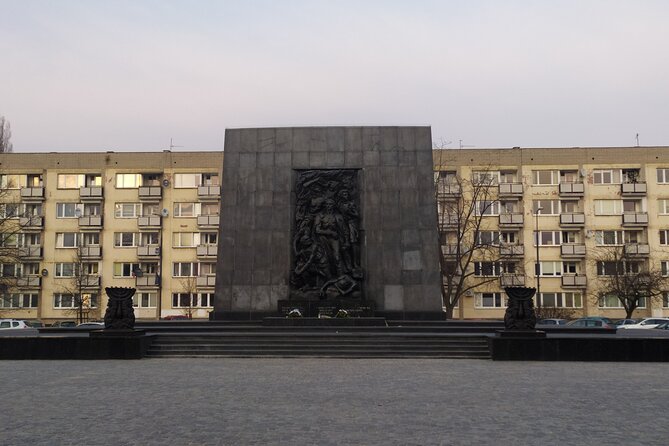
At the Heroes of the Jewish Ghetto memorial, you will spend time considering the 1943 uprising. The monument is one of Warsaw’s most important sites connected with the Holocaust. The guide’s photographs and maps help place the uprising within the former ghetto rather than treating the memorial as an isolated object.
Miła 18 marks the location of Anielewicz’s Bunker, associated with the Jewish resistance during the uprising. There is no dramatic bunker interior to enter. The importance lies in the place itself and in the explanation of what happened there. This is a stop where careful storytelling matters more than what you can physically see.
The route includes long stretches of walking and some cobblestones. Bring an umbrella if rain is possible, and wear shoes with good support. The guides are described as keeping a steady pace, with breaks and time for photographs, but three hours on foot can still be tiring.
Monuments to resistance and the route north
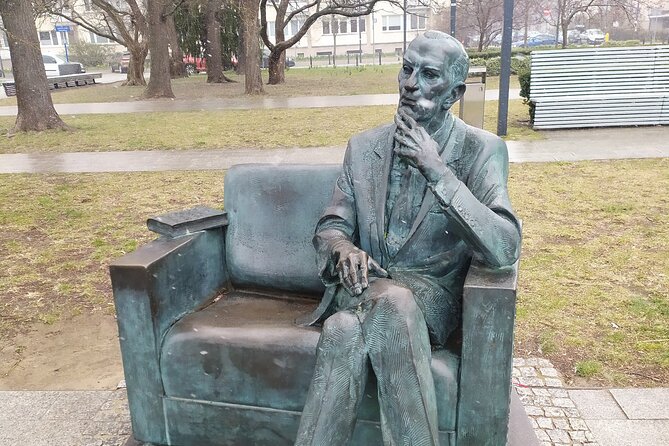
The stop at the Ławeczka Jana Karskiego, or Jan Karski bench, takes about 15 minutes. Karski was a Polish resistance courier who reported on the destruction of European Jewry. The bench is part of a group of Warsaw memorials that connect the city’s wartime story with the people who tried to resist, report, and bear witness.
This section helps balance the tour. The story is not only about victimhood and destruction, though those remain central. It also includes Jewish resistance, Polish witnesses, underground documentation, and the many difficult questions surrounding wartime Poland.
The subject can bring strong emotions and differing views about Polish responsibility, German occupation, local behavior, and memory after the war. A careful guide should distinguish between historical facts and later political arguments. The tour’s emphasis is on the German occupation and the destruction of Polish Jewish life, while also presenting the wider setting in which these events took place.
If you want to explore the subject further, the supplied recommendations point you toward books, museums, and other Warsaw sites. This is useful because three hours can explain a great deal, but it cannot answer every question about occupation, collaboration, resistance, or postwar memory.
Umschlagplatz, the final stop
The walk ends at the Umschlagplatz Monument on Stawki 10. This is the site from which around 300,000 Jews were deported to Treblinka. The tour spends about 10 minutes here, but the emotional weight of the stop is far greater than its scheduled length.
Umschlagplatz was the deportation assembly point. Ending here gives the route a clear shape. You begin with surviving Jewish life at Nożyk Synagogue, pass through fragments and memorials connected with the ghetto, and finish at the place where mass deportations began.
The tour does not return to the starting point. That is useful if you plan to continue north or visit another site nearby, but you should plan your onward route from the monument. One guide helped a participant find the correct tram for a train connection, but you should still allow time and check your own transport plans.
How the $28.87 price measures up
At $28.87 per person, this is a fair price for a three-hour guided walk with a small group, visual material, a pre-tour information pack, and recommendations for further sightseeing. You are paying mainly for interpretation. The wall fragment and memorials themselves are free, and the Nożyk Synagogue admission costs extra.
The value is strongest if you are new to Warsaw’s Jewish history or would otherwise miss the less obvious sites. The route covers a large part of the former ghetto in one morning or afternoon, and the guide helps you see connections that are difficult to find alone.
The value is weaker if you want extensive interior visits or a large number of intact historic buildings. This is an outdoor history lesson, not a museum tour. I strongly suggest pairing it with the POLIN Museum of the History of Polish Jews, but not assuming one replaces the other. The museum can explain Jewish life across the centuries, while this walk places the wartime story on the actual streets.
Who will get the most from this experience
I recommend this tour for anyone who wants a serious introduction to Jewish Warsaw, especially if you have limited time. It is also a good choice if you have read about the Warsaw ghetto but want help locating the events in the city.
The small group suits people who prefer questions and conversation over a large crowd. Guides such as Aga, Agnieszka, and Oliwia are praised for their English, preparation, and ability to explain difficult material clearly. The tone is generally factual and compassionate rather than theatrical.
You should think twice if walking long distances is difficult. The route lasts about three hours, and the ground can include cobblestones. Doing this walk and a major museum on the same day may leave you on your feet for much of the day.
This is also not the best choice if your main goal is architectural sightseeing. Much of the former ghetto was destroyed, and modern Warsaw now occupies the area. The tour’s reward is understanding, not a long sequence of preserved buildings.
Practical details that make the day easier
The experience is offered in English and uses a mobile ticket. It is near public transportation, and service animals are allowed. Most people can take part, but the walking distance should be taken seriously.
The tour has a maximum of 10 people. That makes it easier to hear the guide, see the visual aids, and pause for questions without losing the group. Arrive at Sienna 53 with enough time to find the exact meeting point.
Free cancellation is available up to 24 hours before the start time. Cancellations made less than 24 hours in advance are not refunded, and changes inside that window are not accepted.
Should you book the Jewish Warsaw walk?
Book it if you want the former ghetto explained as a real part of Warsaw rather than treated as a list of monuments. The guides, maps, photographs, and carefully chosen route make a major difference in a city where many physical traces disappeared.
Skip it if you want a short, easy stroll or preserved Jewish streetscapes. The walk is long, the subject is heavy, and some stops may look modest without explanation. For most people interested in Warsaw’s wartime past, though, the combination of Nożyk Synagogue, the wall fragment, Muranów, Miła 18, and Umschlagplatz gives you a clear and moving three-hour foundation.
FAQ
How long does the Jewish Warsaw walking tour last?
The tour lasts approximately three hours.
Where does the tour begin?
It begins at Sienna 53, 00-820 Warszawa, near the corner with Jana Pawła II Avenue, at Baguette Mi.
Where does the tour end?
The tour ends at the Umschlagplatz Monument at Stawki 10, 00-178 Warszawa.
What language is the tour offered in?
The tour is offered in English.
Is entry to Nożyk Synagogue included?
No. Entry costs 20 PLN and is paid separately.
How many people can join the tour?
The maximum group size is 10 people.
Is the tour suitable for someone who has difficulty walking long distances?
The tour is not recommended for people who have problems walking long distances. It lasts about three hours and includes extended walking.
What does the tour provide besides the guided walk?
You receive an information pack before the tour, visual aids during the walk, and recommendations for other places to visit, eat, and drink.
More Walking Tours in Warsaw
- Warsaw: Old Town Highlights Walking Tour in English
★ 4.7 · 1,516 reviews - Warsaw: Old Town Guided Walking Tour
★ 4.9 · 599 reviews - Half-Day Polish Food Walking Tour with Guide and Dinner
★ 4.5 · 381 reviews - Old Town Warsaw Walking Tour
★ 4.5 · 333 reviews
Just added around Warsaw
- Wolfs Lair and Swieta Lipka Small Group Tour from Warsaw with Lunch★ 4.5 · 21 reviews
- Wolf’s Lair & Treblinka Tour in 1 day from Warsaw★ 5.0 · 37 reviews
- Wolfs Lair “Hitler’s Headquarters” – Full Day Tour from Warsaw by private car★ 4.5 · 4 reviews
- Tour from Warsaw: Wolf’s Lair, Hitler’s HQ Zones I and II★ 5.0 · 32 reviews
- Wolf’s Lair Private Day Trip from Warsaw★ 5.0 · 50 reviews
- Warsaw Must-See Local City Tour with Antek and Tomek★ 5.0 · 51 reviews
- Off the Beaten Track in Warsaw: Private City Tour★ 4.5 · 9 reviews
- Warsaw’s Old Town A Self-Guided Audio Tour★ 4.5 · 10 reviews
Jewish Heritage Tours, compared.

Bike Tour of Old Town, Jewish Quarter and the Ghetto
Read our review →
Kazimierz, Schindler’s Factory & Ghetto Guided Tour
Read our review →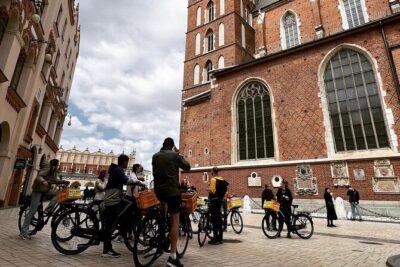
Full Bike Tour – the Old Town, Jewish Qtr & the Ghetto NEW BIKES
Read our review →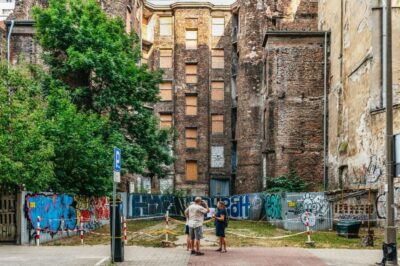
Warsaw Ghetto Private Walking Tour with Hotel Pickup
Read our review →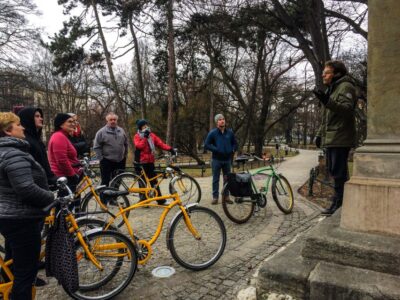
Bike Tour of the Old Town, Kazimierz, and the Ghetto
Read our review →Browse the lists this tour appears in