
Reviewed · JEWISH HERITAGE TOURS
Warsaw: Jewish History Guided Walking Tour in English
Warsaw’s Jewish story is not told from behind museum glass. This 150-minute walk takes you through streets where the pre-war Jewish community lived, worked, worshiped, and fought for Poland, then shows how the Holocaust and war changed the city. I especially like the visit to Nożyk Synagogue, the only surviving pre-war synagogue in Warsaw, and the stop at Chłodna Street, where a bridge once linked two parts of the ghetto.
I also like the way the tour connects Jewish life before the war with the city’s present-day community. Guides including Andrzej, Jacek, Aga, Luke, and Christopher have been praised for clear English, thoughtful handling of painful subjects, and a willingness to answer questions. The main drawback is simple: you are outside for the entire two and a half hours, and a large group can make it harder to hear every word.
Key points to know before you book
- Nożyk Synagogue is the only surviving pre-war synagogue in Warsaw, giving the tour a rare physical link to the city’s Jewish past.
- Chłodna Street marks the site of the former ghetto bridge, a powerful reminder that the ghetto was divided into separate sections.
- Waliców Street brings together several layers of history, from the former ghetto boundary to the Warsaw Uprising.
- The tour covers both Jewish life and Jewish destruction, including culture, political activity, persecution, resistance, and survival.
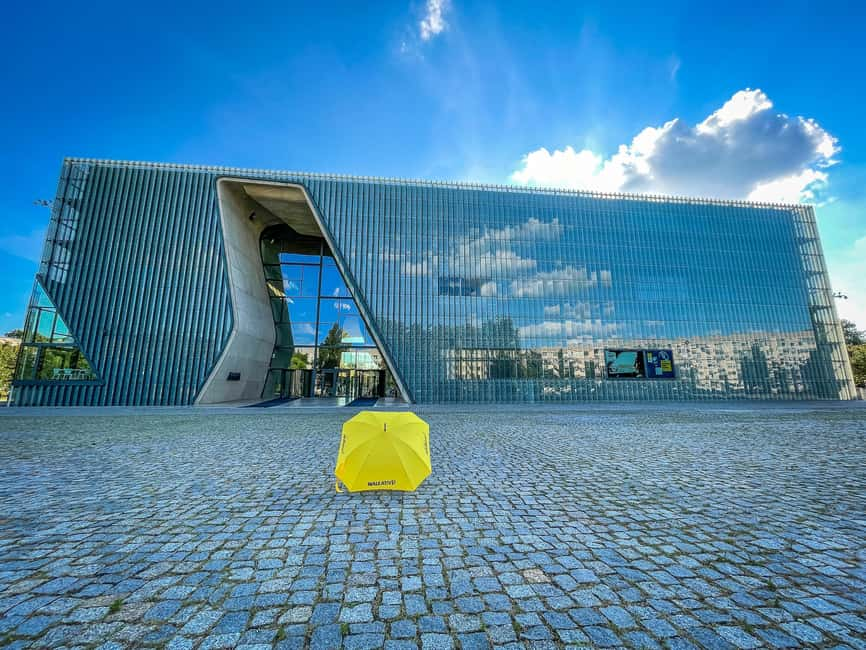
- The meeting point is easy to find, next to All Saints Church at Grzybowski Square, under a yellow umbrella.
- The $26 price is good value if you want a serious historical introduction led by a live English-speaking guide rather than a quick orientation walk.
Why this walk matters before you see Warsaw
Before the Second World War, Warsaw was the second-largest Jewish city in the world. That fact can sound abstract until you walk through the city and learn how deeply Jewish life shaped its streets, politics, arts, businesses, newspapers, and neighborhoods.
This tour begins to restore that lost city in your mind. You hear about Jewish residents as workers, writers, actors, journalists, political activists, and neighbors, not only as victims of persecution. That balance matters. If a tour starts with the ghetto and ends with death, you learn about destruction but not what was destroyed.
The guide also places Jewish history within the wider story of Warsaw. In the 19th century, Jews joined other residents in resistance to occupying powers and took part in Polish uprisings. During the interwar years, Jewish Warsaw had an active cultural life, with artists, performers, writers, and journalists contributing to a city known for its energy and variety.
I find this opening context especially useful if you know little about Jewish life in Poland. It gives you a clearer sense of scale. The Holocaust did not erase a small, separate community at the edge of the city. It destroyed a major part of Warsaw itself.
More Historical Tours in Warsaw
- Warsaw: POLIN Museum of the History of Polish Jews Ticket
★ 4.7 · 1,142 reviews - Warsaw: Chopin Concert at Historical Venue in Old Town
★ 4.7 · 445 reviews - Small-Group Historical Guided Tour of Warsaw with pick up/drop off. Public Tour.
★ 4.5 · 343 reviews
Starting at Grzybowski Square and All Saints Church
The meeting point is beside All Saints Church at Grzybowski Square. Look for the yellow umbrella. This is a practical location in central Warsaw, and one person specifically found it easy to identify, even on a cold morning.
Grzybowski Square is a fitting place to begin because the surrounding area carries several layers of Warsaw’s past. Your guide uses the square and nearby streets to introduce the Jewish presence in the city, then builds the story as you walk.
Do not expect a long indoor presentation at the start. This is a walking tour, and the guide’s spoken explanation does most of the work. Some guides have used photographs and maps to show what the area looked like before and during the war. Those visual aids are particularly helpful because much of the original built environment no longer exists.
The meeting point is also useful for visitors who want a broader Warsaw orientation. Several guides have offered extra suggestions at the end, including general city advice and places to eat or have coffee. That is a small bonus, but it can help early in a Warsaw visit.
Nożyk Synagogue and the surviving link to pre-war Warsaw
Nożyk Synagogue is one of the tour’s most important stops. It is the only surviving pre-war synagogue in Warsaw, so it offers something many other parts of the route cannot: a visible building connected to the Jewish city that existed before 1939.
The stop helps you understand that Jewish Warsaw was not only a group of streets or a wartime administrative zone. It had institutions, religious life, schools, cultural groups, businesses, and a strong public presence.
You should check your expectations about the synagogue. The tour includes seeing Nożyk Synagogue, but admission inside is not listed as part of the walking tour. One guide explained the history from outside, and some people later wished they had been able to enter. If going inside is important to you, ask the guide whether it is possible on your date or plan a separate visit.
The synagogue also gives the guide a chance to discuss the survival of Jewish life after the war. The tour does not treat Jewish Warsaw as a subject that ended in 1945. It points toward the young, diverse, and active Jewish community that exists in Warsaw today.
Chłodna Street and the divided Warsaw ghetto
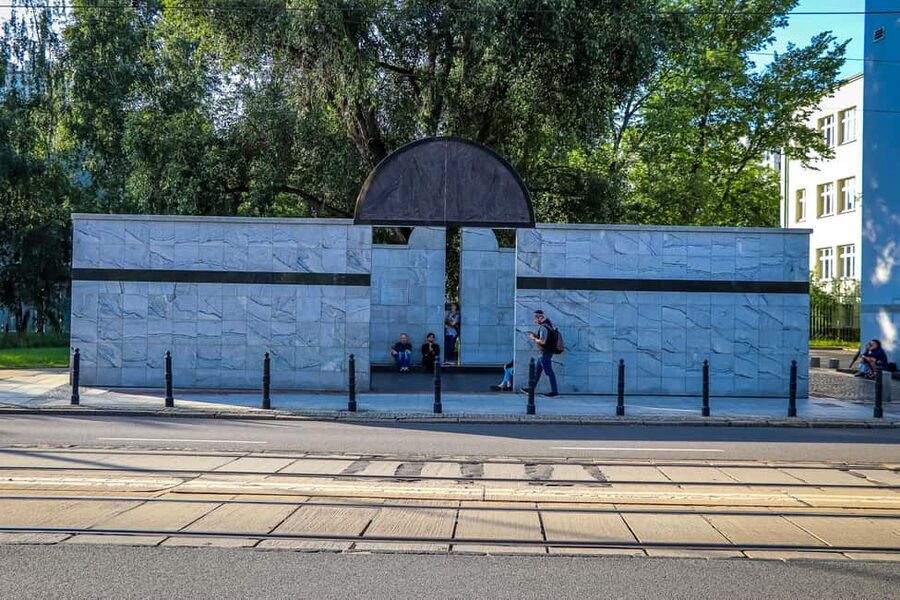
At Chłodna Street, the tour reaches one of its most memorable places. The street was connected to the bridge that joined two sections of the Warsaw ghetto. The bridge allowed people to cross above the street while the city continued moving below.
The physical bridge is gone, but the location carries the story. This is one of the tour’s central lessons: Warsaw’s Holocaust history is often marked by absence. You may be looking at an ordinary modern street, yet the guide explains how fences, walls, checkpoints, and forced movement once divided the city.
That contrast can be difficult. It also makes the walk more effective than a list of dates. You are not simply told that the ghetto was crowded and controlled. You are shown how its sections were separated and why movement through the city became a matter of survival.
Guides use photographs and maps when available, which makes this stop easier to picture. One guide received praise for bringing visual material because so many original buildings and structures have disappeared. In a large group, stay close and position yourself where you can see the guide’s images.
The subject is painful, and the best guides handle it directly without turning the tour into a performance. Several guides have been praised for combining plain facts with compassion, occasional humor, and room for questions. That balance helps you keep listening for two and a half hours.
More Jewish Heritage Tours in Warsaw
- Warsaw: Warsaw Ghetto Private Walking Tour with Hotel Pickup
★ 4.9 · 369 reviews - Private Tour: Warsaw’s Jewish Heritage by Retro Fiat
★ 5.0 · 208 reviews - Warsaw: Ghetto, Jewish Cemetery & POLIN Museum Private Tour
★ 4.8 · 132 reviews - Tour of the Warsaw Ghetto
★ 5.0 · 119 reviews
Waliców Street, the ghetto border, and the Warsaw Uprising
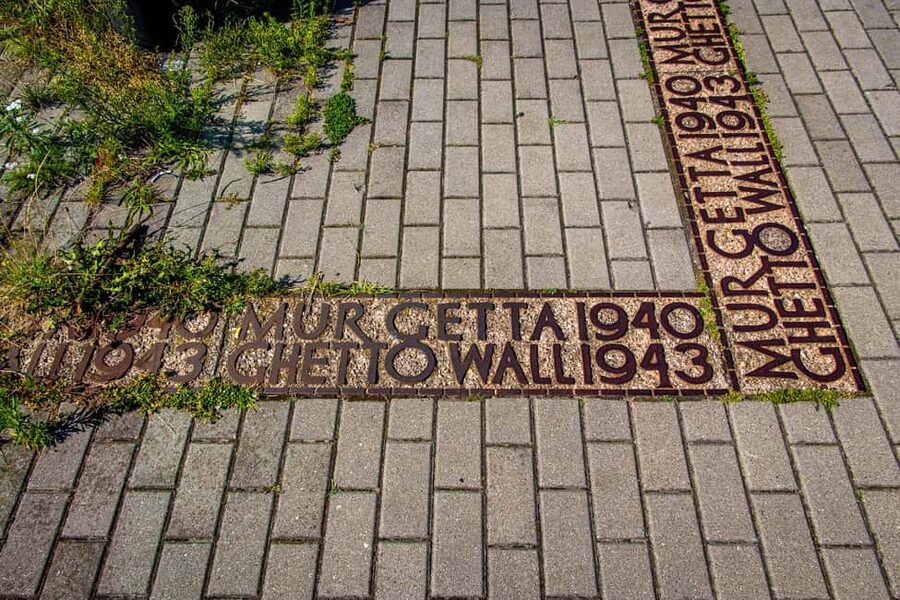
Waliców Street adds another layer to the route. It once marked part of the ghetto border, and it is also linked to the Warsaw Uprising. That combination shows how Jewish history and the wider history of wartime Warsaw cannot be neatly separated.
Here, the guide can explain how the city changed during the German occupation and how different forms of resistance developed. You learn not only about the persecution of Jews, but also about the wider struggle of Warsaw residents against occupation.
This part of the walk is valuable because it resists a narrow story. The Holocaust is central, but Jewish residents were also part of the city’s political and social life. The tour connects Jewish participation in earlier Polish uprisings with the terrible choices and acts of courage made during the war.
Do not expect a preserved wartime street scene. The difficulty is that much of the original setting has disappeared or been altered. That can make the stop feel less dramatic at first than a museum room filled with artifacts. A good guide makes up for that with photographs, maps, precise explanation, and a clear sense of where the old boundaries ran.
One guide also pointed out that the walk can reveal places missed on a separate ghetto-focused tour. If you have already taken another Warsaw Jewish history tour, this route may still add useful context, especially through its attention to pre-war life and the city beyond the ghetto.
The story before the war, not only the story of the Holocaust
The strongest part of this experience is its range. You learn how Jewish residents helped shape Warsaw during peaceful periods, how they responded to political pressure, and how Jewish culture grew during the interwar years.
That cultural section changes the emotional weight of everything that follows. Hearing about hundreds of Jewish artists, actors, writers, and journalists gives you a fuller picture of what the Nazis sought to destroy. You are not left with an image of anonymous crowds. You gain a sense of individual lives and a community with its own arguments, ambitions, humor, art, and daily routines.
This is also where the guides’ style matters most. One guide was praised for explaining a difficult subject with personal family experience and humor. Another was appreciated for brutal honesty about terrible events. A third used films and television recommendations to connect the past with material visitors might explore later.
The tone varies by guide, but the overall approach is serious and accessible. If you prefer a strictly academic lecture, you may find the conversational style less formal than expected. If you want a guide who welcomes questions and explains the story in plain English, it should suit you well.
How the guides handle a difficult subject
Guide quality is the tour’s biggest strength. The guides named in the feedback include Andrzej, Jacek, Aga, Luke, Christopher, Anna, Ana, Tomasz, and Agneska. Their styles differ, but the praise is consistent: clear English, strong command of the subject, patience with questions, and genuine care in presenting Warsaw’s Jewish history.
Christopher was singled out for knowing the city in remarkable detail and for discussing places connected to Mila 18. Jacek was praised for a good pace and a willingness to involve the group. Luke was described as passionate, approachable, and able to make the subject understandable to people with little previous knowledge.
That does not mean every moment will be perfectly polished. One person found it hard to hear the guide when he walked ahead while finishing a sentence. Large groups can create the same problem. Stay near the guide and politely ask for a repeat if traffic or distance gets in the way.
The group format also matters. This is a general walking tour, and the fee covers the reservation and guide payment. If you want a smaller private tour, you can contact the supplier after booking to ask about arranging one.
A notable strength is that a guide continued the tour for a single customer rather than canceling. That suggests the experience can remain worthwhile even with a very small group, although group size can vary by date.
Weather, pace, and what to bring
You are outdoors for the entire 150 minutes. In summer, that means sun and warm pavement. In winter, it can mean bitter cold. A February booking went ahead in freezing weather, and another winter walk was described as very cold even though the guide kept the group engaged.
Dress for the forecast, not for the calendar. Wear warm layers in the colder months, and use comfortable shoes in every season. Bring water and arrive ready to walk without a planned café break, since a stop indoors is not part of the stated program.
The pace is generally manageable. A group of four found it comfortable, and another guide was praised for keeping the walk moving at a good speed. Still, the tour covers a lot of material, so you will spend much of the time listening while standing or walking.
The full 150 minutes usually feels purposeful rather than padded. Several people wanted an even longer tour, which tells you the content is dense. If you have limited stamina or need frequent indoor breaks, this is worth considering before booking.
Is $26 a fair price?
At $26 per person, this is a good-value introduction to Warsaw’s Jewish history. You receive a live English-speaking guide for two and a half hours, along with a route that brings together religious history, pre-war culture, the ghetto, resistance, the Warsaw Uprising, and the Jewish community today.
The value is strongest if you are visiting Warsaw for the first time or have only a basic understanding of the city’s wartime past. A guide gives you context that plaques and scattered monuments cannot provide. You can ask why a street mattered, how the ghetto was organized, and what changed after the war.
The price does not include hotel pickup or drop-off, but the central meeting point keeps the arrangement simple. It also does not promise a private group or entry into Nożyk Synagogue. Think of it as a shared outdoor history walk, not a private tour or a synagogue visit.
Free cancellation up to 24 hours before the tour and the option to reserve now and pay later make it easier to fit into a changing itinerary. Starting times depend on availability, so check the schedule when you book.
Who should book this Warsaw walking tour?
I would choose this tour if you want a serious introduction to Jewish Warsaw and prefer learning through streets, landmarks, photographs, and conversation. It suits first-time visitors, people with family connections to Warsaw or Polish Jewish history, and anyone who wants to understand the city beyond its rebuilt center.
It is also a good choice for visitors who already know something about the Holocaust but want more background on Jewish life before 1939. The pre-war culture and political history prevent the story from becoming a single chapter about suffering.
You may want another option if you need an indoor experience, cannot walk for two and a half hours, or specifically want guaranteed synagogue entry. You should also think twice if you dislike group tours, though a private arrangement may be possible after booking.
For the best experience, arrive early, dress for the weather, stay close enough to hear, and bring questions. The guides clearly welcome discussion, and the most rewarding moments often come when a guide connects a place on the street with a larger question about memory, identity, and Warsaw today.
Should you book it?
Yes, if you want a thoughtful, well-paced introduction to Jewish Warsaw for a reasonable price. The route is especially strong because it begins with Jewish life and culture, then moves through the ghetto, wartime resistance, and the community’s continuing presence.
Book it with realistic expectations: much of the original city is gone, you will remain outdoors, and the experience depends partly on group size and your guide’s ability to keep everyone close. If you can handle those limits, the walk offers a clear, human account of one of Warsaw’s most important stories.
FAQ
How long is the Jewish History Guided Walking Tour?
The tour lasts 150 minutes, or two and a half hours.
What language is the tour conducted in?
The live tour guide speaks English.
Where does the tour meet?
Meet next to All Saints Church at Grzybowski Square. Look for a yellow umbrella.
What places are included on the route?
The route includes Nożyk Synagogue, Chłodna Street, and Waliców Street, along with sites connected to the former Warsaw ghetto and the Warsaw Uprising.
Is entry to Nożyk Synagogue included?
The tour includes seeing Nożyk Synagogue, but synagogue admission is not listed among the included services.
Is hotel pickup provided?
No. Hotel pickup and drop-off are not included.
Can I cancel the booking for a refund?
Yes. You can cancel up to 24 hours in advance for a full refund. You can also reserve now and pay later.
More Walking Tours in Warsaw
- Warsaw: Old Town Highlights Walking Tour in English
★ 4.7 · 1,516 reviews - Warsaw: Old Town Guided Walking Tour
★ 4.9 · 599 reviews - Half-Day Polish Food Walking Tour with Guide and Dinner
★ 4.5 · 381 reviews - Old Town Warsaw Walking Tour
★ 4.5 · 333 reviews
Just added around Warsaw
- Wolfs Lair and Swieta Lipka Small Group Tour from Warsaw with Lunch★ 4.5 · 21 reviews
- Wolf’s Lair & Treblinka Tour in 1 day from Warsaw★ 5.0 · 37 reviews
- Tour from Warsaw: Wolf’s Lair, Hitler’s HQ Zones I and II★ 5.0 · 32 reviews
- Wolf’s Lair Private Day Trip from Warsaw★ 5.0 · 50 reviews
- Wolfs Lair “Hitler’s Headquarters” – Full Day Tour from Warsaw by private car★ 4.5 · 4 reviews
- Warsaw Must-See Local City Tour with Antek and Tomek★ 5.0 · 51 reviews
- Off the Beaten Track in Warsaw: Private City Tour★ 4.5 · 9 reviews
- Warsaw’s Old Town A Self-Guided Audio Tour★ 4.5 · 10 reviews
Jewish Heritage Tours, compared.

Bike Tour of Old Town, Jewish Quarter and the Ghetto
Read our review →
Kazimierz, Schindler’s Factory & Ghetto Guided Tour
Read our review →
Full Bike Tour – the Old Town, Jewish Qtr & the Ghetto NEW BIKES
Read our review →
Warsaw Ghetto Private Walking Tour with Hotel Pickup
Read our review →
Bike Tour of the Old Town, Kazimierz, and the Ghetto
Read our review →Browse the lists this tour appears in